Views: 0 Author: Site Editor Publish Time: 2026-07-13 Origin: Site


The demand for localized, decentralized recycling is rising rapidly across various limited-space environments. Modern laboratories, boutique recycling centers, and small manufacturing businesses require practical waste solutions. A significant gap exists between flimsy office paper shredders and massive, multi-ton industrial crushers. You cannot reasonably install a factory-sized granulator inside a standard commercial workspace. Floor space remains limited. Heavy electrical infrastructure is often unavailable. This is where a mini shredder machine enters the picture as the ideal solution. It provides the exact middle ground you need. You gain access to industrial-grade torque scaled down to a footprint respecting strict facility constraints. We designed this comprehensive guide to help you navigate this highly specific equipment niche. We cover realistic machine capabilities, technical evaluation criteria, and vital procurement considerations. You will learn how to size, specify, and purchase the correct equipment for your decentralized material recovery goals.
Purpose: Engineered for low-volume, high-value localized recycling where space and standard single-phase power limits prohibit industrial equipment.
Capacity Reality: Ideal for light-to-medium plastics, e-waste components, and soft metals; not a substitute for high-throughput heavy industrial tasks.
Sourcing: Scaling requires looking beyond consumer-grade units toward heavy-duty desktop or OEM mini shredder models built with hardened steel and serviceable parts.
Evaluation: Buying decisions should be based on torque-to-speed ratios, blade accessibility, and jam-recovery mechanisms, not just stated motor wattage.
Facilities generating localized waste routinely face steep outsourcing costs. Innovation labs, small-batch manufacturers, and secure data destruction centers deal daily with severe logistical hurdles. You pay premium fees to haul away relatively low volumes of bulky material. Transporting empty space costs money. Furthermore, you lose the potential financial value of repurposed scrap. Relying entirely on third-party waste management firms creates bottlenecks. Your internal material builds up while waiting for scheduled pickups. This wastes valuable square footage and creates safety hazards.
Implementing a small-scale shredder solves these logistical issues directly. It enables true closed-loop material recovery right at the source. You bypass the need for expensive structural facility upgrades. You avoid reinforcing concrete floors. You skip the expense of installing dedicated three-phase power lines. The equipment fits seamlessly into your existing workflow layout. Localized processing means you reduce waste volume immediately upon generation.
Consider your return on investment timeline carefully. We must compare the upfront investment of a compact mini shredder against long-term operational savings. You save substantial capital by minimizing or eliminating waste hauling contracts. You quickly reclaim valuable warehouse or lab space previously dedicated to storing bulky scrap. Many businesses also gain financial benefits by reselling processed materials. Shredded plastics and metals command higher market prices than unsegregated bulk waste. This decentralized approach effectively turns a daily waste management headache into a streamlined, cost-effective industrial process.
We must establish clear operational boundaries to build realistic expectations. The designation "mini" refers to a reduction in physical footprint and maximum throughput. It does not indicate a compromise on the fundamental physics of shearing and cutting. A light-duty shredder relies on the same robust mechanical principles as massive units. You just scale the application appropriately.
These compact machines excel at specific low-volume tasks. They process materials efficiently without overtaxing the motor or dulling the blades prematurely.
Thermoplastics: They easily process PET, HDPE, and solid PLA purge blocks originating from 3D printing labs.
Light e-waste: You can safely process standard printed circuit boards (PCBs), provided they lack heavy transformers or thick steel brackets.
Soft non-ferrous metals: Thin aluminum sheets, copper wire, and brass off-cuts shred cleanly and consistently.
Paper and packaging: Thick corrugated cardboard tubes and dense paper blocks break down rapidly.
Pushing a compact unit beyond its engineered limits causes catastrophic mechanical failure. Avoid inserting thick steel components. Never attempt to process industrial automotive parts. Keep highly elastic rubbers entirely out of the cutting chamber. Elastic materials require specialized shear angles. They tend to stretch and wrap around the cutting shaft rather than breaking cleanly. This instantly stalls the machine and creates severe jams.
Let us define realistic hourly output expectations. You should anticipate processing roughly 10kg to 50kg per hour. This figure varies dramatically based on material density and operator feeding speed. Continuous run-time limitations also affect your daily numbers. Compact motors require scheduled cooling periods to prevent overheating. Plan your batch processing schedules accordingly.
Material Category | Processing Suitability | Expected Output (kg/hr) | Primary Mechanical Constraints |
|---|---|---|---|
Thermoplastics (PLA/PET) | Excellent | 30 - 50 | Friction heat causing material melting |
Light E-Waste (PCBs) | Good | 15 - 25 | Abrasive wear on cutting edges |
Soft Metals (Aluminum) | Moderate | 10 - 20 | Torque limits and occasional jamming |
Thick Steel / Hard Metals | Do Not Shred | 0 | Immediate motor stall, shattered blades |
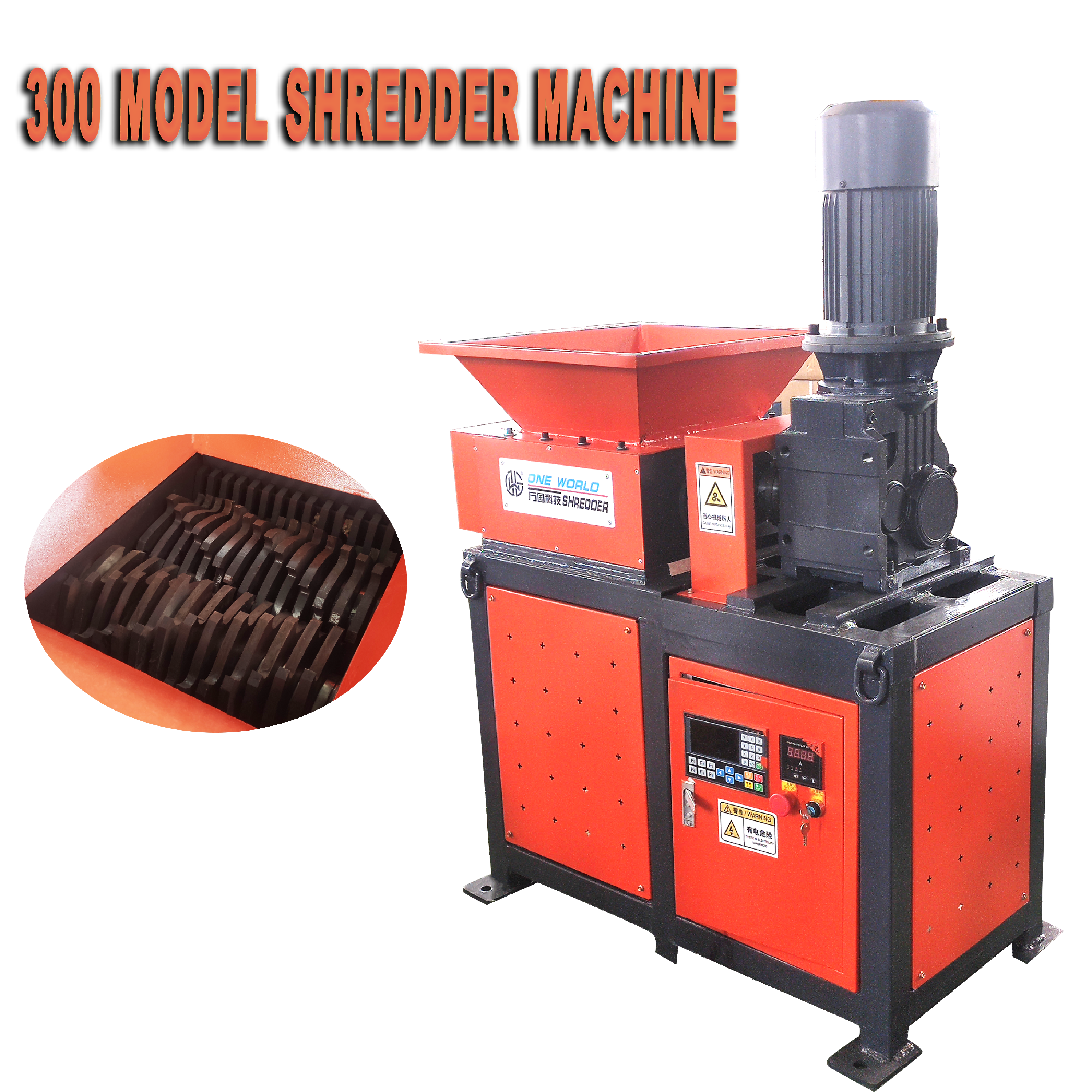
You need strict criteria when selecting your equipment. Do not simply look at the stated motor wattage. You must analyze the mechanical design and power delivery system. Low rotation speed combined with high torque is strictly critical. Compact machines rely entirely on this ratio to prevent motor stalling when encountering dense materials. High RPMs generate excessive dust and intolerable acoustic noise. Slow rotation grabs, pierces, and shears tough materials safely. The gearbox acts as the heart of the system, trading speed for raw cutting power.
Micro footprints usually dictate highly specific rotor configurations.
Shaft Configuration: Single-shaft designs work exceptionally well for consistent material sizing. They push material against a stationary blade. Double-shaft setups excel at the initial breakdown of bulky, irregular items.
Material Grades: Blade metallurgy matters immensely. You must demand hardened materials like D2 tool steel or H13 steel. Hardened blades are non-negotiable even for desktop units. Cheap alloys dent and dull rapidly, rendering the machine useless.
Evaluate the feed opening dimensions carefully. The throat size must comfortably accept your typical waste stream without requiring manual pre-cutting. If operators must pre-cut material manually, you lose all process efficiency. Emphasize anti-flyback features during your evaluation. Operator safety relies on physical barriers. Anti-flyback curtains prevent shattered plastic or sharp metal fragments from ejecting upward out of the hopper.
Clarify your available electricity before purchasing. Most small shops and labs operate on single-phase 110V or 220V circuits. True industrial machines almost exclusively require three-phase power. Reputable manufacturers use advanced gear reduction to maximize torque within single-phase limits. Make sure your local circuit breakers can handle the initial amperage spike during motor startup.
Deploying compact industrial equipment comes with inherent operational challenges. Material jamming represents the most common failure point. Dense plastic blocks or unexpected metal chunks stop the rotors instantly. Evaluate prospective units based heavily on their reversal capabilities. Auto-reverse sensors detect electrical resistance and clear jams automatically by spinning backward. At minimum, ensure an easily accessible manual reverse switch exists on the control panel.
Motor heat generation poses a serious, ongoing problem. Continuous heavy use inside a compact, unventilated chassis traps heat rapidly. Always look for built-in thermal overload protection circuits. These safety circuits shut down the system automatically before electrical fires occur or motor windings melt. Implementing forced-air cooling fans around the motor housing extends continuous run times significantly.
You will need to perform routine mechanical maintenance. Regular screen cleaning prevents throughput bottlenecks. Blade sharpening and bearing lubrication represent mandatory ongoing tasks. Warn your team against purchasing "black box" consumer units. If basic maintenance requires breaking seals and voiding warranties, look elsewhere immediately. You need unobstructed, safe access to the cutting chamber.
Operators frequently place compact units directly on workbenches or in light commercial office spaces. The constant grinding and snapping creates severe acoustic stress. Discuss vibration dampening options with your supplier before purchasing. Heavy rubber mounting pads help isolate vibrations significantly. Custom soundproof enclosures may become necessary for shared, quiet office environments.
You face a distinct choice when buying reduction equipment. Off-the-shelf commercial machines suit straightforward, proven applications perfectly. Standard plastics processing and basic document destruction fall into this category. You benefit directly from high market availability and highly predictable warranties. Replacement parts usually ship quickly from local warehouses.
Sometimes standard commercial models fail to meet niche processing requirements. This scenario dictates specifying an OEM mini shredder solution. You might need to integrate the cutting mechanism directly into a larger proprietary manufacturing line. You may require custom hopper designs to fit cleanly under existing conveyor belts. You can also request specific screen hole diameters to achieve exact, uniform particle sizing for remelting.
Treat manufacturer vetting as a rigorous, unforgiving process. Use this basic checklist to verify supplier credibility before transferring funds:
Parts Availability: Verify the immediate availability of spare blades, screens, and drive belts.
Sourcing Transparency: Demand transparent motor and gearbox origin information.
Material Testing: Request a live or video-documented test run using your specific scrap.
Suppliers must remain willing to run test samples before finalizing the purchase. Sending your actual waste material to their facility guarantees the machine handles your specific density and toughness.
A well-engineered compact machine successfully bridges the difficult gap between standard commercial waste management and localized material recovery. You gain complete control over your recycling process without sacrificing massive amounts of floor space or overhauling your electrical grid.
To move forward effectively, follow these actionable steps:
Audit your physical waste completely, documenting the size, volume, and exact material composition.
Verify your facility power constraints by checking your breaker limits for single-phase capacity.
Request a video-documented test run by sending your hardest-to-process scrap directly to the equipment supplier.
Calculate your break-even point strictly based on eliminated hauling fees and newly reclaimed material value.
A: Yes, provided the blocks are not excessively thick. Solid plastics require immense torque to pierce and shear. You should feed large PLA or PETG purge blocks slowly. Consider a double-shaft model for aggressive grabbing. If the machine stalls, the thermal overload protection will trigger safely. Pre-cutting massive blocks extends blade life considerably.
A: A shredder performs the initial rough size reduction. It uses low speed and high torque to tear materials into irregular strips. A granulator operates at high speeds. It uses spinning knives to slice material into uniform, tiny flakes for remelting. Shredders handle tough, bulky items easily. Granulators require pre-shredded material.
A: Blade lifespan ranges from 6 to 18 months depending entirely on material hardness. Shredding soft plastics extends life significantly. Processing e-waste or soft metals dulls edges much faster. Hardened steel blades allow for multiple sharpening cycles. Sharpening restores performance efficiently. Eventually, repetitive wear requires full replacement.
A: Single-phase electricity limits maximum motor horsepower. This inherently creates a power-to-torque limitation. They will stall if overfed or if processing unusually dense metals. High-quality models prevent stalling through advanced gearbox reduction. Feeding material at a steady, controlled rate prevents the vast majority of stalling issues.


