Views: 0 Author: Site Editor Publish Time: 2026-07-10 Origin: Site


Processing bulk waste demands relentless mechanical force. Every plant operator faces a universal challenge on the tipping floor. You must balance continuous material throughput with reliable volume reduction. You also need to prevent excessive machine wear. Unsorted or oversized debris easily destroys lighter machinery. This failure causes severe downstream bottlenecks and inflates maintenance budgets.
A dual-shaft machine provides the best solution for the primary reduction of complex, mixed, or bulky materials. However, selecting the right equipment requires moving past generic capacity claims. You must analyze specific torque ratings, blade metallurgy, and maintenance accessibility. We will explore how to objectively evaluate these heavy-duty machines to ensure maximum operational uptime.
Application matching is critical: Success depends on aligning machine specifications (torque, shear force) with the exact bulk material profile (e.g., MSW, tires, light scrap metal).
Component durability dictates ROI: Evaluating blade alloys and gearbox configuration prevents high maintenance downtime.
High-speed vs. low-speed distinction: Standard applications require low-speed/high-torque, while a high-speed double-shaft shredder is reserved for specific secondary processing needs.
OEM partnership value: Selecting an OEM double-shaft shredder manufacturer should involve physical material testing and strict aftermarket support evaluations.
Facilities often struggle when unsorted or oversized bulk waste enters the processing line. Bulky materials create massive downstream bottlenecks. They lead to high transportation costs due to inefficient volume-to-weight ratios. Furthermore, feeding oversized items directly into secondary processing equipment accelerates premature wear. Procuring an industrial double-shaft shredder resolves these primary reduction challenges.
You must define specific operational success criteria before selecting a machine. Plant managers should evaluate their requirements across three core dimensions. Skipping this evaluation often leads to undersized equipment or excessive capital expenditure.
Target throughput: You need to measure this in tons per hour. Peak surge capacity matters just as much as average daily throughput.
Desired output size: Determine if your process requires a rough, random shred or a uniform fraction. Primary reduction generally aims for rough sizing.
Tolerance for contaminants: Assess the likelihood of non-shreddable items entering the chamber. High volumes of tramp metal require specific protective mechanisms.
The mechanism of action sets these machines apart. Two counter-rotating shafts draw material down into the cutting chamber. The interlocking blades aggressively shear and tear the waste apart. We can contrast this against single-shaft machines, which mill or chip material against a sizing screen. Single-shaft units excel at producing uniform pieces but struggle with highly contaminated, bulky loads. Quad-shaft machines offer uniform, single-pass sizing but introduce significant mechanical complexity. Dual-shaft designs remain the superior choice for high-volume, coarse primary reduction.
A true bulk material shredder is only as reliable as its internal components. You cannot judge a machine solely by its motor horsepower. The engineering behind the cutting chamber and drive system dictates long-term performance.
Blade design determines cutting efficiency. You must assess blade thickness, hook count, and material composition based on your specific abrasion levels. Thicker blades handle heavy shock loads, while thinner blades provide a cleaner shear for lighter materials. Hook count dictates how aggressively the machine grabs the material.
Metallurgy is a critical decision point. Facilities commonly use D2 tool steel for general plastics and municipal solid waste. H13 steel offers better impact resistance for tough, heterogeneous loads. Custom hardfaced alloys provide maximum defense against extreme abrasion. You must understand the reality of wear-and-tear. Blades dull over time. Replacement frequency depends entirely on operating hours and material abrasiveness.
Alloy Type | Primary Characteristic | Best Suited For | Wear Resistance Level |
|---|---|---|---|
D2 Tool Steel | High hardness, good edge retention | Plastics, cardboard, standard MSW | High |
H13 Tool Steel | High shock and impact resistance | Light metals, tires, mixed debris | Medium-High |
Hardfaced Alloys | Extreme surface durability | Highly abrasive C&D waste | Maximum |
Operators must evaluate hydraulic versus electric drives. Electric drives offer excellent energy efficiency and lower upfront costs. They work perfectly for consistent, predictable material streams. Hydraulic drives excel in unpredictable environments. They deliver massive low-end torque and handle frequent stalling without damaging the power unit.
Torque transfer relies heavily on the gearbox configuration. Planetary gearboxes provide exceptional shock-load absorption capabilities. They distribute stress evenly across multiple gears. This prevents catastrophic failures when the blades strike an uncrushable object. Proper gearbox selection prevents expensive downtime.
Modern processing requires smart automation. Intelligent PLC controls monitor motor amperage in real time. They feature automated anti-jamming protocols. When the system detects a severe overload, it automatically reverses the shafts to clear the obstruction. This auto-reverse function protects the blades, shafts, and gearboxes from catastrophic stress.
Integration capabilities matter for modern facilities. Advanced PLC systems connect directly with existing plant SCADA systems. This allows remote monitoring, predictive maintenance scheduling, and seamless coordination with upstream and downstream conveyors. You gain total visibility over your reduction process.
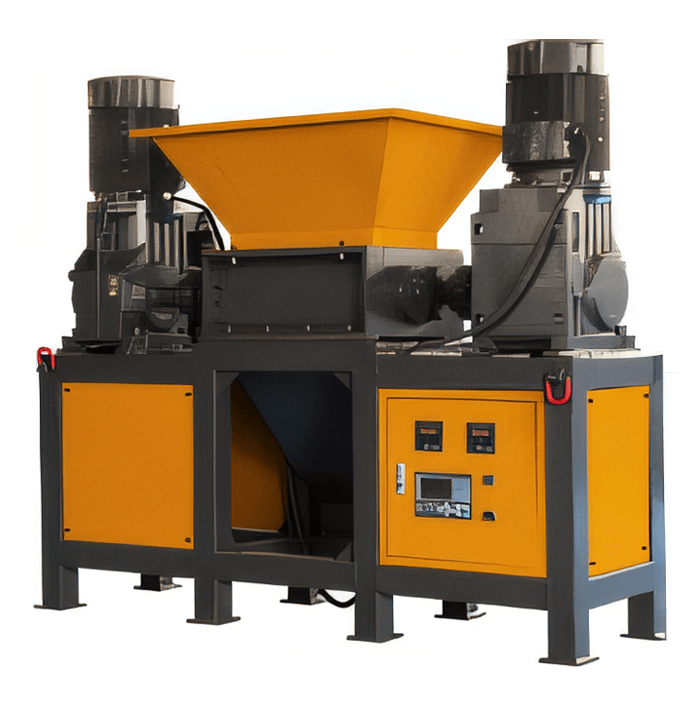
Industry terminology often causes confusion during the procurement process. We must clarify the distinction between speed and torque. Most bulk shredders rely on low speed and high torque. They turn slowly, typically between 15 and 35 RPM. This slow rotation shears tough materials quietly. It prevents sparking, minimizes dust generation, and safely processes contaminated loads.
Conversely, a high-speed double-shaft shredder fills a very specific operational niche. These units operate at much higher RPMs. They prioritize throughput velocity over raw shearing force. Facilities utilize high-speed models for specific secondary processing needs. Common applications include specific organics processing, Refuse-Derived Fuel (RDF) preparation, or refining pre-sorted homogenous materials.
You must perform a strict evaluation check before specifying a high-speed unit. Guide your engineering team to audit the material stream carefully. High-speed units cannot tolerate heavy metal contaminants. If tramp metal enters a high-speed chamber, the kinetic energy causes catastrophic blade shattering. Avoid specifying a high-speed machine for inappropriate, highly contaminated primary loads. Always align the kinetic profile with the material purity.
Every industrial machine requires ongoing maintenance. We must outline transparent maintenance assumptions. All shredders jam occasionally. All blades eventually dull. Acknowledging these real-world operational facts allows you to plan effective mitigation strategies. A double-shaft shredder represents a significant investment, and maximizing uptime requires proactive management.
Serviceability dimensions directly impact your daily operations. You must evaluate machines based on how easily your maintenance team can work on them. Consider these specific factors during your facility planning:
Access to the cutting chamber: Look for split-housing designs. These allow technicians to access the shafts without dismantling the entire hopper assembly.
Shaft and blade swap times: Determine the exact time required for a full shaft replacement. Some machines require days of downtime, while modular designs reduce this to a single shift.
Spare parts availability: Localized spare parts inventory is critical. Relying on overseas shipments for proprietary shear pins or custom blades will cripple your production schedule.
Facility integration introduces specific engineering risks. These massive machines require adequate floor space. You must address footprint constraints early. High-vibration equipment demands specialized structural foundations. Pouring inadequate concrete leads to hazardous structural fatigue over time. Furthermore, you must match the infeed and outfeed conveyors precisely. A powerful machine will sit idle if your conveyors cannot supply material fast enough or remove the shredded output efficiently.
Best Practice: Always install a heavy-duty magnetic separator on your outfeed conveyor. This captures liberated ferrous metals, protecting downstream secondary processors and creating an additional revenue stream.
Procurement extends far beyond reading a basic spec sheet. Buyers must demand customized material testing. Theoretical throughput charts often fall short in reality. A chart might claim ten tons per hour, but your specific mix of wet, tangled debris might process at half that rate. Verifiable testing eliminates this operational risk.
You need a strict evaluation framework when selecting an OEM double-shaft shredder manufacturer. Consider the following criteria to ensure a reliable partnership:
In-house manufacturing vs. assembly: Does the OEM actually machine their own shafts and blades? Manufacturers who control their own CNC machining offer much tighter quality control than those who merely assemble outsourced parts.
Customization flexibility: Evaluate their willingness to alter hopper designs. Your plant layout is unique. The vendor must adapt their cutting profiles and support structures to match your specific footprint.
Warranty and Service Level Agreements (SLAs): Read the fine print carefully. Many standard warranties cover structural steel but exclude wear parts entirely. Ensure you understand exactly what the SLA covers regarding gearbox failures or motor burnouts.
Take clear next-step actions to secure the right equipment. First, request a comprehensive site audit from your shortlisted vendors. Let their engineers view your actual tipping floor. Next, submit bulk material samples for factory testing. Demand video evidence or travel to the facility to witness the test in person. Real-world validation remains the best defense against buyer's remorse.
Procuring an industrial reduction machine is a heavily customized engineering decision. It is never a standard catalog purchase. Your operational success relies on matching the exact mechanical specifications to your unique waste stream. By understanding torque requirements, blade metallurgy, and the critical differences in operating speeds, you empower your facility to handle tough materials efficiently.
Prioritize component durability and verifiable OEM testing over initial capital expenditure. Ensure your facility infrastructure can handle the dynamic loads and maintenance requirements. Take action by auditing your current material stream and reaching out to specialized manufacturers for physical testing. This rigorous approach ensures continuous throughput, minimizes unexpected downtime, and guarantees long-term operational profitability.
A: They excel at processing municipal solid waste (MSW), construction and demolition (C&D) debris, scrap tires, electronic waste, and light scrap metals. However, operators should avoid feeding them solid heavy metals, massive steel blocks, or highly explosive materials, as these exceed standard shear limits.
A: Replacement timeframes vary drastically based on material abrasiveness. Processing clean plastics might allow blades to last several years. Conversely, shredding abrasive C&D waste might require blade hardfacing or replacement every few months. Regular inspections determine your exact maintenance intervals.
A: No. Dual-shaft units provide rough, random sizing. The output size depends on the blade width and hook configuration. If your process requires exact, uniform fractions, you will need a screen-equipped machine or a dedicated secondary shredder downstream.
A: Advanced machines utilize automated PLC controls. When sensors detect an extreme load, the system auto-reverses the shafts to clear the jam. Additionally, mechanical shear pins or hydraulic relief valves will disengage the drive, protecting the motor and gearbox from catastrophic damage.


