Views: 0 Author: Site Editor Publish Time: 2026-05-04 Origin: Site


Building a home plastic recycling setup promises a closed-loop micro-factory. However, most DIY attempts end in burned-out motors or melted plastic. Transforming rigid 3D printing waste or household plastics into reusable flakes requires specialized mechanics. Modifying a paper shredder or kitchen blender will not work. These appliances suffer from excessive friction and low torque. Successfully building a crusher machine requires prioritizing torque over speed. You must select the right blade metallurgy to ensure longevity. Finally, you need to match your power source to your specific output goals to achieve consistent results.
Torque is Non-Negotiable: A reliable plastic crusher machine needs low speeds (~70 RPM) and high torque (minimum 300 Nm) to cut rather than melt plastic.
Material Selection Dictates Lifespan: While mild carbon steel (S235) is cheap, upgrading to Stainless Steel (SS304) or Hardox 450 prevents rusting and premature blade wear.
Sieve Size Equals Quality: For 3D printing filament extrusion, target a <7mm (ideally 5mm) flake size; standard 8mm commercial kit sieves are often too large.
Gearing is Mandatory: Whether using a hand crank, a modified drill, or a 1.5kW motor, multi-stage speed reduction (chains + worm gears) is essential to prevent jamming.
Many beginners attempt to cut corners during their first build. They often search for cheap alternatives to proper engineering. This leads directly to equipment failure and wasted resources.
You cannot modify a $50 cross-cut paper shredder to process hard plastics. These office devices are engineered for thin, fibrous materials. They fail catastrophically when introduced to rigid polymers.
The friction problem is the primary point of failure. Fast, low-torque blades generate immense heat quickly. When you process low glass-transition temperature plastics like PLA, they do not shatter. Instead, they melt. The molten plastic adheres to the rotors. Once the plastic cools, it locks the blades completely. This destroys the machine.
The inconsistency issue presents another major hurdle. Single-rotor hacks chop material haphazardly. They produce long, irregular strips rather than uniform flakes. You cannot feed long strips into an extrusion system or an injection molding machine. Proper manufacturing requires consistent granular material.
You must establish industrial physics within your desktop environment. Building a functional device requires respecting strict mechanical baselines. Follow these proven engineering standards:
Target rotational speed: Aim for approximately 70 RPM. This speed prevents excessive friction and heat buildup.
Minimum torque threshold: Motorized setups require at least 300 Nm. Manual operation on dense materials demands up to 500 Nm of force.
Clearance tolerances: You must maintain blade gaps between 0.5mm and 0.15mm. Precision gaps allow the blades to shear plastic cleanly instead of tearing it.
Procuring your metal components determines the overall quality of your build. You face two distinct paths. Each path offers different barriers to entry and fabrication demands.
Raw fabrication is the most labor-intensive approach. It requires access to waterjet or laser cutting tools. You also need strong welding skills. This route presents a high barrier to entry. However, it offers the lowest raw material cost if you already own the necessary fabrication equipment.
Pre-cut shredder kits represent the most reliable choice for most builders. They are excellent bottom-of-the-funnel solutions. You can easily find open-source designs like the popular V2.1 or V3.3 iterations online. Prices vary based on complexity. Basic cutting boxes start around €200. Fully automated commercial-grade kits can exceed €3,000.
Selecting the right steel defines your maintenance schedule. Different metals react poorly to washed plastics and abrasive filaments. Consider the following options before ordering parts.
Material Type | Cost Level | Corrosion Resistance | Best Application |
|---|---|---|---|
Carbon Steel (S235) | Entry-level (Low) | Poor (Prone to rust) | Prototyping and dry material processing. |
Stainless Steel (SS304) | Mid-range | Excellent (Medical/food-grade) | Clean micro-factory setups and washed plastics. |
Wear-Resistant Steel (Hardox 450) | Premium (High) | Moderate to High | Abrasive materials and aluminum cans. |
Carbon steel provides a cheap starting point. However, it rusts quickly if you wash your recycled plastics before grinding. Stainless steel solves the rust issue entirely. It ensures a clean, uncontaminated output. Hardox 450 is the ultimate premium choice. It drastically reduces the need for secondary sharpening. It is essential if your workflow includes highly abrasive carbon-fiber filaments or aluminum cans.
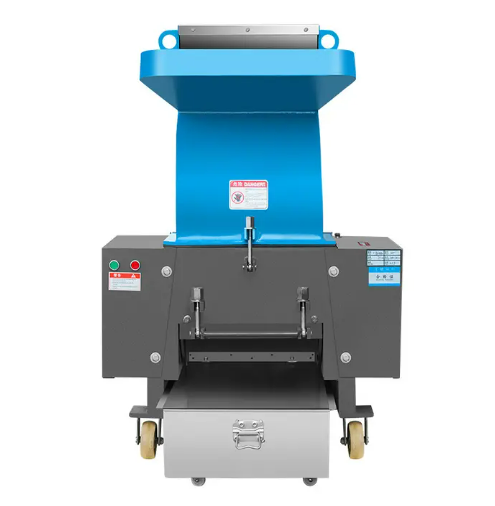
A pristine cutting box is useless without adequate power. Generating high torque at low speeds is your primary mechanical challenge. Powering your Small shredder requires careful drive system selection.
Manual crushing demands an objective reality check. It requires immense physical effort. Processing thick HDPE bottle caps by hand will test your endurance. You cannot rely on short handles.
Leverage requirements are strict. You need a minimum 80cm lever arm to generate enough force. Material selection for the crank is equally critical. Avoid thin steel tubing completely. A 16mm steel pipe will bend instantly under 500Nm of resistance. You must mandate 25mm or thicker heavy-duty square stock for the handle arm.
Using a handheld power drill seems logical. However, hand drills are high-speed, low-torque devices. Direct-driving a cutting box using a drill will burn out the motor in minutes. You must gear the drill down aggressively.
Implement a dual-stage reduction strategy. This strategy multiplies torque safely while dropping RPMs.
Stage 1: Use a sprocket and chain linkage. This provides the initial speed drop and handles sudden shock loads.
Stage 2: Connect a worm gear reducer. Worm gears are excellent at preventing backward slip. They deliver massive torque multiplication to the main hex shaft.
Industrial setups offer the best long-term reliability. They allow you to process thick, solid plastic chunks effortlessly.
You need a minimum 1.5kW (2HP) single-phase or three-phase motor. Pair this motor alongside industrial worm gear reducers. Shortlist standard industrial brands to ensure reliable performance. Dodge Tigear, Boston Gear, and SEW-eurodrive manufacture proven, heavy-duty reducers.
Safety features are mandatory for motorized builds. You must include a Variable Frequency Drive (VFD) or a mechanical slip clutch. A VFD allows for automatic reversing if the rotor jams. Without a reverse function or slip clutch, a severe jam will shear your drive shaft or destroy the gearbox internals.
You must define your output goals before assembling the machine. The size of the shredded plastic dictates what you can manufacture next. Different processes require distinct flake dimensions.
Frame your output sizing based on the final manufacturing application. Industrial standards categorize flake sizes into three distinct tiers. Review the chart below to match your goals.
Tier Level | Flake Size | Ideal Manufacturing Application |
|---|---|---|
Large | 0 - 30mm | Suitable only for sheet pressing and large-scale melting. |
Medium | 0 - 10mm | Acceptable for basic desktop injection molding. |
Small | 0 - 7mm | The gold standard. Required for sensitive pellet extruders. |
Achieving the small tier is critical for 3D printing hobbyists. High-fidelity 3D printing filament demands a completely uniform melt zone. Large chunks cause extrusion pulses, ruining filament tolerances.
Sieve selection causes significant frustration for many builders. We must highlight a common kit-buying pitfall. Many pre-built kits ship automatically including an 8mm sieve. This default size leaves chunks far too large for desktop filament extruders.
You have two practical solutions. First, specify a 5mm sieve explicitly during your initial procurement. If you already own an 8mm setup, utilize variable-infill 3D-printed stackable sieves. You can print mesh screens adjusting the infill density to create custom filter gaps. This allows you to filter out oversized flakes easily. You can then throw those larger chunks back into the hopper for secondary grinding.
Putting the components together introduces a new set of challenges. Poor assembly techniques lead to premature wear and contaminated plastic batches. Pay attention to initial friction points and ongoing cleaning protocols.
Raw laser-cut parts rarely arrive perfectly smooth. The laser cutting process leaves microscopic burrs and slag along the edges. These parts require extensive deburring and manual filing. You must file the inner hexagonal holes meticulously to ensure smooth axle rotation. Skipping this step causes the blades to bind against the shaft.
Furthermore, main axles face extreme torsional stress. They must be thick enough to resist bending under heavy load. Standard designs specify 35mm hex shafts. Do not downsize your axle to save money. A bent axle ruins the precise blade clearances, rendering the entire cutting box useless.
Once operational, routine maintenance keeps your output pristine. Cross-contamination is the primary cause of failed recycled parts. Mixing PETG into a batch of PLA ruins the structural integrity of your next print. Therefore, the machine must be designed for rapid disassembly. You need to clean the blades thoroughly between color or polymer changes.
Feed safety requires strict attention. The hopper design must prevent "flyback." Flyback occurs when the rotating blades catch a rigid piece of plastic and eject shards violently upward. Build a tall, baffled hopper. It must physically block hands from ever reaching the 16-blade cutting box while preventing plastic shrapnel from escaping.
Building a reliable home setup bridges the gap between a $50 toy and a $7,000 industrial unit. By respecting mechanical engineering principles, you can transform household waste into high-value manufacturing material.
For most micro-manufacturers and 3D printing hobbyists, a hybrid approach works best. We recommend purchasing a pre-cut SS304 kit. Pair it alongside a salvaged 1.5kW motor and a commercial industrial gearbox. This strategy offers the best balance of capital efficiency and guaranteed torque.
Take action by finalizing your target flake size and power availability today. Decide whether you need 110V, 220V, or a manual setup before ordering any metal components. Careful planning upfront guarantees a smooth, functional build.
A: No. Blenders rely on high-speed impacts rather than high-torque shearing. They will either shatter the plastic into unusable dust, melt the material onto the blades, or burn out the motor instantly.
A: A completely manual, scrap-built machine can cost under $150. However, a reliable, motorized setup using a pre-cut metal kit and a proper gearbox typically ranges from $400 to $800, depending on motor sourcing.
A: Jamming usually results from insufficient motor torque (under 300 Nm), feeding material too quickly, or failing to use a gear reduction system to drop the speed to the ~70 RPM sweet spot.


