Views: 0 Author: Site Editor Publish Time: 2026-04-30 Origin: Site


Acknowledge that while the basic premise of a crusher machine is simple—reducing large rocks into smaller pieces—the operational reality is a complex exercise in margin protection, output optimization, and downtime mitigation. You must engineer your material processing workflow carefully to maintain profitability. Selecting the wrong equipment leads directly to mismatched reduction ratios, excessive wear-part replacement, and off-spec end products. For example, you might generate flat aggregates instead of the highway-compliant cubical shapes required for infrastructure projects. Bad choices drain budgets rapidly and stall project timelines.
This guide transitions from basic definitions to a practical decision-stage evaluation framework. We detail what different crushers are used for and how they integrate into your broader production lines. You will discover exactly how to evaluate your material. By the end of this article, you will understand how to spec the right machine for your specific site requirements.
Application versatility: Crusher machines dictate the profitability of mining, aggregate production, and concrete recycling by controlling the final product's size and shape.
Stage-dependent selection: Effective material reduction operates in a funnel—Primary (coarse), Secondary (mid-size), and Tertiary (fine)—requiring different machine types at each stage.
Operational integration: Choosing a crusher isn't a standalone decision; it must align with screening equipment, mobility requirements, and the material's compressive strength.
Cost control: The primary ROI driver is matching the machine’s crushing mechanism (compression vs. impact) to material abrasiveness to minimize wear-part expenses.
You cannot evaluate mechanical function without connecting it to your ultimate operational outcomes. Industrial material reduction directly influences the commercial value of your final product. Different sectors leverage these heavy-duty machines to solve unique business problems.
Modern infrastructure heavily relies on highly specific grades of gravel, crushed stone, and asphalt or concrete aggregates. Highway projects enforce strict regulations regarding material specifications. They demand perfectly cubical-shaped output to ensure proper interlocking strength in road beds. If your equipment produces elongated or flaky stones, inspectors will reject the batch. Quality aggregate production requires precision machinery tailored to deliver exact shapes and uniform sizes.
Mining operations face a different challenge. They must liberate valuable minerals hidden inside gangue, which is the surrounding waste rock. Heavy machinery crushes these massive chunks into manageable fragments. This process serves as the crucial precursor to the fine milling and grinding stages. You cannot feed massive boulders directly into a ball mill. You must strategically step down the material size to ensure downstream chemical extraction or flotation processes work efficiently.
Contractors increasingly use processing units directly on demolition job sites to handle recycled concrete and asphalt. You can convert massive piles of concrete rubble into reusable base materials immediately. This practice eliminates exorbitant landfill tipping fees. It also drastically cuts down the logistics of hauling waste away and trucking fresh gravel in. Processing waste on-site transforms a demolition liability into a usable, profitable resource.
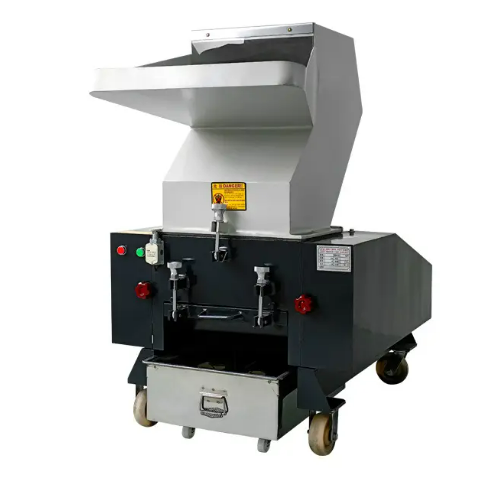
You must differentiate heavy-duty rock processing from other size-reduction applications. They serve entirely different purposes. For example, a Small shredder is ideal for volume reduction of softer waste. You use shredders for municipal plastics, wood pallets, or light industrial materials. Conversely, a true crusher is strictly engineered to handle high-compressive-strength rock and heavy metal ores. You cannot cross-apply these technologies without risking catastrophic equipment failure.
Effective material reduction operates like a massive funnel. You cannot reduce a one-meter boulder down to gravel in a single pass. Attempting extreme reduction ratios in one machine causes severe bottlenecks and rapid component destruction. Standard plant workflows divide the job into three distinct stages.
Primary Crushing (The Heavy Lifters): You use primary units to accept the largest, rawest materials straight from the blast face or excavator bucket. They focus entirely on capacity rather than product shape.
Input/Output: Typically handles 800–1500mm boulders and reduces them down to 150–300mm chunks.
Primary tool: Jaw crushers or Gyratory models.
Secondary Crushing (The Refiners): You use secondary machines to take the primary output and reduce it further. This prepares the rock for intermediate screening or subsequent fine crushing.
Input/Output: Reduces 150–300mm rock down to manageable 50–80mm pieces.
Primary tool: Cone crushers or standard Impact units.
Tertiary/Quaternary Crushing (The Finishers): You use these final-stage units to generate precise product sizes and perfect shapes. This stage creates high-value items like manufactured sand or specific road-base gravel.
Input/Output: Reduces material down to ultra-fine 5–12mm particles.
Primary tool: Vertical Shaft Impactors (VSI) or short-head Cone crushers.
To visualize this workflow, review the standard progression chart below.
Reduction Stage | Typical Input Size | Typical Output Size | Optimal Equipment Type | Primary Objective |
|---|---|---|---|---|
Primary | 800mm – 1500mm | 150mm – 300mm | Jaw, Gyratory | Handle massive volume; prepare for transport. |
Secondary | 150mm – 300mm | 50mm – 80mm | Cone, HSI | Shape refinement; prepare for final sizing. |
Tertiary | 50mm – 80mm | 5mm – 12mm | VSI, Short-head Cone | Perfect cubical shape; exact size compliance. |
Choosing the right technology requires matching mechanical principles to your specific material. Equipment generally falls into two distinct categories based on how they break rock: compression and impact. Using the wrong mechanism on abrasive rock destroys internal wear parts quickly.
Jaw units operate through brute force compression. They use a fixed stationary plate and a moving swing plate to crush rock via extreme pressure. The V-shaped chamber forces material downward as the plates squeeze together.
Best used for: Highly abrasive, extremely hard rocks like granite, basalt, or quartzite at the primary stage.
Implementation reality: They offer exceptionally low wear-part costs because the rock is squeezed rather than struck. However, they frequently produce elongated or slab-like output. You almost always need secondary processing to correct the material shape.
These machines also use compression, but in a continuous circular motion. An eccentric rotation of a main central shaft squeezes the rock against an outer stationary concave wall. The material works its way down the chamber until it is small enough to fall through the bottom gap.
Best used for: Medium-to-hard, highly abrasive materials in secondary and tertiary stages.
Implementation reality: They are highly sensitive to feeding conditions. You must "choke-feed" a cone unit. This means keeping the crushing chamber full of rock at all times. Choke-feeding forces rock-on-rock compression, maintaining ideal particle shape and preventing abnormal, uneven liner wear.
Impactors break rock differently. They rely entirely on kinetic energy rather than pressure. Horizontal Shaft Impactors (HSI) use heavy steel blow bars attached to a spinning rotor to violently strike the falling material. Vertical Shaft Impactors (VSI) use high-speed rotors to fling the rock outward against heavy metal anvils or against a wall of other rocks (rock-on-rock crushing).
Best used for: Softer to medium-hard rock like limestone. They are also the industry standard for producing perfectly cubical aggregates.
Implementation reality: They provide unmatched product shape and high reduction ratios. However, they are highly vulnerable to accelerated wear if you use them on highly abrasive materials. High silica content will destroy blow bars in a matter of days, driving operational expenses through the roof.
Beyond selecting the crushing mechanism, you must determine how the equipment physically integrates into your site. Scalability, logistics, and site-specific lifespans dictate whether you should build a permanent installation or invest in tracked machinery.
Stationary plants represent a massive infrastructure commitment. You bolt the heavy machinery into custom-poured concrete foundations. Conveyor belts link the various processing stages across a large footprint.
Best for: Long-term mining operations or permanent commercial quarries with expected lifespans of 10 to 30 years.
Advantages: They provide significantly higher overall throughput. You can easily integrate complex, multi-deck screening configurations, heavy scalpers, and wash plants. Over a long horizon, fixed plants deliver a much lower cost-per-ton processed.
Implementation risks: The initial permitting, site engineering, and construction phases take considerable time. Once built, you cannot easily move the plant.
Mobile units place the crushing chamber, power unit, and discharge conveyors onto heavy-duty tracks. You can drive them via remote control precisely where you need them.
Best for: Road construction projects, contract crushing businesses, and C&D recycling efforts.
Advantages: They drastically reduce material hauling costs. You can drive the equipment directly to the active rock face or waste pile. As the extraction face moves, the machine moves with it. This eliminates the need for a fleet of dump trucks shuttling raw material to a central processing hub.
Trade-offs: They demand a higher initial CAPEX relative to their physical size and output capacity. They also carry stricter maintenance demands. You must carefully monitor their compact hydraulic systems and manage the continuous vibration affecting the chassis.
Procuring heavy processing equipment requires rigorous pre-purchase evaluation. Generic throughput numbers mean very little without contextual data. You need actionable criteria to shortlist machines without over-specifying or under-equipping your site.
You must test your raw material before selecting a machine. Assess the Bond Work Index, which measures the specific hardness and the energy required to break the rock. Analyze the abrasiveness by testing the silica content. High silica instantly rules out certain impact crushers. Finally, evaluate the moisture level. Wet, sticky clay will clog standard compression chambers, requiring specialized heated decks or specific liner profiles to prevent packing.
Calculate the exact ratio between your maximum feed size and your desired final output. A single machine cannot efficiently reduce a 1000mm rock down to 10mm. Attempting to force a massive reduction ratio causes extreme mechanical strain, rapid wear, and severe bottlenecking. If you need a 10:1 reduction, you must split the workload across primary and secondary stages.
Verify the presence of advanced hydraulic relief systems. In real-world environments, uncrushable objects frequently enter the feed hopper. An excavator bucket tooth or a piece of rebar can destroy a crushing chamber instantly. Modern equipment utilizes hydraulic cylinders that automatically open the crushing gap when they detect extreme, unyielding pressure. This lets the tramp iron pass through, preventing catastrophic shaft failure, and then immediately resets to the original setting.
A crusher is only as effective as its surrounding screens. Material processing is a continuous loop. If your screens cannot handle the volume, your crusher will choke. Factor in the sizing of heavy scalpers before the primary chamber. Scalpers pre-screen dirt, fines, and already-to-size rocks before they enter the jaw. Bypassing fine material optimizes throughput and prevents unnecessary wear on your primary plates.
A well-specified machine dictates the overall efficiency and profitability of your entire material processing operation. Getting the specification right requires looking far beyond generic capacity charts. You must deeply analyze your material's specific hardness, your desired final shape, and your site's broader operational workflow.
For your next steps, we recommend conducting a comprehensive laboratory material analysis on your rock source. Take those results and consult directly with an application engineer. They will help you design a custom, multi-stage screening and reduction circuit perfectly tailored to hit your exact yield requirements efficiently.
A: A primary unit accepts massive, raw boulders directly from blasting or excavation, focusing on volume reduction rather than shape. A secondary unit takes that coarse output and refines it further into mid-sized aggregates. Primary machines sit at the start of the workflow, while secondary machines handle the intermediate refinement stage.
A: Most cannot process metal safely. Cone crushers suffer severe damage from tramp iron, relying on hydraulic relief valves to survive accidental exposure. However, specialized impact crushers paired with cross-belt magnetic separators are excellent for concrete recycling, as they break the concrete and liberate the rebar for safe removal.
A: On compression equipment like jaws and cones, you adjust the Closed Side Setting (CSS), which changes the gap at the bottom of the chamber. On impact equipment, you control final size by altering the rotor's RPM speed or by adjusting the gap between the blow bars and the internal apron plates.


