Views: 0 Author: Site Editor Publish Time: 2026-04-28 Origin: Site


Processing raw minerals efficiently dictates your operational profitability. Every ton of rock passed through a poorly matched system wastes energy and shrinks margins. Selecting the wrong size reduction equipment leads to high cost-per-ton and excessive wear part replacements. It also generates non-compliant aggregate shapes that buyers frequently reject. This guide skips the basic definitions. We move straight into advanced evaluation criteria, reduction ratios, and operational trade-offs. You will explore the technical realities of industrial equipment alongside auxiliary shredding machinery. Our goal is straightforward. We want to equip plant managers, quarry operators, and procurement teams with an evidence-based framework. You will learn how to evaluate primary, secondary, and tertiary crushing solutions for your specific site needs.
The selection of a crusher machine is dictated by a strict matrix of material hardness, abrasiveness, desired reduction ratio, and required throughput (t/h).
Primary crushing relies heavily on compression forces (Jaw and Gyratory), while tertiary shaping relies on high-speed impact (VSI) to meet highway-grade cubical aggregate standards.
Capital Expenditure (CAPEX) vs. Operating Expenditure (OPEX) realities: Machines with lower upfront costs often carry higher maintenance penalties when misapplied to abrasive materials.
Adopting a "more crushing, less grinding" philosophy upstream significantly reduces energy consumption in downstream milling circuits.
Understanding equipment capabilities starts by aligning mechanical actions to the reduction lifecycle. Materials require different breakdown methods at various sizes. We must match the underlying physics to the correct production stage.
Machines break rock using four distinct physical actions. Each force suits specific material types and production goals.
Compression (Squeezing): The machine forces rock between two rigid surfaces. It is ideal for highly abrasive, hard materials.
Impact (Striking): High-speed rotors hurl materials against anvils. This force creates uniform, cubical shapes.
Attrition (Rubbing): Particles grind against each other or the machine. This action smooths edges and produces finer particles.
Shear (Cleaving): Spiked rollers or teeth tear the material apart. This method handles sticky or wet materials well.
This stage handles massive 20- to 50-inch feed sizes arriving directly from blasting. The primary goal focuses on maximum volume reduction. These machines process unsorted, highly abrasive rock. They prepare the feed for more precise downstream equipment.
Here, the system reduces 13-inch materials down to 4 inches. Secondary equipment often operates in a closed circuit. Vibrating screens send oversized rocks back through the chamber. This ensures consistent sizing before the final shaping phase.
The final phase reduces material to 1 inch or less. Success criteria change entirely here. Operators stop worrying about volume reduction. They focus on particle shape uniformity instead. The goal is creating cubical shapes rather than flat, elongated pieces.
Stage | Typical Feed Size | Primary Objective | Dominant Force |
|---|---|---|---|
Primary | 20" - 50" | Heavy breakdown, volume handling | Compression |
Secondary | 4" - 13" | Intermediate sizing, size consistency | Compression / Impact |
Tertiary | < 4" | Fine shaping, cubical aggregate creation | Impact / Attrition |
Every equipment class presents distinct pros and cons. We present balanced operational data here, free from vendor bias. Understanding these trade-offs ensures you select the correct crusher machine for your specific application.
Mechanism: A jaw crusher squeezes rock between two V-shaped plates. One plate remains stationary. The other swings to crush the feed. Manufacturers build them in single or double toggle designs.
Performance Data: They typically offer a reduction ratio of 3:1 to 6:1.
Best For: They provide high ROI for operations producing under 1,200 to 1,600 tons per hour (t/h). They easily handle irregular, highly abrasive, and extremely hard rock.
Trade-offs: The output particle shape often becomes slabby or elongated. High vibration levels also require solid concrete foundations.
Best Practice: Keep the crushing cavity optimally fed. Uneven feeding creates excessive localized wear on the jaw plates.
Mechanism: A mantle rotates eccentrically within a stationary concave bowl. This geometry allows continuous squeezing action. It crushes material constantly throughout its full rotation.
Performance Data: These units achieve a reduction ratio of 4:1 to 7:1.
Best For: They serve massive-scale mining operations exceeding 1,200 t/h. A major advantage is their ability to accept feed directly from dump trucks. Operators can often skip prior scalping or screening steps.
Trade-offs: They demand immense CAPEX. They also require massive infrastructure and complex foundational engineering compared to jaw setups.
Mechanism: Cone crushers operate similarly to gyratory models. However, they feature a less steep crushing chamber and a shorter spindle.
Operational Reality: This equipment requires strict "choke feeding". You must keep the cavity continuously full. This maximizes inter-particle crushing, optimizes particle shape, and ensures even wear on manganese liners.
Best For: They excel at processing hard, abrasive materials in secondary or tertiary stages. They deliver high production volumes while consuming less energy per ton.
Trade-offs: A complex mechanical structure translates to higher maintenance labor costs. They are also highly sensitive to tramp metal entering the chamber.
Common Mistake: Trickle-feeding a cone crusher causes poor aggregate shape and premature lower-liner wear.
Horizontal Shaft Impactors (HSI): HSIs boast extremely high reduction ratios, ranging from 10:1 to 25:1. They can serve as primary units for softer, non-abrasive rock like limestone. This significantly reduces the need for secondary machines downstream.
Vertical Shaft Impactors (VSI): VSIs use high-speed centrifugal action. They utilize "rock-on-rock" or "rock-on-anvil" configurations to smash materials.
Best For: Impactors dominate tertiary shaping. They are absolutely essential for producing strict, highway-spec cubical aggregates required for asphalt and concrete.
Trade-offs: You will face rapid, expensive wear-part degradation if you feed them highly abrasive materials like high-silica granite.
Roll Crushers & High-Pressure Roller Mills: These units minimize dust creation. They significantly reduce downstream grinding costs in mineral processing operations. They perfectly embody the "more crushing, less grinding" philosophy.
Mineral Sizers: Sizers are low-speed, high-torque shearing machines. They easily process wet, sticky materials. Such materials would instantly clog standard compression equipment.
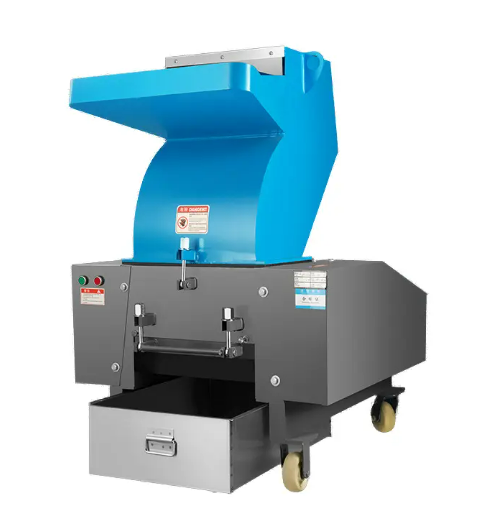
Small Shredder & Crusher Buckets: These tools target localized construction and demolition (C&D) recycling. Excavator attachments or a standalone Small shredder provide high mobility. They offer a lower footprint for processing asphalt slabs, glass, or plastics directly on-site.
Synthesizing technical data into a shortlisting checklist clarifies the procurement process. You must weigh several operational constraints before purchasing equipment.
Silica content serves as the ultimate deciding factor. High silica levels require compression forces. You should lean heavily toward Jaw or Cone equipment. Low silica or soft rock allows for impact forces. An HSI becomes the most efficient choice here.
Industry experts closely watch the 1,600 t/h watershed mark. Below this threshold, Jaw setups offer vastly superior ROI. They require less initial capital. Above the 1,600 t/h mark, Gyratory units easily justify their hefty infrastructure costs through continuous, massive volume handling.
You must choose between fixed plant installations and track-mounted mobile units. Mobile units drastically reduce haulage costs. However, they require careful power and terrain evaluation. Good mobile units can handle up to 1:10 inclines. Ensure your site terrain matches their specifications.
Work backward from your final contract requirements. If the buyer requires fine, cubical aggregate, your choices narrow. A VSI or a heavily controlled closed-circuit Cone setup becomes non-negotiable. You must include these regardless of your upstream primary equipment.
Selection Criteria | Observation | Recommended Action |
|---|---|---|
High Silica Content | Highly abrasive material | Choose Jaw or Cone to save on wear parts. |
Strict Shape Specs | Need cubical aggregate | Deploy VSI in the tertiary stage. |
Low Throughput (<1200 t/h) | Limited daily volume | Select Jaw for better capital efficiency. |
High Mobility Needs | Multiple site locations | Opt for track-mounted units or attachments. |
Purchasing the equipment represents only the first step. Post-purchase realities often determine long-term profitability. Understanding these risks ensures you operate at peak efficiency.
Operators frequently underestimate the replacement rate of manganese liners, blow bars, and strike plates. You must accurately forecast these consumable costs. Operating expenses on impactors processing hard rock can rapidly spiral. These ongoing costs easily consume any initial CAPEX savings gained at purchase.
Poorly calibrated machines generate excess fines. This dust represents wasted mechanical energy. It also creates an unsellable byproduct that requires costly disposal. Proper gap settings and feed rates prevent severe over-crushing.
A single machine rarely constitutes a complete solution. You must build a cohesive processing loop. You need to factor in auxiliary equipment. Conveyors transport the material. Magnetic separators remove tramp iron to prevent mechanical failure. Multi-deck vibrating screens dictate the final product sizing. Ensure your plant design accounts for all integrated components.
No single machine fits all applications. You must mix and match primary, secondary, and tertiary equipment based on shifting material realities.
Work backward from the goal. The best procurement decisions start from the desired end-product size and shape.
Understand the material. High silica means you use compression. Soft rock means you can use impactors for higher reduction ratios.
Focus on system integration. Screens, conveyors, and separators define your ultimate throughput just as much as the primary breaker.
Take action today: We strongly recommend conducting a comprehensive material crushing test. Consult an applications engineer for a precise flow-sheet simulation before authorizing any major capital purchase.
A: A gyratory crusher features a steep cavity. It serves primarily in the first stage for massive throughput operations exceeding 1,200 t/h. A cone crusher has a shallower cavity and a shorter spindle. It operates in secondary or tertiary stages to size harder materials more precisely.
A: Yes. Compression machines like jaw crushers often produce slabby, flat, or elongated output. Impactor machines utilize high-speed strikes to fracture rocks along natural cleavage lines. This results in uniform, cubical aggregates preferred for asphalt and concrete production.
A: Jaw crushers typically offer a 3:1 to 6:1 reduction ratio. Gyratory models range from 4:1 to 7:1. Horizontal Shaft Impactors (HSI) deliver massive ratios, sometimes stretching from 10:1 up to 25:1, depending on rock softness.
A: No. Shredders employ shearing forces meant for softer recycling materials, plastics, or light construction waste. Processing hard rock requires heavy-duty compression or high-speed impact forces. Shredder blades will fail instantly if fed solid granite or abrasive limestone.


