Views: 0 Author: Site Editor Publish Time: 2026-06-07 Origin: Site


Attempting to process memory foam or innerspring mattresses using standard wood chippers or industrial compactors inevitably leads to disaster. You will face jammed rotors, severe overheating, and significant fire risks. Reality demands a highly specialized approach for these uniquely resilient items. Mattresses consist of incredibly tough materials. Steel wire, dense polyurethane, and layered textiles simply refuse to stay compacted. Municipalities and private waste operators face massive logistical hurdles. You end up paying exorbitant fees just to "haul air" across long distances. The volume problem quickly cripples operational efficiency.
There is a proven way to flip this equation. Investing in a purpose-built mattress shredder transforms a massive landfill liability into a profitable resource stream. We call this the Waste-to-Value model. You will learn exactly why traditional equipment fails and how modern engineering solves this crisis. We will explore specific machine configurations, downstream recycling economics, and critical safety features. This guide gives you the blueprint to build a highly efficient, zero-landfill disposal operation.
Standard compactors fail on mattresses due to spring memory and wire tangling; specialized low-speed, high-torque shredding is a strict operational requirement.
Industrial shredding reduces mattress volume by up to 80%, drastically cutting transportation and landfill fees.
A fully integrated spring mattress recycling line separates materials into highly tradable commodities: scrap steel, foam for carpet underlay, and textiles for Solid Recovered Fuel (SRF).
Evaluating a mattress disposal machine requires looking beyond horsepower to auto-reversing anti-jam features, blade metallurgy, and fire suppression capabilities.
Waste operators face a daily battle against bulky municipal items. Bedding products rank among the most difficult materials to manage at scale. The physical properties of these items actively resist standard waste handling methods.
Mattresses take up disproportionate space inside transport bins. They weigh relatively little compared to their massive footprint. Transport costs quickly outpace your processing capabilities. You essentially pay diesel and labor rates to move empty space. Volume reduction becomes an absolute necessity before transport.
Traditional balers and compactors prove entirely ineffective here. High-carbon steel springs possess incredible memory. They bounce back aggressively the moment hydraulic pressure releases. Multi-layered fabrics and synthetic foams also retain their original shape. The material fights back against standard compression forces.
High-tensile steel wire coils pose severe mechanical risks. They frequently wrap around non-specialized, high-speed rotors. This tangling causes extensive mechanical downtime. Operators must stop the line entirely. They face dangerous manual clearing procedures inside the cutting chamber. Using incorrect equipment puts your maintenance crew in direct physical danger.
About 75% of mattress components hold viable recycling value. Yet, actual landfill diversion remains historically low across the industry. State-level legislation now enforces strict disposal mandates. Landfill bans and tipping fees are rising rapidly. Facilities must adopt specialized bedding shredder systems to maintain regulatory compliance.
Trying to process wet or heavily soiled units through standard balers.
Ignoring the fire risks caused by sparks hitting dry foam dust.
Relying on manual dismantling, which scales poorly and increases labor injury rates.
Choosing the correct rotor architecture dictates your entire operational success. Processing heavy 70-100 lb mattresses requires a specific mechanical approach. You need sustained power, not rapid slicing.
High-speed cutting blades fail instantly against steel coils. They dull, chip, or shatter upon impact. You need massive, sustained torque. Low-speed operation shears through mixed materials methodically. It prevents overheating and protects the blade edges. This principle remains non-negotiable for bedding applications.
These units utilize one robust rotor pushing against a stationary counter-comb. A hydraulic ram often feeds the material forward.
Mechanism: The rotor shears material against fixed stator blades.
Advantages: They produce exceptional, consistent output sizes. You easily hit a homogenous 50-150mm fraction. They feature adjustable screens to control exact particle sizing.
Best Fit: Ideal when you need precise sizing for secondary processing or direct fuel conversion.
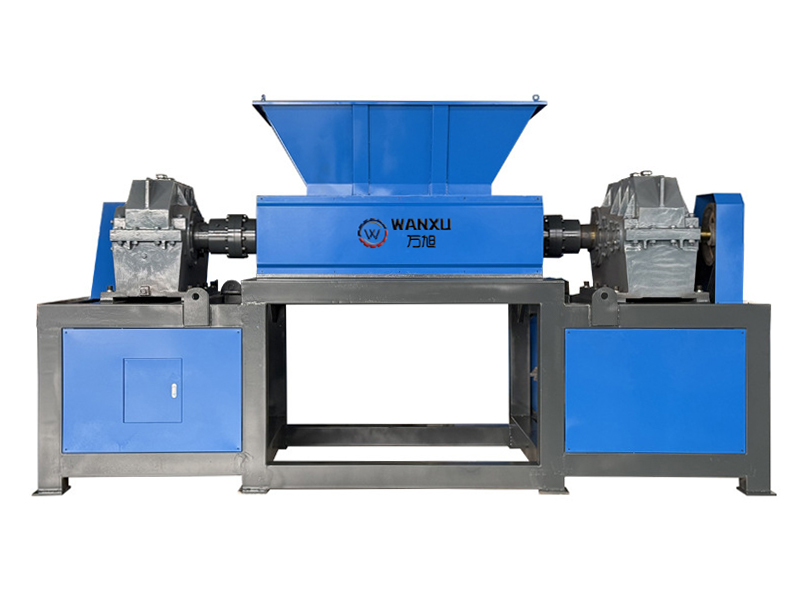
These robust machines feature two counter-rotating shafts equipped with interlocking blades. They bite into the bulky material directly.
Mechanism: The shafts pull mattresses downward, tearing them apart in the center.
Advantages: They offer significantly higher throughput. A strong twin-shaft can destroy a mattress in under 30 seconds. They easily handle up to 200 units per hour. They provide superior resistance against large steel wire blockages.
Best Fit: Perfect for primary volume reduction and high-capacity municipal flows.
Industrial-grade systems typically demand serious electrical infrastructure. You generally need 60kW to 120kW+ motors. Throughput ranges widely based on material mix. Expect 1 to 5 tons per hour. Wet materials or heavy memory foam will slow these rates slightly.
Feature | Single-Shaft Shredder | Twin-Shaft Shredder |
|---|---|---|
Cutting Mechanism | Rotor against fixed stator blades | Counter-rotating interlocking blades |
Output Consistency | Very High (Screened output) | Moderate (Strips and chunks) |
Throughput Speed | Moderate (1-3 tons/hr) | Very High (Up to 5 tons/hr) |
Wire Tangle Resistance | Good | Excellent |
A single standalone machine cannot solve the whole puzzle. You must build an integrated workflow. Following guidelines from authorities like the Mattress Recycling Council (MRC) ensures compliance. The MRC stresses the need for holistic separation processes.
A comprehensive spring mattress recycling operation involves multiple distinct stages. Each stage isolates a specific material type for optimal recovery.
Stage 1: Primary Volume Reduction. The initial shredder breaks the structural integrity completely. It exposes the individual wood, steel, foam, and fabric components. We recommend deploying a heavy-duty mattress disposal machine for this crucial first step.
Stage 2: Ferrous Metal Extraction. Integrated overband magnetic separators hover above the discharge conveyor. They pull shredded steel springs out of the fluff. This clean steel diverts into a separate bin for direct recycling.
Stage 3: Non-Ferrous & Fines Separation. Eddy current separators act next. They eject non-ferrous metals like aluminum or brass from zippers. Dust collection systems purify the remaining fluff. They pull out hazardous particulate matter, leaving clean foam and textiles.
Stage 4: Baling. Vertical or horizontal balers compress the sorted, homogenous outputs. Baling ensures highly efficient downstream transport. You maximize truck payloads and secure better commodity pricing.
Always position the overband magnet at a transition point between two conveyors. Material loosens as it falls, allowing the magnet to capture deeply embedded steel wire easily. Keep the belt speed moderate to ensure maximum magnetic capture rates.
Proper processing turns disposal headaches into diversified revenue. The market demands clean, sorted secondary materials. Your profitability depends entirely on the purity of your separated streams.
Cleanly separated steel springs form a high-value commodity. Scrap metal buyers readily purchase this clean fraction. Concrete reinforcement manufacturers also utilize this steel. Removing the metal efficiently pays for the electrical running costs of the plant.
Shredded polyurethane holds tremendous secondary value. Using a dedicated foam shredder setup guarantees clean chunks. Memory foam bits see massive demand in secondary manufacturing markets. They serve as premium carpet padding. They provide acoustic dampening in vehicles. Furniture makers also use them as rebounded stuffing.
Not all fabrics hold direct recycling value. However, non-recyclable synthetic fibers and wood frame shards serve an energy purpose. They become ideal feedstocks for Refuse-Derived Fuel (RDF). Waste-to-energy (WtE) plants burn Solid Recovered Fuel (SRF) to generate electricity. This ensures nothing hits the landfill.
A properly calibrated system allows facilities to achieve an incredible 100% landfill diversion rate. You eliminate tipping fees completely. You sell steel and foam on the commodity market. You send textiles to energy recovery. This strategy turns fixed disposal overhead into a diversified revenue portfolio.
Material Extracted | Average Percentage | Primary Downstream Market |
|---|---|---|
Steel Springs | 15% - 20% | Scrap metal buyers, concrete reinforcement |
Polyurethane Foam | 30% - 40% | Carpet underlay, acoustic panels, furniture stuffing |
Textiles & Fibers | 25% - 35% | Refuse-Derived Fuel (RDF), industrial filters |
Wood & Base Frames | 10% - 15% | Biomass fuel, landscape mulch |
Buying industrial equipment strictly based on motor horsepower often leads to catastrophic failure. You must evaluate the intelligent subsystems. Protection mechanisms determine your ultimate uptime.
Wire tangles happen even in the best environments. Look for advanced control panels featuring Programmable Logic Controllers (PLC). These systems monitor shaft torque continuously. They automatically reverse the rotor direction the exact millisecond a wire tangle occurs. It spits the unbreakable object out, repositions it, and tries again. This automation saves hundreds of hours in manual clearing.
Blade durability defines your maintenance schedule. Insist on easily accessible cutting chambers. You need modular, segmented blades. D2 tool steel alloy provides excellent wear resistance against high-carbon springs. Segmented designs mean you can replace or rotate a single damaged tooth. You avoid dismantling the entire massive shaft just to fix one edge.
We cannot overstate the fire risks in bedding recycling. Shearing dense memory foam generates immense heat through friction. Snapping steel springs throw localized sparks. This combination poses a legitimate, severe fire hazard inside the hopper. High-end systems integrate continuous temperature monitoring sensors. They include automated water or foam suppression systems directly within the cutting hopper.
Verify the PLC includes auto-reversing torque protection.
Confirm cutting blades use high-alloy tool steel (like D2 or equivalent).
Ensure the hopper contains an integrated fire suppression module.
Check that maintenance hatches allow ground-level access to the rotors.
Transitioning from manual dismantling to an automated mattress shredding system represents an operational necessity. Modern waste facilities handling municipal bulk items simply cannot rely on compactors anymore. specialized low-speed, high-torque equipment solves the crushing volume problem. It extracts valuable commodities and virtually eliminates landfill reliance.
Facilities should never purchase equipment based on spec sheets alone. You must demand proof of performance. Request a pilot test using your facility's exact material bales. Test heavily soiled units, soaked foam, and distinct foam-to-spring ratios. You must verify real-world throughput, energy consumption, and the final particle size before making this crucial infrastructure investment.
A: Only if equipped with low-speed, high-torque rotors and proper cooling. Memory foam is highly dense and resilient; improper equipment will cause the foam to wrap around the shaft and generate extreme friction, leading to equipment failure or fire.
A: For optimal downstream magnetic separation and RDF processing, facilities generally target an output size between 40mm and 150mm. This homogenous sizing prevents downstream blockages and ensures maximum steel recovery.
A: Depending on the motor size and shaft configuration, commercial-grade systems range from 50 units per hour to high-capacity machines capable of processing up to 200 mattresses per hour (roughly one every 20-30 seconds).
A: Yes and no. While the shredder physically breaks the connection between the spring and the foam, an automated magnetic separator (usually suspended over the discharge conveyor) is required to actually pull the metal out of the mixed waste stream.


