Views: 0 Author: Site Editor Publish Time: 2026-06-16 Origin: Site


Plant managers constantly face a critical bottleneck in waste processing facilities. They must achieve a strictly uniform output size for downstream recycling while completely avoiding frequent machine jams and motor overloads. Simple volume reduction merely breaks materials down into random, unpredictable chunks. Precision sizing, however, demands careful engineering to deliver exact millimeter-perfect specifications. Many operators struggle because they mismatch their equipment to their specific material requirements. To overcome these daily processing hurdles, facilities need specialized equipment built for absolute consistency. This article provides a strictly technical and operational breakdown of core shredding mechanics. We explore crucial design variations and outline the exact material matching strategies needed to optimize your production line. You will learn the exact physical forces at play during shredding operations. We also outline key component specifications you should look for when planning a facility upgrade. Our objective is to help you make sound, technically informed procurement decisions.
The **single shaft shredder working principle** relies on a high-torque, low-speed shear combined with a sizing screen to guarantee uniform particle size (typically 10-80mm).
Unlike dual-shaft alternatives, a **single rotor machine** utilizes a hydraulic ram (pusher) to maintain constant material contact, optimizing throughput for lighter or bulky materials.
Long-term ROI depends less on motor horsepower and more on cutting geometry (V-rotor design), screen open area ratio (OAR), and automated overload protection (PLC auto-reverse).
Material trials are mandatory; buyers should leverage manufacturer test centers before finalizing specifications to validate throughput claims.
To fully grasp the single shaft shredder working principle, we must thoroughly break down its four-stage operational cycle. This specific workflow establishes the engineering authority behind the equipment.
Feeding and Pushing: Bulky materials drop into the main hopper. A specialized hydraulic pusher shredder mechanism then steps into action. It forces low-bulk-density materials directly against the spinning rotor. This eliminates material "bouncing" and ensures constant, aggressive cutting contact.
Grabbing and Shearing: The machine relies entirely on the precise physics of material failure. It applies massive tensile and shear stress simultaneously. Rotating knives grab the incoming material. They forcefully shear it against stationary bed knives securely mounted on the machine's stator.
Screen Dynamics: System throughput directly correlates to the screen's Open Area Ratio (OAR). The bottom sizing screen acts as a strict physical gatekeeper. Materials pass through only when they reach the desired target size. Oversized pieces ride back over the top of the rotor for repeated cutting passes.
Discharge: Uniform particles finally exit the machine. This collection phase remains critically important. Downstream equipment like extruders and granulators demand strict size consistency to function properly.
Understanding torque versus RPM defines true machine capability. Low-speed, high-torque configurations dominate this industrial sector for good reason. A motor running at a deliberate 80 RPM utilizes heavily reduced gearboxes. It delivers immense, unstoppable crushing power. High-speed granulators often stall out completely under heavy material loads. The slower rotational speed prevents these sudden stalling issues entirely. It easily shears through notoriously tough materials like thick plastic lumps, woven textiles, and dense wood blocks without faltering. High torque ensures continuous operation where weaker machines fail.
Specific internal components define overall machine performance. A robust single shaft shredder design prevents costly catastrophic breakdowns. It guarantees consistent output quality over thousands of punishing operating hours.
First, we must examine rotor and knife geometry. Leading manufacturers utilize a specialized V-shape staggered knife layout. This precise geometric arrangement ensures only one or two knives engage the material simultaneously. It actively prevents massive drive-train shock. Distributing the cutting force mitigates sudden electrical spikes across your power grid. It ultimately stops the main motor from overloading during extremely heavy material surges.
Next, core component durability plays a fundamental role. You absolutely need heavy-duty shafts for these high-torque applications. Solid forged shafts provide superior structural strength compared to hollow alternatives. Hexagonal profile designs stop individual knife holders from slipping out of alignment. They handle intense rotational forces much better than standard round shafts. You want an oversized bearing housing to support these massive loads effectively.
Automated overload protection systems are completely non-negotiable. Every industrial rotor shredder needs built-in risk-mitigation features. Fluid couplings absorb sudden shock loads highly effectively. They act as a fluid buffer between the electric motor and the mechanical gearbox. Additionally, modern machines utilize PLC-controlled auto-reverse functions. If un-shreddable inclusions instantly jam the rotor, the PLC controller detects the amp spike. It instantly reverses the rotor direction. It clears the physical blockage, rotates forward, and resumes normal operation automatically.
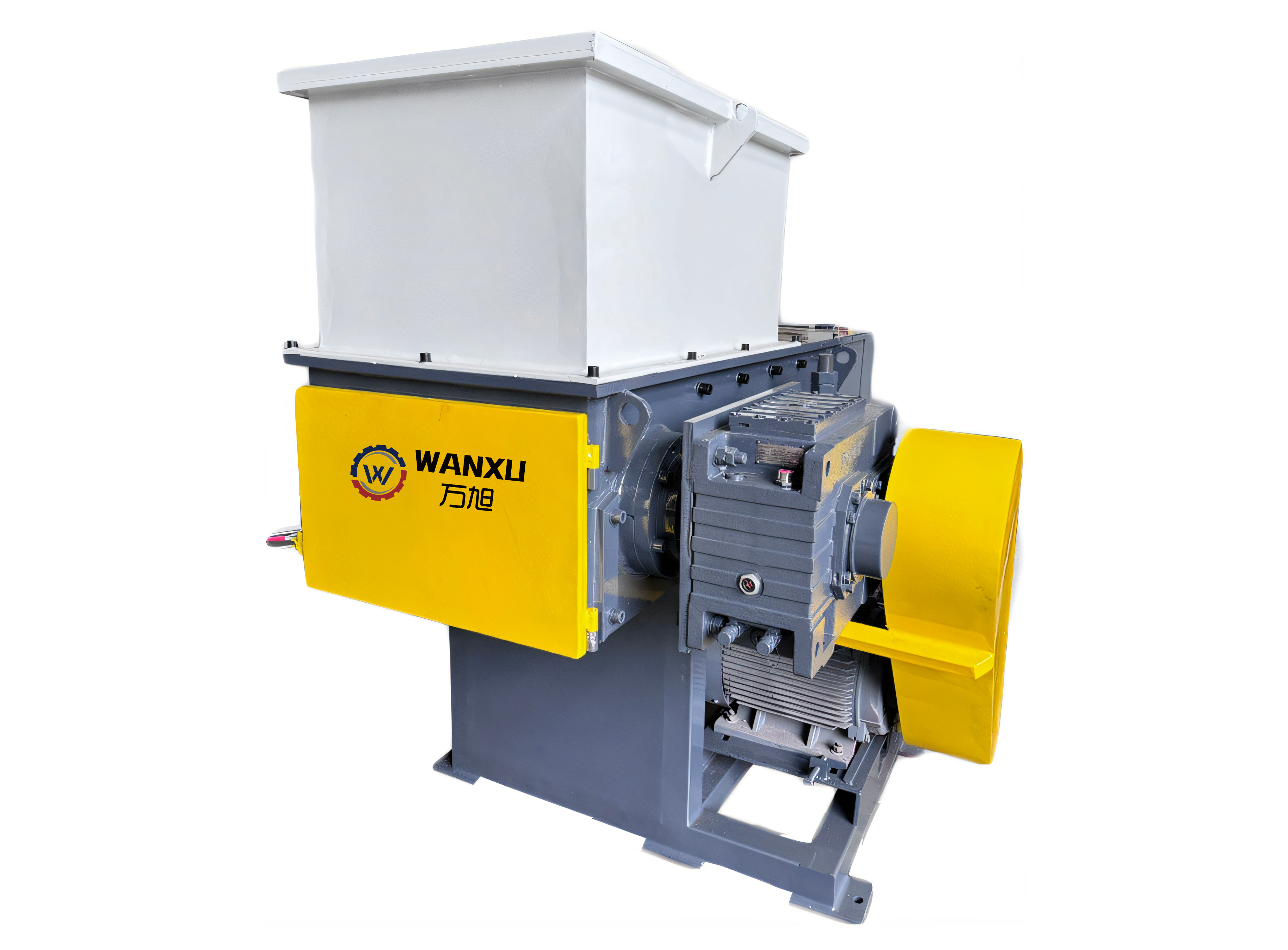
Plant managers often struggle to choose the right equipment configuration. We strongly recommend applying the "Uniformity Heuristic" to simplify this complex choice. You must define your exact output goals before looking at machine specs. Do you need strict dimensional consistency? For instance, modern washing lines require exact 50mm plastic flakes. Here, single-shaft machinery becomes absolutely mandatory. Do you simply need crude volume reduction? Contaminated materials like whole truck tires demand completely different handling. Dual-shaft machines excel at tearing massive, heavily contaminated items into rough, unpredictable chunks.
Material Suitability and Machine Configuration Matrix | ||
Material Type | Single Shaft Recommendation | Dual Shaft Recommendation |
|---|---|---|
Plastics (Films, Pipes, Lumps) | Highly Recommended | Not Suitable |
Wood Scrap & Pallets | Highly Recommended | Limited Capability |
Refuse-Derived Fuel (RDF) | Highly Recommended | Acceptable (Pre-shred only) |
Textiles & Carpets | Highly Recommended | Prone to wrapping |
Heavy Solid Metals | Not Suitable / High Risk | Highly Recommended |
Heavily Contaminated C&D Waste | High Risk (Screen Damage) | Highly Recommended |
This specific matrix highlights a fundamental operational rule. Single-shaft systems rely heavily on sizing screens beneath the rotor. Screens break easily under heavy metal impact. Therefore, highly contaminated waste streams pose severe operational risks to your sizing screens. If your material contains hidden engine blocks or heavy rebar, dual-shaft equipment handles those inclusions safely. Conversely, dual-shaft machines cannot produce the 40mm uniform chips required for downstream biomass boilers.
Different industries leverage uniform shredding for distinct operational benefits. Processing efficiency directly improves your facility's daily throughput and overall product yield.
Hard and soft plastic recycling relies completely on exact material sizing. Upgrading from varied random chunks to uniform flakes dramatically boosts downstream pelletizing operations. Plastic extruders perform significantly better when fed a consistent, predictable particle size. Machine melt rates stabilize across the production shift. Extruder surging drops to zero. Overall recycled pellet quality improves dramatically when the infeed material remains physically consistent.
The Refuse-Derived Fuel (RDF) and biomass sectors also demand absolute precision. Transforming raw waste materials into usable energy requires strict physical calibration. Industrial power boilers operate under extremely tight specifications. They require specific particle sizes to burn efficiently and cleanly. Consistent shredded biomass prevents automated boiler feed blockages entirely. It maximizes thermal energy generation while minimizing ash residue.
Secure destruction and compliance represent another major industrial application area. Companies frequently must destroy proprietary manufacturing defects to protect their brand. They also shred old corporate uniforms and sensitive data hardware. Corporate security mandates demand absolute non-recoverability of these items. Operators easily satisfy these strict legal requirements through precise screen sizes. Installing a 10mm sizing screen guarantees complete physical destruction. You eliminate corporate liability risks completely by guaranteeing items can never be reassembled.
Operating a heavy-duty single rotor machine involves highly scheduled maintenance planning. Realistic downtime planning keeps your industrial facility running smoothly without unexpected stoppages.
First, you must manage cutting consumables actively. Rotor knives endure extreme physical wear over time. Operators typically rotate or re-sharpen these hardened steel knives every 200 to 500 operating hours. You should proactively schedule a two-to-four hour downtime window for complete knife changes. Many modern machines feature quick-change knife holders. These specialized holders accelerate this routine process significantly.
Next, consider your facility integration requirements carefully. These massive machines occupy significant concrete floor space. They also generate substantial operational noise during peak loads. You must implement adequate acoustic shielding to protect floor workers. Furthermore, seamless integration demands automated infeed and outfeed conveyors. Manual loading creates dangerous feeding bottlenecks. We suggest installing magnetic crossbelt separators on your outfeed conveyors. They catch accidental tramp metal before it reaches your sensitive secondary granulators.
Finally, material testing remains absolutely crucial. You should never purchase industrial equipment based strictly on printed spec sheets. We strongly advise buyers to utilize manufacturer test centers. Send them your exact mixed material batches. Run empirical tests under real-world conditions. You must verify actual machine capacity in kilograms per hour. You also need to observe real-time tool wear rates empirically. Testing validates bold performance claims before you finalize any technical specifications.
A successful industrial equipment purchase balances several vital operational factors simultaneously. You must carefully evaluate your required hourly throughput against machine capabilities. You must thoroughly understand how your specific mixed materials behave under extreme shear stress. Preventative maintenance accessibility also directly determines long-term operational success. Overlooking any of these critical variables inevitably leads to frequent machine jams and deep operational frustration.
Document your exact material mix, contamination levels, and bulk density immediately.
Determine your precise desired output size in millimeters for downstream equipment.
Request a customized material trial from potential vendors using your actual waste.
Focus heavily on cutting geometry and automatic overload protection rather than raw motor horsepower.
Plan your facility layout to accommodate automated infeed conveyors and acoustic shielding.
A: Screen size and throughput volume share an inverse relationship. Smaller screen holes require materials to stay inside the cutting chamber longer. The machine must cut the material multiple times before it passes through. This strict sizing requirement reduces your total hourly capacity. Larger screen holes allow material to exit quickly, which drastically increases overall throughput.
A: These machines feature robust overload protection. Fluid couplings and auto-reverse functions handle accidental tramp metal effectively. They stop the rotor before severe motor damage occurs. However, you should never use them for continuous scrap metal processing. Heavy solid metals will rapidly destroy the knives and shatter the sizing screen.
A: Preventative maintenance directly prevents feeding bottlenecks. You should check hydraulic fluid levels weekly. Technicians must lubricate the pusher guide rails daily to ensure smooth movement. Regularly inspect the hydraulic cylinder seals for any fluid leaks. Maintaining proper pusher pressure guarantees the machine feeds bulky materials consistently into the spinning rotor.


