Views: 0 Author: Site Editor Publish Time: 2026-06-14 Origin: Site


Industrial shredders require massive upfront capital expenditure. However, operational expenses rely heavily on a single consumable component. You must optimize the internal blades. Default OEM replacements often underperform entirely. Facility waste streams frequently deviate from initial baseline assumptions.
Mismatched blades create severe compounding costs across your facility. You will experience unexpected downtime for frequent changeouts. Frequent jamming significantly reduces your overall daily throughput. Furthermore, inefficient cutting causes your energy consumption to spike excessively.
We provide plant managers and procurement engineers a technical decision framework. You will learn to specify proper geometry, metallurgy, and advanced surface treatments. We will match these variables directly to your specific waste streams. This targeted approach minimizes your long-term operational expenses.
Geometry determines behavior, material determines lifespan: Hook count controls aggressiveness and particle size, while metallurgy dictates blade wear resistance and impact tolerance.
Beware the "all-purpose" myth: Blades optimized for rigid plastics (high hardness) will often shatter when processing e-waste or scrap metal (which require high toughness).
Value over upfront cost: Upgrading to premium tool steels or applying hardfacing can increase initial blade costs by 30-50% but often yields a 200-300% extension in service life.
You must move beyond tracking the mere upfront cost per blade. Successful facilities evaluate their true cost per ton processed. Upgrading your cutting blade design transforms your entire operational profitability. It dictates how efficiently your machine translates electrical power into physical destruction.
Optimizing this geometry directly impacts overall rotor torque requirements. Efficient blades slice cleanly through complex materials. This reduces mechanical strain on your primary gearboxes. It also manages dangerous electrical amp spikes effectively. When blunt blades crush rather than cut, motors draw excessive current. This trips breakers and halts production lines.
You must correctly diagnose your current operational inefficiencies. Diagnosing failure modes helps you prevent future catastrophic downtime. Facilities typically face two distinct wear categories. Understanding these modes informs your future procurement strategy.
Standard Abrasive Wear (Dulling): This happens gradually over time. Highly abrasive materials round off the sharp cutting edges. Dulling steadily increases energy consumption. It also decreases overall throughput volume.
Catastrophic Failure (Chipping or Snapping): This occurs suddenly. Massive shock loads exceed the material toughness limit. Hidden tramp metal often causes these violent fractures. Snapping requires immediate machine shutdown and replacement.
Predictable shred sizing ensures strict compliance regarding downstream sorting requirements. Optical sorters and magnetic separators require uniform particle dimensions. Furthermore, proper blade configurations minimize severe fire risks. Processing lithium-ion batteries or tires generates massive friction. Efficient shearing limits this dangerous heat generation.
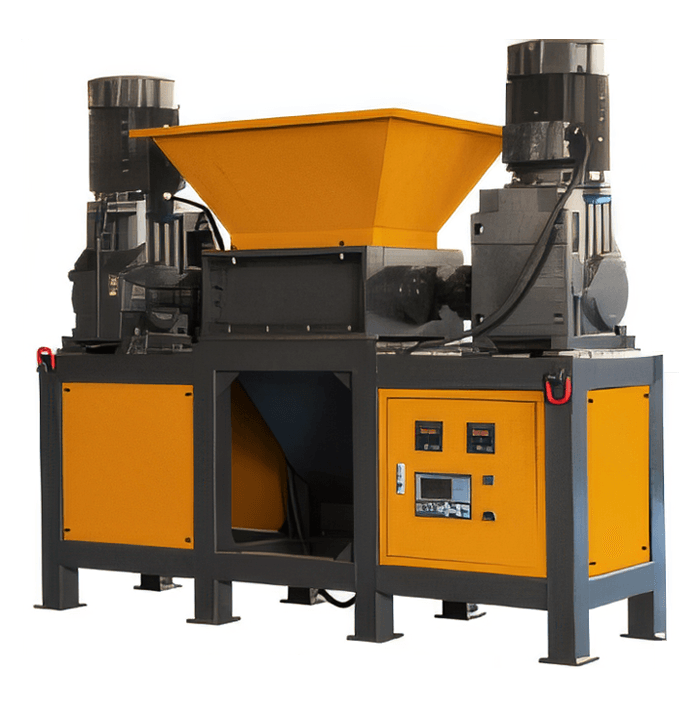
The physical shape of your blades dictates how material behaves inside the chamber. You must select geometries matching your specific infeed material. Engineering the perfect shredder blade design requires balancing aggressiveness against mechanical load.
Hook count fundamentally controls how the rotor bites into the waste. Single-hook profiles offer exceptionally high grabbing capability. They excel at pulling large, hollow, or light materials downward. You should use them for steel drums or intermediate bulk containers (IBCs). However, they carry a higher risk of jamming. Dense material chunks can overwhelm a single deep hook.
Multi-hook configurations feature two, three, or five hooks per disk. They produce much smaller, highly uniform particle sizes. Multi-hook designs take smaller bites per rotation. They distribute cutting force more evenly across the rotor shaft. This even distribution reduces violent shock loads on the gearbox.
Thickness determines structural integrity under immense lateral pressure. Thick blades are built for high-torque, heavy-duty applications. Processing scrap metals and whole tires demands massive thickness. Thickness prevents blade snapping under extreme stress. However, thick profiles naturally produce much larger shreds.
Thin blades suit lighter, more flexible applications perfectly. They remain ideal for plastics and municipal solid waste (MSW). Thin profiles produce the finer shred sizes required for recycling lines. They shear cleanly through materials rather than crushing them bluntly.
Implementation reality dictates your ultimate success. The most advanced geometry remains useless without proper clearance tolerances. You must maintain precise gaps between moving rotors and stationary stators. Tight clearances prevent soft material from wrapping around shafts.
Processing plastic films requires maintaining gaps below one millimeter. Loose gaps allow film to stretch and slip between blades. This generates intense friction and melts the plastic entirely. Conversely, metal processing requires slightly wider gap settings. Wider tolerances prevent microscopic metal expansion from seizing the entire machine.
Your chosen metallurgy determines how long the edges survive daily abuse. You must match the steel chemistry to your exact operational hazards. Selecting the right shredder blade material requires a delicate scientific balance.
Metallurgy presents a strict physical trade-off. You cannot maximize both hardness and toughness simultaneously. High hardness provides incredible resistance against continuous abrasion. However, higher hardness fundamentally increases molecular brittleness. Brittle metals shatter when striking solid steel blocks.
High toughness allows metals to absorb massive impacts safely. Tough steels bend or deform slightly rather than shattering apart. However, high-toughness alloys dull much faster under constant abrasive loads. You must identify which failure mode hurts your facility most.
Industry standards rely on specific tool steel categories. Understanding these grades helps you challenge OEM defaults confidently. Below is a comprehensive chart comparing standard shredder metallurgies.
Steel Grade Category | Common Alloys | Primary Characteristic | Best Suited Applications |
|---|---|---|---|
Cold Work Tool Steels | D2, SKD11, Cr12MoV | Extreme Hardness (58-62 HRC) | Clean plastics, rubber, fiberglass. High abrasion zones. |
Hot Work Tool Steels | H13, SKD61 | Exceptional Toughness (50-54 HRC) | E-waste, scrap metal, MSW. High impact zones. |
Specialty Wear Plates | Hardox 500/600 | Structural Impact Resistance | Heavy-duty structural scrap, bulky demolition waste. |
Cold work tool steels contain high carbon and chromium levels. They deliver excellent blade wear resistance against continuous friction. You should deploy them for clean, highly abrasive materials. They excel at processing clean plastics and rubber. However, they fail rapidly if tramp metal enters the chamber.
Hot work tool steels feature lower carbon and different alloy structures. They offer exceptional shock and impact resistance. H13 remains the absolute industry standard for mixed processing. You need it for scrap metal, e-waste, and unpredictable MSW streams.
Procurement engineers must maintain healthy vendor skepticism. You must demand certified heat treatment reports for all purchases. Improper tempering leaves dangerous internal stresses inside the steel matrix. Poorly treated blades look identical to premium ones visually. However, they will suffer catastrophic failure during normal operation. Proper vacuum heat treatment guarantees molecular stability throughout the core.
You must align your blade variables with specific material properties. No single shredder knife performs perfectly across all possible waste streams. We outline specific configurations for major waste categories below.
Challenge: MSW presents a highly unpredictable mix. You will encounter organics, soft plastics, and hidden tramp metal simultaneously. A stray engine block can destroy a brittle blade instantly.
Selection: Choose a medium-thickness, multi-hook design. You must utilize a high-toughness material like H13 steel. This combination survives unexpected metal impacts while maintaining acceptable throughput.
Challenge: E-waste introduces extreme mechanical shock loads. You process hard metal components, thick shafts, and dense motor cores. Sharp edges provide no benefit against solid steel blocks.
Selection: Deploy extremely thick, custom-profiled shredder knives. You must prioritize maximum impact toughness over razor-sharp edge retention. Blunt force shearing breaks apart metal casings effectively safely.
Challenge: Passenger and truck tires cause extreme abrasion. The embedded silica compounds act like sandpaper against steel. Furthermore, the internal steel bead wire easily pulls and tangles.
Selection: Use D2 steel or specialized wear-resistant alloys. Tight rotor-to-stator tolerances remain absolutely mandatory. Tight gaps cleanly shear the steel wire rather than pulling it.
Challenge: Different plastics behave entirely differently under pressure. Rigid plastic blocks shatter violently and need aggressive biting forces. Plastic films stretch endlessly and wrap around spinning rotors.
Selection: Specify aggressive, deep hooks for rigid blocks. Utilize scissor-cut, close-tolerance designs for flexible films. You should maintain high hardness using D2 steel for both applications.
Engineering the perfect blade is only the first step. You must manage maintenance and edge restoration meticulously over time. Implementing advanced maintenance protocols maximizes your initial capital investment.
You must understand the strict limits of blade hardfacing. Welding Tungsten Carbide onto worn edges can extend lifespan significantly. Specialized hardfacing wire builds up lost material efficiently. However, repeated welding cycles cause severe localized embrittlement. The intense heat alters the original factory tempering. This creates microscopic cracks along the heat-affected zone. Eventually, hardfaced edges will simply spall and break away.
Facilities must establish rigorous predictive sharpening intervals. You should never run blades until complete failure occurs. Establish a schedule based on motor amp draw monitoring. As blades dull, energy consumption increases exponentially. Gearbox strain multiplies dangerously. Sharpening blades early removes less base material. This proactive approach keeps throughput high and extends overall machinery life.
You should always conduct localized pilot testing first. Never replace an entire set with an untested alloy. Run a localized test by changing out a single row. Place the new blades on a dual-shaft shredder test section. Run your normal production material for several weeks. Measure the wear visually and dimensionally against your existing blades. This proves your metallurgy ROI confidently before executing a facility-wide rollout.
You must not blindly reorder standard OEM replacements automatically. Audit your operational data if your waste stream has evolved. Analyze your most common failure mode rigorously. Determine whether chipping or dulling causes the most downtime. Adjust your metallurgy and geometry accordingly to solve the root problem.
Refine your vendor shortlisting logic immediately. Seek manufacturers who offer highly customized heat-treatment profiles. Demand transparent material sourcing and verifiable hardness testing reports. Look for partners willing to support localized trial programs. A data-driven approach guarantees improved machine reliability and better processing margins.
A: Hook depth and count dictate how much material is pulled into the cutting chamber per rotation. Mismatched designs lead to bouncing material. Material floats above the rotors instead of processing. This drastically reduces your daily throughput and wastes immense electrical energy.
A: High-carbon, high-chromium tool steels perform best. D2 steel serves as the industry standard for high-abrasion environments. You can often supplement these steels with specialized surface hardening. Localized carbide hardfacing also effectively combats extreme surface abrasion over time.
A: Yes. You achieve this through localized hardfacing. This involves welding specialized wear-resistant layers directly to the cutting edge. However, this process requires strict pre-heating and post-weld cooling protocols. Following proper thermal procedures avoids cracking the underlying base metal.


