Views: 0 Author: Site Editor Publish Time: 2026-06-22 Origin: Site


Rising landfill tipping fees and stricter environmental regulations are rapidly transforming the recycling industry. We no longer view Construction and Demolition (C&D) waste simply as a costly disposal problem. Instead, it has become a highly lucrative material recovery opportunity for prepared operators. However, processing heavy, abrasive, and unpredictable mixed debris introduces severe operational challenges to your plant.
Standard size-reduction equipment often suffers catastrophic failure upon encountering hidden tramp metal, thick steel rebar, or massive concrete slabs. You need specialized machinery designed specifically to endure these brutal conditions without constantly breaking down. Protecting your sorting lines requires robust primary volume reduction tools built for aggressive industrial environments.
This article provides plant managers and recycling facility operators with a clear, vendor-neutral evaluation framework. You will discover how to select the optimal machinery based on specific throughput demands and complex material profiles. We will help you build a highly reliable, efficient recycling line capable of dominating the toughest demolition debris.
Application alignment: Shredders are designed for primary volume reduction and liberation (e.g., separating rebar from concrete), not for producing fine, uniform aggregates (which requires a crusher).
Technology choice: Low-speed, high-torque shredders are the industry standard for minimizing wear and preventing catastrophic failure when processing mixed C&D debris.
Configuration: The choice between mobile track-mounted units and stationary electric plants depends on processing location (on-site demolition vs. centralized MRF) and power availability.
TCO reality: Initial capital expenditure is secondary to the long-term costs of wear parts (knives, rotors) and maintenance downtime when processing abrasive materials like brick and concrete.
Mixed construction waste is notoriously bulky. Transporting unprocessed debris means you mostly haul empty space, which exponentially drives up transportation costs. When these loads reach the landfill, escalating tipping fees quickly consume your project margins. Furthermore, relying on manual labor for hand-sorting exposes your workforce to serious safety hazards, including sharp metals, unstable debris, and hazardous dust.
Implementing a dedicated construction waste shredder dramatically alters this dynamic. This equipment preconditions raw material before it enters automated sorting lines. A quality primary processor reduces material volume by up to 60-70% in a single pass. During this size reduction process, it effectively liberates highly valuable recyclables. You can easily extract ferrous metals, dimensional wood, and reusable aggregates once the bulk structure breaks apart.
Facility managers evaluate the success of this upgrade through several distinct metrics. First, you calculate the direct reduction in disposal costs. Second, you measure the new revenue streams generated by selling recovered ferrous metals and clean wood chips. Finally, you track the increased throughput speed for downstream sorting systems, as uniformly sized material prevents conveyor blockages.
Modern volume reduction directly supports broader sustainability goals. Pre-processing waste helps contractors meet stringent EPA landfill diversion targets. It also simplifies LEED certification reporting for construction firms. Facilities capable of providing detailed diversion metrics easily win more commercial contracts.
Many operators confuse shredding with crushing, but the mechanical limits differ entirely. Crushers rely on high-impact compression forces to shatter brittle materials. In contrast, an industrial concrete shredder utilizes aggressive shear and tear forces to rip apart slabs and cinder blocks. This mechanism makes it highly effective for the primary breakdown of heavily contaminated loads.
Handling tramp metal highlights the biggest divergence between these machines. Jaw or impact crushers easily jam or sustain severe structural damage when they encounter thick steel reinforcement. High-torque shredders stretch, bend, and cleanly liberate rebar from concrete matrices. The naked steel then passes harmlessly down the line for automated magnetic separation.
Versatility remains the core operational advantage of shredding equipment. You can continuously feed a chaotic mixture of wood, rigid plastic, thick insulation, and masonry. The machine handles this diverse diet simultaneously without requiring expensive, labor-intensive pre-sorting. This flexibility keeps your loaders moving and your stockpiles shrinking.
However, you must acknowledge realistic limitations before purchasing. Shredders produce a coarse, highly irregular output size. They excel at primary destruction rather than final sizing.
Best Practice: Always position an overband cross-belt magnet immediately after the primary shredder discharge conveyor to capture liberated steel before it damages downstream belts.
Common Mistake: Attempting to produce a graded, 2-inch aggregate base product using only a shredder. If fine sizing is your goal, you must pair the shredder with a secondary impact crusher and a trommel screen.
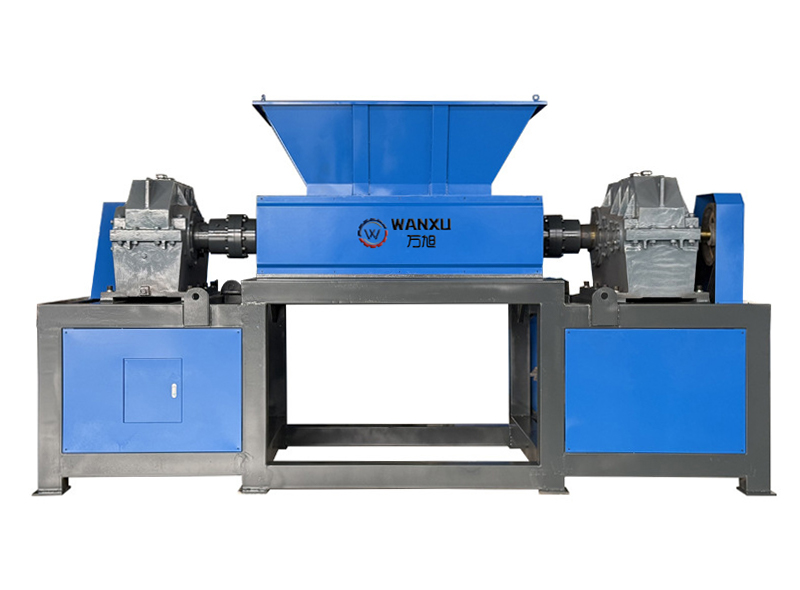
Selecting the proper drive architecture guarantees long-term reliability. Slow-speed, high-torque systems represent the essential standard for processing mixed C&D waste. These machines operate at remarkably low speeds, typically ranging from 15 to 40 RPM. This slow rotation drastically limits airborne dust generation. It reduces ambient noise levels and entirely prevents high-velocity shrapnel from ejecting out of the hopper.
Auto-reverse functionality serves as a critical evaluation feature for any robust building waste shredder. Advanced programmable logic controllers (PLCs) monitor hydraulic pressure or electrical current. When the machine bites into an un-shreddable object—like a massive solid steel excavator tooth—the PLCs detect the spike instantly. They automatically reverse the cutting shafts to clear the jam. This intelligent system prevents catastrophic motor burnout and structural shaft damage.
Shaft configuration directly dictates the nature of your final product. You must align the rotor style with your specific material stream.
Configuration Type | Primary Mechanism | Ideal Material Feed | Output Characteristics |
|---|---|---|---|
Twin-Shaft | Aggressive grabbing, tearing, and shearing between counter-rotating blades. | Bulky mixed waste, heavy concrete, large furniture, and un-sorted debris. | Coarse, irregular strips. Excellent for liberation. Variable sizing. |
Single-Shaft with Screen | Cutting against a stationary bed knife, forced through a sizing screen. | Pre-sorted, less abrasive materials (wood, plastics, light commercial waste). | Defined, uniform output size in a single pass. Prone to severe screen wear with concrete. |
Choosing the physical platform of your equipment defines your entire workflow. The industry splits largely between highly agile mobile units and permanent stationary installations. Each platform serves distinctly different operational models.
Mobile, track-mounted systems deliver supreme flexibility. You simply load them onto a lowboy trailer and deploy them directly to active job sites. They utilize powerful diesel or advanced diesel-electric hybrid drives. Processing material on-site eliminates the need to transport bulky, unprocessed waste across town. This platform dominates disaster cleanup scenarios, temporary demolition projects, and remote site preparation.
Conversely, stationary electric systems thrive inside dedicated facilities. They permanently anchor to concrete foundations inside Transfer Stations or Material Recovery Facilities (MRFs). Electric drives deliver massive torque with superior energy efficiency. They integrate seamlessly into complex, automated sorting lines utilizing custom hoppers and specific discharge heights.
To finalize your platform choice, use this simple decision matrix:
Evaluate your site footprint: Do you have the indoor space and concrete foundation required for a permanent line?
Assess power grid access: Does your facility possess the three-phase industrial power infrastructure necessary to run a 400+ horsepower electric demolition waste machine?
Determine relocation frequency: Do you generate revenue by processing at client demolition sites, or do clients pay tipping fees to bring material to your central hub?
Processing masonry, bricks, and structural metal is an inherently destructive act. The abrasive nature of this debris continuously attacks the cutting tools. Therefore, you must rigorously evaluate machines based on the accessibility of the cutting chamber. Mechanics need safe, rapid access to perform routine inspections and clear occasional stubborn blockages.
Wear part economics dictate your true operational success. You will routinely replace or hardface cutting knives and rotor teeth. The engineering behind these wear parts matters immensely. Bolt-on modular components offer massive operational advantages. Your onsite maintenance team can swap out a damaged bolted tooth in minutes using standard tools. Conversely, traditional solid rotors require specialized factory re-welding. If a welded rotor sustains damage, your entire plant might shut down for days while welders rebuild the profile.
Energy consumption profiles vary heavily between systems. Mobile diesel units burn significant fuel, making them sensitive to fluctuating diesel prices. Stationary electric equivalents draw heavy kilowatt-hour loads but generally operate with greater efficiency per ton of processed material. You must balance this energy efficiency against the logistical benefits of mobility.
Mitigating downtime requires robust digital and physical support networks. Modern processors feature remote telematics and cellular diagnostics. Factory engineers can securely log into your machine to troubleshoot hydraulic faults or update PLC logic remotely. Ensure your chosen brand maintains a local distributor network. Fast, domestic spare parts availability keeps small maintenance issues from becoming month-long operational nightmares.
Before you request quotes from manufacturers, you must audit your specific waste stream. Define your dominant material ratios accurately. A machine optimally configured for 80% dimensional wood and 20% rubble requires an entirely different rotor setup than one processing 80% heavy concrete slabs. Understanding your incoming material ensures you buy the correct tool profile.
Never base a major capital purchase solely on a glossy specification sheet. You must demand actual material testing. Shortlist manufacturers who willingly offer live test runs using your specific demolition debris. Watching the equipment handle your dirtiest, most difficult loads reveals the truth about its torque, auto-reverse sensitivity, and output quality.
Finally, verify strict system integration capabilities. An isolated machine creates bottlenecks. Your new C&D waste shredder must feed smoothly into existing infrastructure. Evaluate the discharge conveyor height. Ensure it provides adequate clearance for overband magnets, feeds cleanly into trommel screens, and pairs well with your air classification systems. Seamless integration guarantees high-volume continuous production.
Investing in advanced primary processing equipment establishes a reliable, high-uptime bottleneck-breaker for your entire recycling operation.
Prioritize low-speed, high-torque drive systems to handle un-crushable tramp metal without sustaining catastrophic damage.
Audit your material stream carefully; choose modular twin-shaft designs for aggressive primary liberation of heavily mixed debris.
Always verify equipment claims by compiling a material breakdown report and scheduling a live, physical demonstration using your site's actual waste.
A: Yes, low-speed, high-torque shredders are specifically designed to handle thick steel rebar. Unlike traditional crushers, they use immense shearing force to bend and pull the steel. This action safely liberates the rebar from the concrete matrix so it can be easily recovered by a downstream magnet.
A: Primary shredders typically yield a coarse, irregular output ranging from 6 to 12 inches. The exact size depends heavily on the specific shaft tooling, screen presence, and the brittleness of the material. Secondary processing equipment is always required if you need finer, uniform aggregate sizing.
A: Lifespan varies heavily based on material abrasiveness and daily tonnage. Hardfaced teeth processing heavy concrete may require routine maintenance or hardfacing every few hundred hours. This high wear rate is exactly why selecting a machine with modular, easily replaceable bolt-on wear parts remains critical for uptime.


