Views: 0 Author: Site Editor Publish Time: 2026-06-27 Origin: Site


The rapid adoption of fiber-reinforced polymers in wind turbine blades, marine hulls, and chemical pipes delivers immense structural benefits. However, it also creates a massive end-of-life disposal bottleneck globally. Facilities now face mounting pressure to process these massive, rigid structures safely and economically.
Standard size-reduction equipment simply cannot survive this demanding application. The abrasive, high-tensile nature of composite materials quickly destroys conventional blades and jams standard rotors. Facility engineers and procurement teams often struggle to find machinery capable of handling this extreme wear without constant breakdowns.
You need heavy-duty, specialized equipment engineered specifically for extreme wear resistance, dust mitigation, and high-torque mechanical breakdown. In this article, we explore how purpose-built technology solves these distinct challenges. You will learn how to evaluate rotor designs, metallurgy, and drive systems to process composite waste efficiently and profitably.
Material Reality: Fiberglass features a tensile strength of up to 4500MPa and a Mohs hardness of 6-7, causing standard shredder blades to wear 8-12x faster.
Optimal Technology: Slow-speed, high-torque dual-shaft shredders are the industry standard for primary FRP volume reduction, drastically reducing respirable dust compared to high-speed granulators.
Economic Drivers: Effective shredding reduces landfill volume by up to 85% and opens recovery pathways like cement kiln co-processing and recycled concrete aggregate.
Critical Features: Successful procurement requires evaluating anti-entanglement rotor designs, tungsten carbide blade metallurgy, and automated overload protection.
Processing composite waste introduces mechanical challenges unseen in standard plastics recycling. You cannot rely on conventional crushers. The physical realities of fiber-reinforced polymers demand a completely different engineering approach. We must examine the specific failure modes that destroy standard size-reduction machinery.
Glass fiber content typically ranges from 30% to 60% in most composite structures. These rigid fibers act exactly like industrial sandpaper during the cutting process. They grind against standard carbon steel knives. This lateral friction blunts conventional cutting edges prematurely. Operators often find their standard blades wearing out 8 to 12 times faster than expected. This rapid degradation destroys cutting efficiency and stalls production lines.
Fiberglass exhibits a massive discrepancy between its tensile and compressive strengths. The material boasts a tensile strength reaching an astonishing 4500MPa. Yet, its compressive strength sits much lower, typically around 1500MPa. This mechanical reality dictates your equipment choices. You cannot stretch or shatter these materials easily. You must use robust shearing mechanisms to break them down through compressive force. Fiberglass recycling demands machinery built specifically to exploit this structural weakness.
Friction generates intense heat during the shredding process. High-speed machines amplify this thermal output. This heat rapidly softens polyester and epoxy resins within the composite matrix. Once softened, these resins transform into sticky, glue-like accumulations. They blind internal screens, coat cutting chambers, and ultimately jam the spinning rotors. This thermodynamic failure requires hours of manual cleaning and maintenance.
Many composite structures rely on layers of woven roving fiberglass. When the shredder tears these layers apart, they delaminate. The resulting long glass fibers behave exactly like industrial textile waste. They wrap tightly around rotating shafts. They choke the machine components and bridge across discharge screens. This severe entanglement easily stalls standard drive motors.
Decommissioned wind turbine blades present an extreme dimensional challenge. Processing these items means hitting 80-100mm thick root sections alongside razor-thin 3-5mm tips. This wild variation causes severe shock loads on drive trains. A standard machine cannot adapt to these instantaneous density shifts. It will eventually suffer catastrophic gearbox failure.
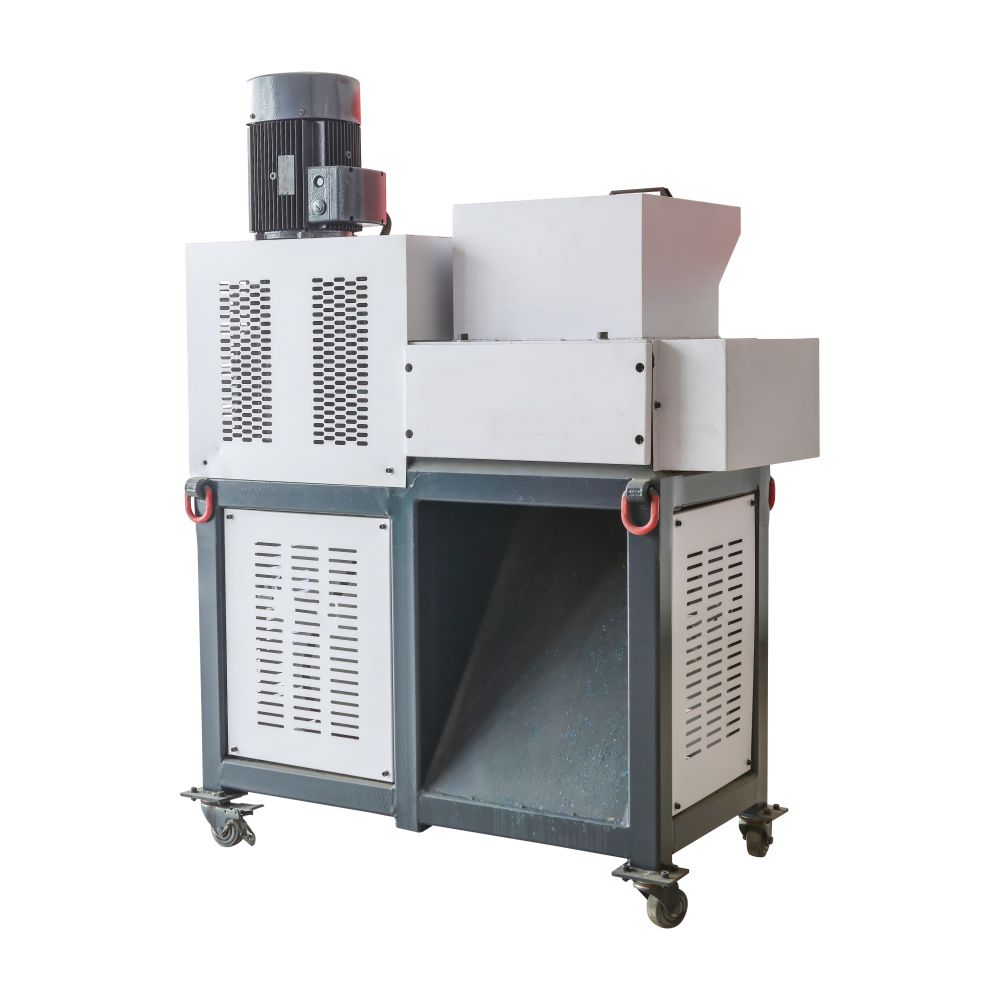
You must choose the correct machine architecture to handle composite waste safely. Facilities generally evaluate two primary configurations: single-shaft and dual-shaft shredders. Making the wrong choice here severely impacts operational uptime and worker safety.
Single-shaft systems offer a few specific benefits for lighter applications. They utilize internal sizing screens to achieve a uniform, specific particle size in just one pass. However, they possess fatal flaws when handling high-strength composites. The internal pusher blocks press material aggressively against a high-speed rotor. This friction generates massive amounts of heat. As discussed earlier, this heat brings a severe resin gumming risk. More importantly, the high-speed milling action creates significantly more hazardous dust.
Facility engineers overwhelmingly prefer dual-shaft configurations for processing composites. A robust composite waste machine utilizes a low-speed, high-torque shearing action. This mechanical approach perfectly suits heavy-duty applications. It grabs, bites, and shears thick materials without generating excessive friction.
This design offers distinct advantages. It minimizes heat generation, preventing resin melt. It drastically reduces the creation of airborne particulates. You can easily process bulky, irregular waste like large pipes, boat hulls, and automotive panels without expensive pre-cutting steps.
Industrial best practices often require a multi-stage approach. You begin with primary dual-shaft shredding to bring bulky waste down to 40-50mm strips. If your off-taker requires finer material, you follow this with specialized secondary granulation. This secondary step brings the material down to 5-10mm flakes suitable for industrial mixing or fuel processing.
Feature | Single-Shaft Systems | Dual-Shaft Systems |
|---|---|---|
Operating Speed | High RPM | Low RPM |
Torque Output | Moderate | Extremely High |
Dust Generation | High (Requires heavy extraction) | Low (Easier to manage) |
Heat Generation | High (Resin melting risk) | Minimal |
Best Use Case | Secondary sizing of pre-shredded material | Primary volume reduction of bulky parts |
Procuring a reliable fiberglass shredder requires deep attention to component engineering. You cannot accept off-the-shelf configurations. Ensure your selected vendor meets the following stringent technical specifications.
You must combat the 8-12x accelerated wear rate caused by glass fibers. Standard D2 steel will fail rapidly. Look for advanced alloys like CrMoV high-alloy steel or DC53. For the absolute best performance, specify replaceable cutter discs featuring Tungsten Carbide hard-facing. These hard-faced blades resist the sandpaper-like abrasion of fiberglass, extending maintenance intervals significantly.
Long glass fibers will wrap and choke standard parallel rotors. You must mandate anti-winding rotor geometry. Look for "V-type" or staggered knife arrangements. These specific layouts create a self-cleaning action during rotation. They prevent long roving from wrapping around the shaft and burning out the main drive motors.
Processing wind blades or boat hulls means hitting hidden metal. You need intelligent power delivery. Require a PLC-controlled adaptive hydraulic system or a heavy-duty electric drive with torque-sensing capabilities.
The system must include instantaneous auto-reversing capabilities. If the machine hits an uncrushable steel component, like a thick embedded mounting bracket, it must reverse immediately. This microsecond reaction prevents catastrophic gearbox failure and blade shattering.
Fine fiberglass dust acts as a highly abrasive contaminant. It easily migrates into standard mechanical housings. Bottom-sealed pusher systems and isolated bearing housings are non-negotiable. They keep microscopic glass shards out of the grease and bearings, protecting the drive train from premature seizure.
Best Practice: Always request a material test run. Send sample composites to the vendor and demand a video of the machine handling your specific wall thickness.
Common Mistake: Under-sizing the motor horsepower. Facilities often buy based on plastic recycling specs, only to find the machine stalls on high-density SMC panels.
Best Practice: Specify modular cutting tables. This allows your maintenance team to swap out entire blade assemblies quickly rather than changing individual knives inside the machine.
Investing in heavy-duty processing equipment must deliver a clear return on investment. The economic argument for a dedicated GRP waste shredder focuses on immediate operational savings and the creation of valuable downstream commodities.
Bulky composite waste eats up expensive facility floor space and shipping containers. Highlight the immediate operational ROI of reducing composite volume by up to 85%. You stop paying to transport air. This massive reduction directly combats escalating landfill tipping fees. In many regulated regions, these disposal fees now exceed $200 per ton. Shrinking your waste footprint delivers immediate, quantifiable monthly savings.
Once you reduce the material down to a manageable size, new economic pathways open up. You transition from paying for disposal to creating a marketable resource.
Cement Kiln Co-Processing: Shredded FRP offers high calorific value because of its resin content. Simultaneously, the silica glass content acts as a valuable mineral substitute in cement clinker production. Cement kilns eagerly accept sized composite flakes.
Recycled Aggregate: Processed output can be utilized heavily in construction. You can use it in asphalt modification or as a concrete strength-enhancing filler, replacing virgin sand and gravel.
Advanced Chemical Recycling: Mechanical sizing is the mandatory first step for advanced chemical recovery. Facilities performing pyrolysis or solvolysis require precisely shredded input material to break down the polymers successfully.
Many composite items contain embedded metals. Sheet Molding Compound (SMC) automotive parts often feature steel rebar, threaded inserts, or structural bolts. Your processing line should include robust inline magnetic separation. Suspended overband magnets will extract liberated steel automatically before the material hits secondary sizing equipment. This protects your secondary granulators and increases the purity of your final composite flake.
Deploying an FRP shredder introduces severe environmental and safety hazards into your facility. You must engineer your installation to mitigate airborne threats actively.
Mechanical destruction of composites generates respirable fibers. These hazardous particles often measure less than 3.5 μm in diameter. They are classified as potential respiratory hazards for your workforce. Furthermore, this fine dust remains suspended in the air. It rapidly migrates through factories and severely clogs facility HVAC filtration systems.
Airborne composite dust carries another hidden danger. When combined with static electricity generated by the shredding process, it poses a severe explosion risk. A high concentration of polymer dust in a confined space acts exactly like fuel waiting for an ignition source.
You cannot compromise on safety infrastructure. A proper installation requires several layers of engineered protection:
Negative Pressure Enclosures: Build sealed enclosures around the cutting chamber. Use high-capacity extraction fans to maintain negative pressure, ensuring dust cannot escape into the broader facility.
Wet Dust Suppression Systems: Install industrial misting arrays at the feed hopper and discharge conveyor points. A fine water mist knocks airborne glass fibers directly to the ground.
Explosion-Proof Motors: Depending on your local jurisdiction and specific material makeup, specify ATEX-compliant, explosion-proof motors and electrical cabinets.
Finally, evaluate your logistics model to determine the best machine footprint. A permanent, stationary factory installation works best for high-volume, centralized recycling operations. It allows for massive extraction systems and hard-wired power. Conversely, a mobile tracked unit provides vital flexibility. Mobile machines prove ideal for on-site wind turbine blade decommissioning or remote shipyard cleanups, eliminating the massive cost of transporting oversized, intact composite structures.
Processing composite waste ranks among the most severe-duty applications in the recycling industry. Success relies entirely on matching the harsh physical realities of fiberglass with specifically engineered equipment. You must respect the intense abrasion, high tensile strength, and hazardous dust profile of these advanced materials. Standard plastic crushers will fail quickly and expensively.
To successfully integrate this capability into your operations, follow these crucial next steps:
Shortlist vendors who provide transparent blade-life estimates based strictly on specific Mohs hardness inputs and your material's glass content.
Prioritize equipment offering modular cutting table designs. This feature slashes maintenance downtime during inevitable blade swaps.
Demand a demonstration of proven auto-reversing PLC controls to guarantee your gearbox survives encounters with hidden steel embedments.
Design your facility layout with aggressive dust extraction and wet suppression systems from day one.
A: No. Standard blades will blunt exponentially faster due to glass fiber abrasiveness. Furthermore, traditional rotors will jam from continuous fiber wrapping and localized resin melting caused by excessive friction.
A: By utilizing slow-speed shredding to minimize dust creation initially. This must be combined with negative pressure extraction enclosures, industrial HEPA filtration, and localized wet suppression misting systems at all transfer points.
A: Primary dual-shaft shredders typically reduce bulky composite waste to 40mm–100mm strips. Secondary granulators equipped with hardened screens can further reduce this material to 5mm–10mm flakes for use as concrete filler or kiln fuel.
A: Most high-end FRP machines feature load-sensing PLC controls that momentarily reverse the rotors upon detecting extreme resistance. Meanwhile, heavy-duty shear blades easily cut through standard embedded fasteners. Downstream magnets subsequently remove the liberated metal.


