Views: 0 Author: Site Editor Publish Time: 2026-06-09 Origin: Site


Commercial facilities face a constant, messy operational challenge every single day. High-moisture, bulky food waste piles up quickly inside processing plants. This rapidly drives up hauling frequency. It also inflates landfill tipping fees for commercial facilities. Unprocessed organic materials are incredibly heavy. They are highly inefficient to transport across long distances. Leaving these materials intact means you essentially pay for hauling water weight. You also pay for empty air space inside the dumpsters.
A food waste shredder steps in here as an essential solution. It serves as a critical pre-processing step rather than just standard disposal equipment. It prepares bulk materials perfectly for dewatering, composting, or anaerobic digestion. In this guide, we provide an evidence-based framework for facility managers and operations directors. You will learn how to evaluate and shortlist shredding equipment effectively. We explore throughput capabilities, material resilience, and downstream integration. This knowledge ensures you select the right machinery to optimize your specific operations.
Volume Reduction: Proper shredding typically reduces raw organic waste volume by 30% to 60%, directly lowering logistical costs.
Process Optimization: Uniform particle size accelerates downstream processes, functioning effectively as a compost shredder or biogas pre-treatment step.
Integration: Standalone shredders yield limited ROI unless paired with dewatering (e.g., screw presses) or integrated waste management architectures.
You cannot ignore the hidden costs of un-processed organic materials. Haulers base their charges on physical dumpster volume. Bulky vegetables, thick fruit peels, and dense bakery dough consume massive space. They trap large pockets of air between chunks. Your dumpsters fill up artificially fast. You must schedule frequent pick-ups to clear the docks. This frequent hauling drains your operational budget rapidly. It also introduces severe pest and odor management issues. Rotting materials naturally attract rodents and insects. Odor control demands constant attention from your sanitation teams. Failing to process this material correctly hurts your bottom line.
Tightening municipal regulations add external pressure to these internal challenges. Cities aggressively mandate organic waste diversion from standard landfills. They require commercial facilities to pre-process waste for alternative disposal methods. Upgrading your food processing waste machine offers a direct compliance path. We evaluate the success of this equipment through specific criteria. First, you need a measurable reduction in dumpster pick-up frequency. Fewer trucks mean lower monthly hauling bills. Second, you must achieve decreased moisture retention. Shredding aggressively breaks down tough cellular walls. It releases trapped cellular liquids instantly. This physical change makes mechanical dewatering highly efficient.
Impact of Pre-Processing on Waste Logistics | |||
Waste State | Volume Efficiency | Moisture Retention | Hauling Cost Impact |
|---|---|---|---|
Whole / Unprocessed | Low (High air pockets) | High (Liquids trapped in cells) | Maximum Cost |
Shredded Only | Medium (Reduced by 30-60%) | Medium (Liquids released but present) | Reduced Cost |
Shredded + Dewatered | High (Compacted solids) | Low (Liquids extracted) | Minimum Cost |
Selecting an organic waste shredder requires deep technical scrutiny. You cannot rely on basic horsepower metrics alone. We must evaluate the mechanical design against the harsh realities of commercial waste.
Organic materials behave unpredictably under heavy mechanical stress. Some items shatter quickly. Others stretch, bend, or compress. High-torque, low-speed shredding provides the optimal solution here. High-speed equipment often causes rapid emulsification. Fast blades whip wet food into a thick, unmanageable paste. This paste binds equipment components. It clogs discharge chutes stubbornly. Low-speed processing avoids this sticky problem entirely. It applies massive twisting force at a deliberate pace. This sheer force handles tough byproducts easily. You can effectively process beef bones and rigid shells. You can slice straight through fibrous corn stalks without tangling. High torque prevents frustrating equipment stalls during sudden heavy loads.
Food byproducts create highly acidic environments. Citrus peels, tomato paste, and fermented sludges destroy mild steel quickly. Corrosion ruins expensive equipment fast. You must highlight the necessity of 304 or 316 stainless steel components. Your enclosures and hoppers require these premium alloys exclusively. They actively resist acidic pitting. They extend the equipment lifespan significantly. Cutter blade metallurgy also demands careful attention. Standard steel blades dull rapidly against organic abrasion. You need surface-hardened steel alloys for the cutters. Manufacturers tailor these specific alloys for severe-duty environments. Hardened blades maintain their cutting edge much longer. They ensure uniform particle sizing month after month.
Food facilities execute rigorous daily cleaning protocols. Sanitation teams utilize high-pressure hoses everywhere. They apply harsh chemical foamers to sanitize all surfaces. Your equipment must survive these extreme routines. We must assess motor and control panel ratings carefully. Demand IP65 or NEMA 4X ratings as an absolute minimum. These rigorous standards guarantee protection against direct water jets. They keep internal electronics completely dry and secure. Dust and moisture cannot penetrate these heavily sealed units. Proper ratings prevent dangerous electrical shorts. They guarantee daily washdowns never delay your production schedules.
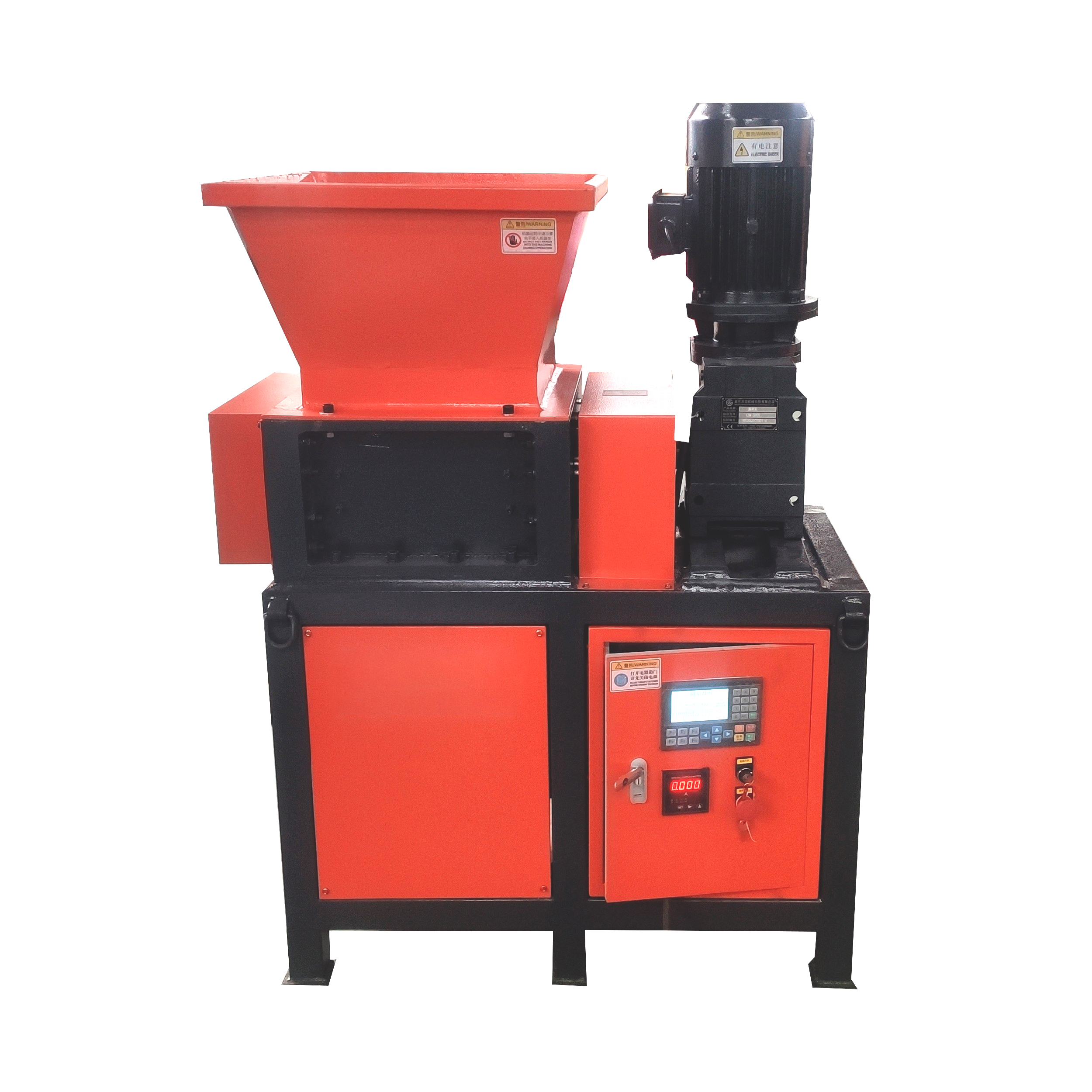
Different waste streams require distinctly different cutting strategies. Drive architecture dictates exactly how well the machine performs. You must match the mechanical design to your specific material profile.
Dual-Shaft Shredders:
These robust machines dominate the modern food processing sector. They feature two parallel, counter-rotating blade stacks. The blades grab bulky material aggressively. They pull it downward into the central cutting chamber. This deliberate action prevents bridging entirely. Bridging occurs when sticky material forms an arch above the cutters. The machine runs empty while waste simply hovers above it. Dual-shaft designs eliminate this operational headache. They pull material continuously. They stand out as the best option for mixed-waste streams. They handle high-volume raw material reduction flawlessly.
Single-Shaft Shredders with Screens:
Some applications demand exact, highly uniform particle sizes. Feeding an anaerobic digester is a perfect example. Single-shaft machines feature a fast-spinning rotor. Knives push material aggressively against a stationary anvil. A sizing screen sits directly below this rotor. Material stays inside the chamber. It only exits once it passes through the precise screen holes. This mechanism guarantees a highly controlled output size. It ensures perfect homogenization for sensitive downstream processes.
Auto-Reversing Mechanisms:
You must view auto-reversing as a mandatory safety feature. Commercial waste streams often hide accidents. Employees accidentally drop steel forks into the hopper. Maintenance tools slip into the feed chute unnoticed. This "tramp metal" instantly jams normal equipment. Auto-reversing logic detects sudden torque spikes immediately. The programmable controller stops the motor. It briefly reverses the drive shafts to clear the jam. It then resumes forward operation automatically. This clears blockages caused by tramp metal perfectly. You avoid dangerous manual operator intervention completely.
A standalone machine solves only half of your problem. True operational efficiency comes from smart downstream integration. You must connect the initial processing to final disposal methods.
Dewatering Synergy:
Mechanical shredding acts as a mandatory prerequisite for liquid extraction. Screw presses and industrial centrifuges require thoroughly pre-conditioned feed. Intact vegetables resist mechanical pressing entirely. They slip out of the press chambers. Shredding violently tears open internal plant structures. It exposes maximum surface area to the press. This simple physical change maximizes your liquid extraction yield. Water weight drives up disposal expenses significantly. Removing this liquid cuts the heaviest portion of waste costs immediately.
Accelerating Aerobic Composting:
Composting relies entirely on biological microbial action. Microbes need physical surface area to feed upon. Large chunks of organic matter break down very slowly. Increased surface area speeds up this natural process dramatically. A well-integrated compost shredder provides exactly what these microbes need. It chops thick stalks and tough rinds into tiny pieces. Oxygen penetrates the compost pile much more evenly. Microbial activity accelerates exponentially. You reduce your overall compost cycle times. Processes taking months suddenly finish in just a few weeks.
Anaerobic Digestion (Biogas) Feed:
Biogas facilities transform organic matter into valuable renewable energy. They require a highly specific, liquid-like feed profile. Digester microbes demand a homogenized, consistent slurry. Inconsistent chunks disrupt natural gas production severely. Proper equipment sizing prevents catastrophic pump blockages. Bio-digesters rely on complex, sensitive pumping networks. Oversized particles clog these expensive pumps quickly. Shredders ensure a smooth, easily pumpable consistency. They protect expensive downstream infrastructure from unnecessary damage.
Facility upgrades rarely happen without some initial friction. You must anticipate common implementation risks early. Preparation prevents costly equipment downtime later.
Foreign Object Damage (FOD):
Commercial waste streams are almost never 100% organic. Plastic packaging accidentally enters the processing line. Metal utensils fall into the mixing vats. You must actively protect your equipment against FOD.
Consider these mandatory protective measures:
Install powerful magnetic separators directly above the primary feed hopper.
Specify robust shear-pin protections on all primary drive shafts.
Implement visual inspection checkpoints directly upstream of the equipment.
Bridging and Hopper Design:
High-moisture, sticky materials behave terribly in standard hoppers. Mashed potatoes or wet dough cling stubbornly to steel walls. They form solid bridges across the feed opening. Material abruptly stops flowing into the cutting chamber. Custom engineering solves this problem effectively. You must detail the need for specifically engineered hopper slopes. Steep, customized angles encourage continuous material flow. Sometimes gravity alone fails you. You must implement custom ram-feeders in these cases. Hydraulic rams physically push the sticky mass straight into the blades.
Scaling Up from a Kitchen Waste Shredder:
Many operations managers under-specify their initial equipment heavily. They mistakenly purchase light-duty commercial units intended for restaurants. A heavy-duty industrial facility cannot rely on standard disposers. A basic kitchen waste shredder fails entirely under continuous factory loads. Its motor overheats quickly during long shifts. The lightweight blades bend or snap against dense bones. Outline your capacity thresholds accurately. Industrial shredders become absolutely mandatory past certain limits. If you process more than 500 lbs/hour, upgrade to industrial specs immediately. Heavy-duty units provide the continuous, multi-shift reliability you actually need.
Selecting the perfect equipment requires a highly strategic approach. You must align the machine's capabilities exactly with your facility goals. We evaluate success through the lens of downstream efficiency. Whether you focus on dewatering, hauling, or digesting, preparation matters immensely.
Take these actionable next steps to secure the right equipment:
Define your exact material profile and hourly throughput requirements clearly.
Request a comprehensive vendor material test before signing any contracts.
Send a representative sample of your specific waste profile to the manufacturer.
Validate throughput speed, uniform particle size, and blade performance physically before procurement.
Testing your exact material ensures your investment performs perfectly. You eliminate risky guesswork entirely. You guarantee smooth facility integration and achieve your volume reduction targets.
A: Results vary significantly based on material density and water content. However, facilities typically see a 30% to 60% reduction in raw volume. This substantial decrease directly lowers the physical space required in dumpsters, reducing hauling costs.
A: Yes, they can. High-torque, dual-shaft shredders are specifically engineered for these dense materials. The machine handles them easily provided the motor is sized correctly for the peak shear force required to crush them.
A: The standard sequence flows smoothly: Hopper to Shredder, then via Chute or Conveyor directly into the Screw Press. Shredding prevents press blockages. It violently breaks cellular walls, which drastically improves the final liquid yield.
A: It depends entirely on the abrasiveness of your feed and the presence of tramp metal. Standard organic waste allows for years of operation. Conversely, frequent shell or heavy bone processing accelerates wear, requiring more frequent maintenance.
A: Modern industrial units include several critical features. You will find safety interlocks on all hoppers, emergency stop lanyards, and auto-reversing jam protection. They also feature fully enclosed feed chutes to prevent dangerous operator reach-in accidents.


