 |


| Quantity: | |
|---|---|
WX-PC400
WANXU
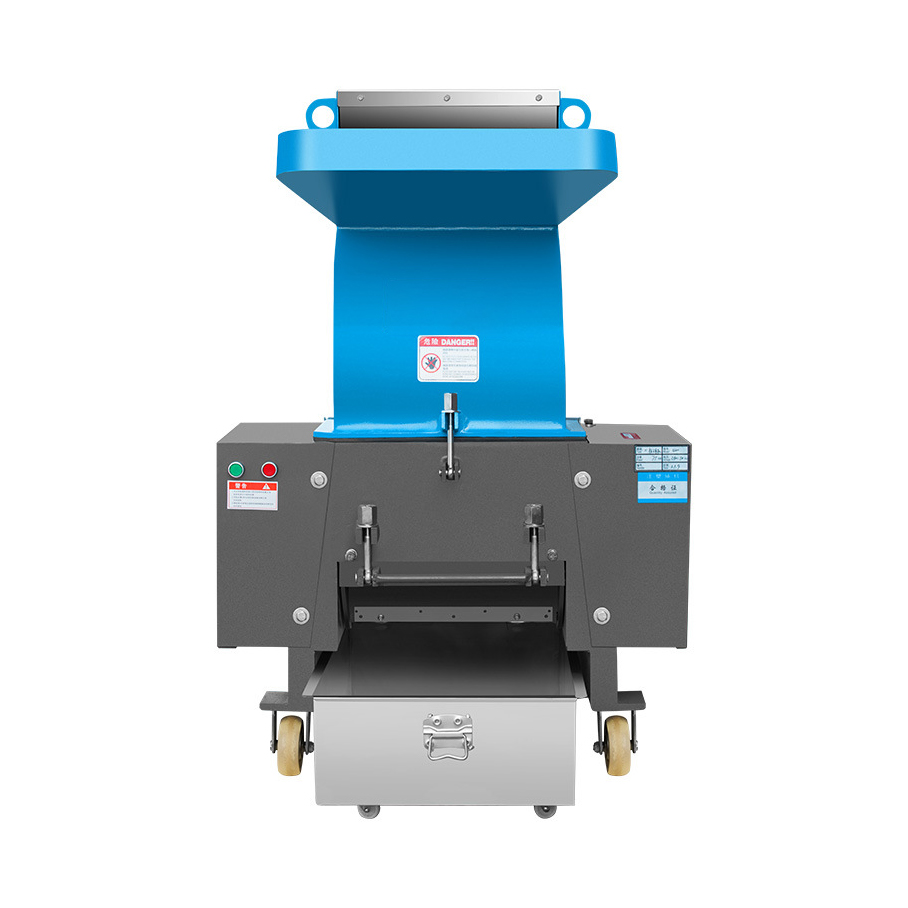
The WX-PC400 is designed for rigid plastic waste such as molded rejects, runners, and extrusion offcuts. Rotary blades work against fixed cutters to shear the material. A replaceable screen beneath the cutting chamber influences the size of the pieces discharged.
For production scrap recovery, the useful output size depends on how the material will be handled next. The largest feed dimensions, wall thickness, and required regrind size help determine whether the scrap needs preparation and which screen is suitable.
The rotary blades cut against two fixed cutters to break rigid parts into smaller pieces. This arrangement is suited to evaluating production scrap such as molded rejects and runners, where piece shape and thickness can vary from batch to batch.
The screen opening can be selected according to the output required for collection or further processing. Comparing trial output with that requirement helps establish whether the proposed screen suits the application.
The machine measures 1,260 × 840 × 1,280 mm. These dimensions provide a starting point for planning a scrap recovery station near molding or extrusion equipment, with space for feeding, collection, and service access.
Feed material | What to check during selection |
|---|---|
Rigid PVC extrusion offcuts | Specify the profile or pipe dimensions, wall thickness, and longest pieces expected in the feed. |
PP injection molding scrap | Include representative runners, sprues, and rejected parts. Note the thickest sections and any attached inserts. |
Rigid PP containers and packaging rejects | Provide the largest dimensions and wall thickness. Indicate whether the parts are whole, flattened, or cut before feeding. |
Parameter | Value |
|---|---|
Model | WX-PC400 |
Machine type | Hard plastic crusher |
Main motor power | 7.5 kW |
Rotary blades | 12 |
Fixed blades | 2 |
Listed processing capacity | 300–400 kg/h |
Overall dimensions | 1,260 × 840 × 1,280 mm |
Actual throughput depends on the material, feed dimensions, screen opening, and feeding conditions.
A trial with representative scrap can show how rigid pieces feed into the cutting chamber and what the resulting regrind looks like. For PVC profiles, include typical wall thicknesses and cut lengths. For PP molding scrap, include both runners and the largest rejected parts if both are part of the regular feed.
A useful trial record pairs photos of the original feed and discharged material with the screen opening and measured processing rate. This gives the buyer a basis for checking whether the output fits the next recycling step.
Beyond the machine itself, our commitment to operational excellence is reflected in our comprehensive manufacturing and support infrastructure. Backed by a dedicated R&D team and advanced testing facilities, every shredder undergoes rigorous, live-load testing before leaving the factory floor, ensuring it is ready for immediate deployment upon arrival. We understand that every processing facility has unique requirements, which is why we offer deep OEM/ODM customization capabilities. Clients can request specific modifications to the hopper dimensions, motor power configurations, and screen specifications to perfectly align with their targeted waste types and throughput goals. To protect your investment during international transit, each unit is meticulously wrapped in moisture-proof stretch film and secured within a heavy-duty, export-grade fumigation-free wooden box, guaranteeing it withstands the rigors of long-distance ocean freight. Furthermore, we provide a standard 1-year comprehensive warranty alongside lifetime technical support. This includes remote installation guidance, detailed operator training, and a highly responsive, low-cost spare parts supply program, effectively minimizing your long-term maintenance expenditures.
A: The shredder is engineered to efficiently process a vast array of common and engineered plastics, including polyethylene (PE), polypropylene (PP), polyvinyl chloride (PVC), polystyrene (PS), and polyethylene terephthalate (PET). It seamlessly transitions between processing rigid forms—such as thick-walled bottles and containers—and flexible materials like agricultural films and woven bags. Furthermore, the robust cutting chamber can handle plastic composites and materials with minor surface contamination, making it highly adaptable to real-world recovery environments.
A: The intelligent control panel utilizes highly sensitive load sensors to continuously monitor the motor's torque output and the physical flow of material. If the sensors detect a sudden spike in motor load indicative of a jam, the system immediately halts and automatically reverses the rotor's direction for a preset interval. This reverse action physically dislodges the stubborn material. The rotor then resumes its normal forward rotation. This automated cycle will repeat if necessary, and the system will trigger a visual and auditory alert for the operator if a persistent, unyielding blockage occurs.
A: To ensure peak operational efficiency, we recommend a straightforward preventative maintenance routine. This includes a quick daily visual inspection of the cutting chamber and blades for excessive wear, weekly lubrication of the precision couplings and moving parts, and monthly diagnostic checks of the hydraulic systems (if equipped). To maintain the precise shearing action, blade sharpening or replacement is advised when the output particle size begins to lose uniformity. Depending on the abrasiveness of the processed material, this typically occurs after 300-400 hours of operation. The machine features a quick-access clamshell design, allowing technicians to reach key internal components rapidly, thereby minimizing scheduled maintenance downtime.
A: While the high-carbon steel blades are remarkably durable and can survive incidental contact with small metal contaminants like stray screws, foil labels, or thin bottle caps, we strongly advise removing excessive or heavy metal attachments prior to feeding. Continuous exposure to heavy metals will accelerate blade wear and potentially chip the cutting edges. For facilities dealing with highly contaminated streams, we offer customized solutions, including the installation of specialized, ultra-wear-resistant alloy blades and integrated in-line metal detection systems to safeguard the shredder's internal components.


