 |




| Quantity: | |
|---|---|
WX-500S
WANXU
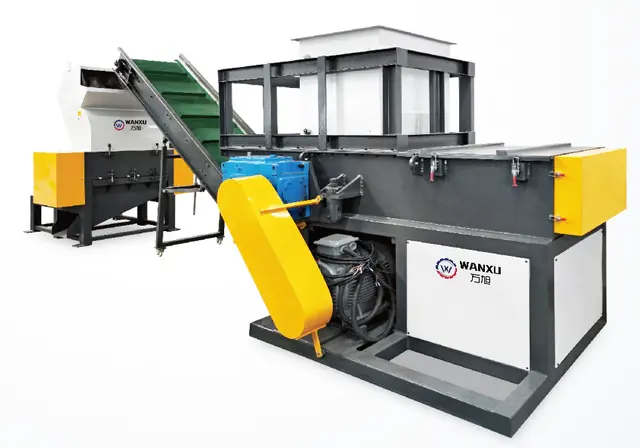
The WX-500S is designed to reduce metal fabrication scrap and selected recycling feed into smaller pieces. Inside the cutting chamber, a hydraulic pusher advances the material toward the rotating blades. The rotor cuts against fixed blades, and the screen beneath it influences the size of the pieces that leave the chamber.
The machine can be evaluated as a standalone shredder or as part of a line with infeed and discharge conveyors. WANXU offers material trials and can review the proposed setup based on the scrap profile, required output size, and available installation space.

The hydraulic pusher advances material toward the cutting rotor. This helps keep irregular offcuts and stamped pieces in contact with the blades as the material is reduced. The hydraulic station uses water cooling.
The listed cutting assembly includes 56 D2 rotary blades and two fixed blades. The rotating and fixed cutters work together to shear the feed. Material thickness, shape, and hardness are useful inputs when assessing how the cutter setup will handle a particular scrap stream.
The screen beneath the rotor can be selected according to the size requirements of the next process. Screen opening influences the discharge size, and elongated or irregular pieces can behave differently from flat offcuts. A representative trial helps check whether the resulting pieces suit downstream sorting or secondary shredding.
The machine design includes access doors and replaceable blade holders. These features give maintenance teams access to the cutting assembly for scheduled inspection and wear-part replacement.

The WX-500S is positioned for scrap metal recycling. Feed suitability depends on the metal type, thickness, geometry, and any attached components.
Feed material | What to check during selection |
|---|---|
Sheet metal and stamping scrap | Provide the metal grade if known, sheet thickness, and largest piece dimensions. Include representative flat, bent, or irregular offcuts. |
Aluminum production scrap | Describe the form of the scrap, such as sheet offcuts or formed pieces. Include the thickness and approximate dimensions of the largest pieces. |
Selected automotive metal scrap | Identify the specific component and whether it is hollow, solid, or reinforced. Share photos and dimensions so WANXU can assess preparation requirements. |
Dismantled appliance metal | Describe the separated metal panels or housings and identify attached parts. Use representative samples to assess the feeding and cutting setup. |
Parameter | Value |
|---|---|
Model | WX-500S |
Rotary Diameter | 400mm |
Main Shaft Width | 1000mm |
Rotary Blade Number | 56 blades (D2 steel) |
Rotary Shaft Speed | 80 rpm |
Fixed Blade Number | 2 blades (SKD-II steel) |
Hydraulic Motor | 4KW |
Hydraulic Cylinder Size | 80×1200mm |
Hydraulic Station Cooling | Water cooling |
Using Pressure | 6~12Mpa |
Crush Capacity | 800-1000 kg/h |
Feed Port Size | 1000mmL×1200mmW |
Main Motor Power | 22.5KW |
Reducer | H2HH6-20-B |
Bearing | NSK |
Sealing Part | TTO |
Machine Weight | 1200kg |
Machine Size | 2700X1650X2500mm |
Electric Control System | NS-D500 |
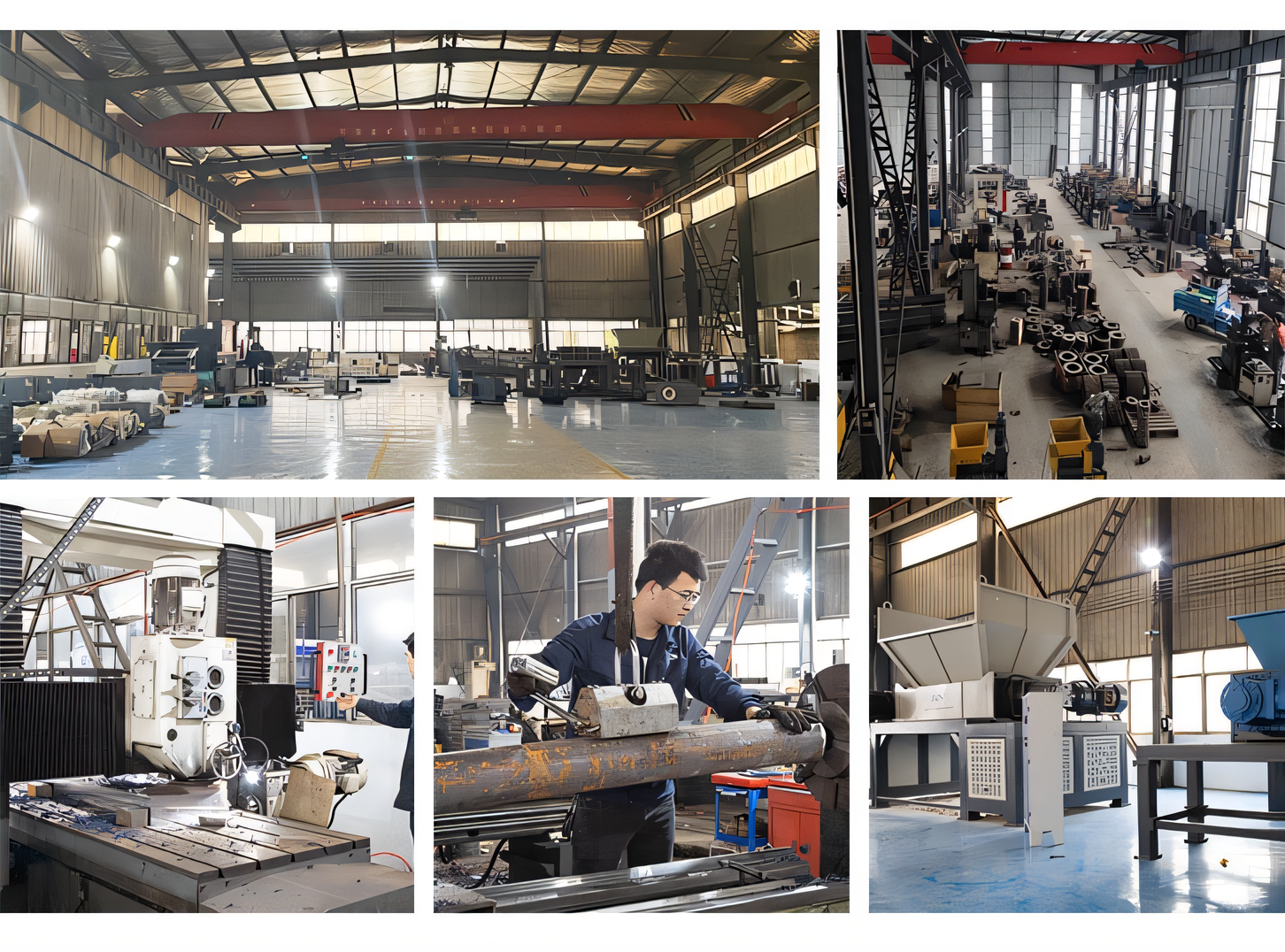
WANXU can run trials with customer-supplied scrap. Samples should reflect normal production, including the largest or thickest pieces expected in the feed. A useful trial records the metal type, feed dimensions, and screen opening, then shows the incoming scrap alongside the discharged pieces.
The specification table lists a crushing capacity of 800–1,000 kg/h. For a specific application, the trial can be used to assess processing rate and output under the proposed feed and screen conditions.
WANXU can review the cutter and screen configuration against the feed material and the requirements of the next machine. For installations that use conveyors or magnetic separation, the review can also cover the infeed arrangement, discharge position, and available floor space. The quotation can specify the screen options, replacement wear parts, and scope of technical support.

The page lists both ferrous and non-ferrous applications. Suitability should be evaluated for the specific feed. Sheet offcuts, formed panels, and dense castings differ in thickness and shape, so photos and representative samples help WANXU assess the proposed setup.
The replaceable screen can be selected around the target output. The actual piece size and shape also depend on the feed and the cutting configuration. Trial output can be compared with the requirements of the next processing stage.
A material trial provides a basis for estimating throughput. The measured result should be recorded with the metal type, feed size, screen opening, and feeding conditions.
WANXU can review the current infeed and discharge equipment, available space, and downstream requirements to determine how the shredder would fit into the line.
Provide scrap photos, metal type, thickness, maximum feed dimensions, target throughput, and required output size. A layout is useful when the shredder will connect to existing conveyors or sorting equipment.


