 |


| Quantity: | |
|---|---|
WX-300D
WANXU
The WX-300D is designed for the first stage of industrial waste processing. Inside the cutting chamber, two shafts rotate in opposite directions. Their intermeshing blades grip and shear bulky or irregular pieces into smaller fragments that are easier to collect, transfer, or sort.
The machine can operate on its own or feed a downstream sorting or secondary shredding stage. The right setup depends on the size and composition of the incoming scrap and what the next machine can accept. WANXU can review those requirements alongside the site layout when planning the shredder and its supporting equipment.
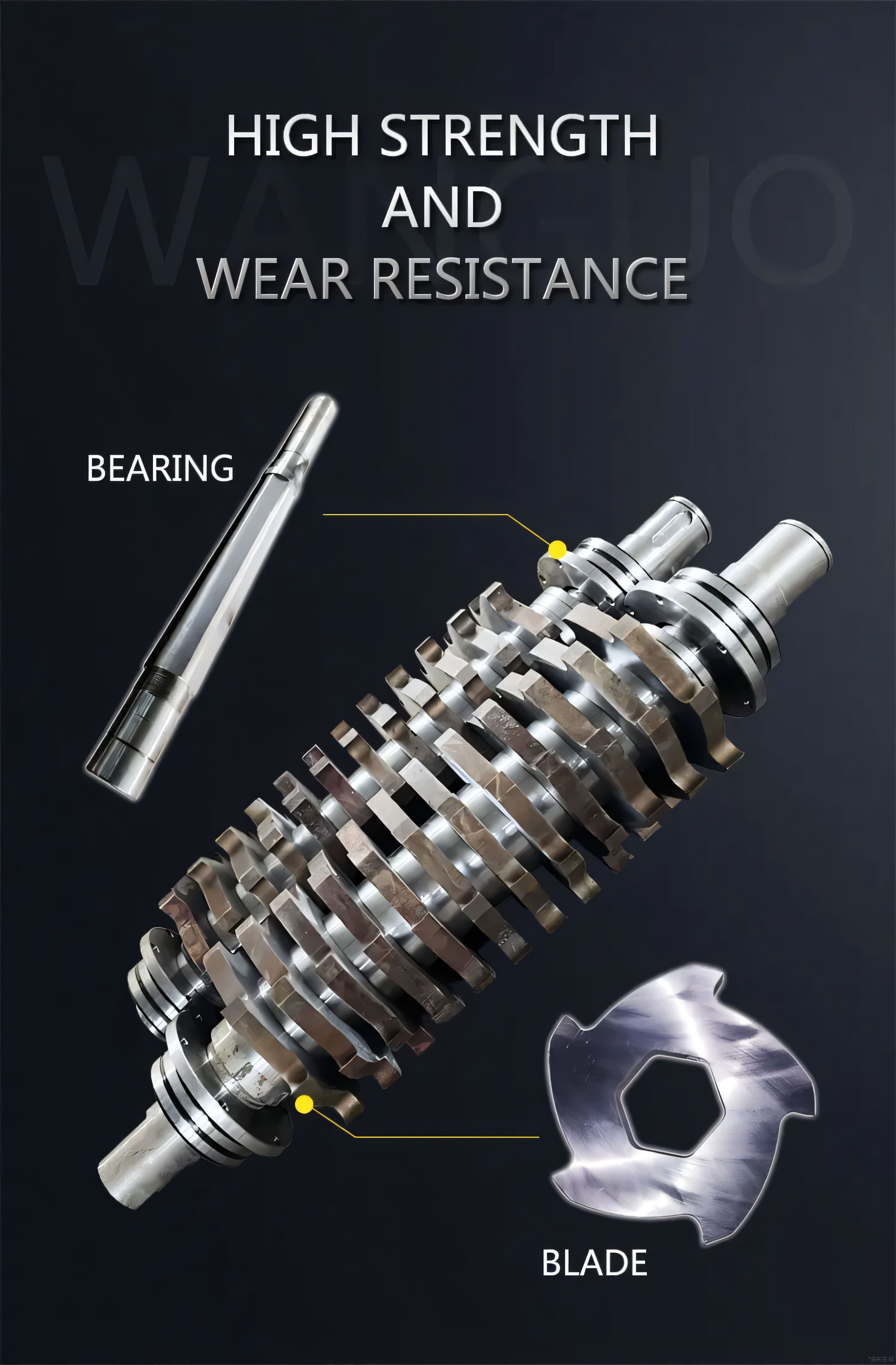
The blades on the two shafts grip irregular pieces and pull them into the cutting zone. This action helps break down bulky items such as molded plastic rejects and production offcuts so they can be moved more easily to the next processing stage.
The WX-300D uses two motors and two planetary gear reducers to drive the cutting shafts. The reducers convert motor speed into the slower shaft rotation needed for shearing. Feed thickness, material density, and the expected mix of scrap are useful inputs when reviewing the drive configuration for a quotation.
Shredded pieces leave the chamber through an open discharge without passing through a sizing screen. This setup suits applications where the first step is to reduce bulky material for sorting or further shredding. A sample trial can help determine whether the discharged pieces fit the next machine’s feed requirements.
The WX-300D can be paired with an infeed conveyor and discharge equipment to match the site layout. Where ferrous material needs to be recovered after shredding, WANXU can also review the placement of an inline magnetic separator. Planning these connections together helps define how material will move through the line.

The WX-300D is intended for primary size reduction. The examples below outline the feed details WANXU needs to assess each application.
Feed material | Application and selection considerations |
|---|---|
Rigid plastic scrap | Evaluate rejected molded parts, thick offcuts, and bulky plastic containers. Provide the dimensions and wall thickness of the largest pieces. |
Wood and packaging scrap | Include the dimensions of wood offcuts or dismantled packaging. Identify nails, brackets, or other embedded hardware when submitting samples. |
Rubber scrap | Specify piece thickness and any reinforcement. Whole tires require a separate review of feed size, construction, and preparation requirements. |
Light metal scrap | Provide the metal type, thickness, and shape. These details help determine whether the material suits the proposed cutter configuration. |
Mixed industrial waste | Describe the main components and how the mix varies between batches. Identify oversized items or contaminants so sorting and preparation requirements can be assessed. |
Specification | WX-300D |
|---|---|
Shredder type | Industrial double shaft shredder |
Processing stage | Primary size reduction |
Cutting arrangement | Two counter-rotating shafts with intermeshing blades |
Drive arrangement | Dual motors with planetary gear reducers |
Discharge design | Screenless, open discharge |
Installation options | Standalone unit or integrated recycling line |
Motor power, usable feed opening, and expected throughput can be confirmed for the proposed configuration during quotation. For material-specific throughput, the feed composition and test conditions should be recorded alongside the result.
WANXU can review the WX-300D as a standalone machine or as part of a complete recycling line. The review can cover infeed conveyors, discharge equipment, and inline magnetic separation, depending on the material and the requirements of the downstream process.
Technical support can cover site planning, installation, commissioning, and operator training. The quotation can also specify available wear parts and the scope of maintenance support for the selected configuration.
Preparation depends on the size, shape, and composition of the feed. Photos and dimensions of the largest items help WANXU review whether they can enter the machine as supplied or should be sorted, dismantled, or cut first.
Throughput depends on material composition, feed size, and how consistently material is fed. A trial with representative samples provides a basis for estimating the processing rate under comparable conditions.
The WX-300D uses a screenless discharge, so piece size and shape vary with the feed and cutter configuration. If the downstream process requires a specific size range, a trial can help determine whether a secondary shredding stage is needed.
Yes. The WX-300D can serve as the primary shredding stage. WANXU can review the available floor space, infeed arrangement, discharge point, and downstream equipment to assess how it would connect to the existing line.
WANXU offers spare parts support. The quotation can identify the blades and wear parts for the selected configuration, along with availability and recommended maintenance guidance.


