Views: 0 Author: Site Editor Publish Time: 2026-06-13 Origin: Site


Scaling waste processing requires a major shift in operational strategy. You must move beyond standalone machinery. Today, successful facilities rely on integrated, continuous-flow systems. Unfortunately, many plant managers face severe operational bottlenecks. These issues usually stem from under-spec'd primary reduction units. You can no longer simply buy a single piece of equipment to solve complex capacity problems. Instead, you must procure a fully integrated waste processing system. This shift transforms a disjointed facility into a highly streamlined operation.
In this comprehensive guide, we will break down the exact evaluation framework you need. We will show you how to confidently select a true turnkey large scale shredding system. You will learn to evaluate these complex systems based on actual throughput and daily reliability. We will also cover essential implementation realities. These insights will help you avoid costly installation delays and critical specification errors.
A true turnkey system integrates primary/secondary shredding, conveying, and separation into one cohesive, PLC-controlled line.
Evaluating a large capacity shredder requires looking beyond peak throughput to continuous operational volume and downtime frequency.
Successful implementation demands rigorous site assessments, including power grid capacity, footprint constraints, and environmental compliance (dust/noise).
Facility managers often underestimate the financial benefits of upgrading their infrastructure. A modern industrial shredding plant does much more than reduce material size. It fundamentally changes your operational economics. You gain better output control, lower manual labor costs, and higher material recovery rates.
Equipment brochures typically highlight a theoretical maximum throughput. They measure this in Tons Per Hour (TPH). However, actual sustained yield paints a different picture. Peak throughput represents short, unsustainable bursts of activity. It ignores jam-clearing times and material bridging events. A proper large scale shredding system prioritizes consistent, predictable output. You want steady processing over an entire eight-hour shift. Consistent operation prevents downstream equipment starvation. It also protects your primary rotors from aggressive shock loads.
Modern waste streams rarely remain uniform. Handling diverse materials drives profitability. You must assess the financial impact of processing multiple streams on a single line. Plant operators save significant time when they avoid manual line changeovers.
Municipal Solid Waste (MSW): Highly variable moisture content. Often contains hidden textiles and soft plastics.
Construction and Demolition (C&D): Extremely abrasive. Packed with heavy metals, concrete chunks, and rebar.
Commercial Waste: Bulky packaging materials, wooden pallets, and rigid plastics.
End-of-Life Tires: Tough steel belts and dense rubber. They require aggressive shear cutting.
When your system handles all these materials, you capture diverse market opportunities. You remain agile as local tipping fees fluctuate.
Manual sorting remains dangerous and inefficient. Older plants rely heavily on human pickers and manual jam clearing. Modern systems change this dynamic entirely. Programmable Logic Controllers (PLCs) automate the heavy lifting. They monitor rotor stress and automatically reverse shafts to clear jams. This automation improves overall facility safety. You can shift your labor force away from hazardous sorting belts. Instead, you train workers for technical oversight and preventative maintenance roles.
Buying individual machines leads to integration nightmares. A true turnkey shredding line functions as a single, breathing organism. Vendors engineer every component to speak to the next. This prevents bottlenecks and ensures smooth material transitions.
A comprehensive line relies on four distinct operational zones. You must properly spec each zone to maintain continuous flow.
Infeed & Metering: You cannot dump bulk material directly into a cutting chamber. Operators use automated walking floors or heavy-duty apron conveyors. These units feed material at a controlled rate. Metering prevents overloading and reduces sudden torque spikes.
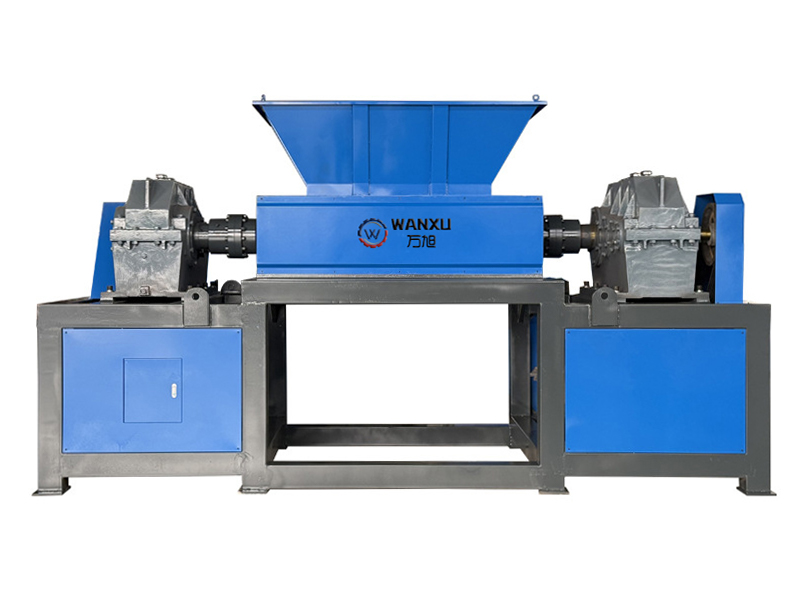
Primary Reduction: This is the workhorse of your operation. Facilities use low-speed, high-torque shredders here. They break down bulky, contaminated materials into manageable pieces. They handle the heaviest abuse, chewing through engine blocks or massive wood stumps.
Secondary Processing: Some end-products require exact output sizing. Refuse-Derived Fuel (RDF) and Solid Recovered Fuel (SRF) demand precise dimensions. Here, operators deploy high-speed granulators or secondary shredders. They utilize specific screen sizes to guarantee final particle dimensions.
Downstream Sorting: You must separate the shredded material into valuable commodities. Integrated magnetic separators pull out ferrous metals. Eddy current separators eject aluminum and copper. Air classifiers blow light plastics and paper away from heavy aggregates.
Hardware means nothing without intelligent software. Centralized SCADA (Supervisory Control and Data Acquisition) systems connect the entire line. They provide real-time monitoring on a central dashboard. If the secondary shredder experiences high amp draw, the PLC tells the infeed conveyor to slow down. This intelligent auto-pacing prevents catastrophic backups. It maximizes throughput without requiring constant human intervention.
Table 1: Turnkey Shredding Line Components and Functions | ||
Component Zone | Primary Function | Key Performance Indicator |
|---|---|---|
Infeed Metering | Regulates material flow to prevent choking | Variable speed control accuracy |
Primary Reduction | Initial breakdown of bulky items | Torque capacity and jam recovery time |
Secondary Processing | Achieves exact final particle sizing | Screen durability and throughput stability |
Downstream Sorting | Recovers valuable commodities | Purity percentage of recovered materials |
Selecting the right machinery dictates your facility's future success. You must look past marketing claims and evaluate raw engineering. Focus heavily on drive mechanisms, cutting chamber design, and how the machine handles un-shreddable objects.
The drive system is the beating heart of any large capacity shredder. You generally choose between hydraulic and electromechanical drives. Each serves a distinct operational purpose.
Chart: Hydraulic vs. Electromechanical Drive Systems | ||
Feature | Hydraulic Drives | Electromechanical Drives |
|---|---|---|
Best Use Case | Heavy industrial waste, C&D, unpredictable streams | Uniform MSW, plastics, predictable materials |
Shock Load Handling | Excellent. Fluid absorbs massive sudden impacts. | Moderate. Relies on gearboxes and VFDs. |
Energy Efficiency | Lower. Hydraulic fluid heating causes energy loss. | High. Direct power transfer minimizes waste. |
Maintenance Profile | Requires regular fluid changes and hose inspections. | Simpler, but gearbox repairs are highly complex. |
The rotor configuration determines your cutting efficiency. You must evaluate the knife designs based on your material. Shear cutting works best for plastics and tires. Tear cutting excels at ripping apart bulky MSW and wood. Furthermore, inspect the screen access. Screens determine your final product size, but they wear out quickly. A well-designed chamber allows operators to swap screens in minutes, not hours.
No waste stream is perfect. Eventually, a massive concrete block or an un-purgable steel anvil will enter the chamber. You must evaluate how the system reacts. High-quality systems use mechanical clutches or advanced software fail-safes. When the rotor hits an immovable object, the system instantly disconnects power or reverses. This rapid reaction prevents catastrophic gearbox destruction.
Never trust throughput numbers based on ideal, uniform materials. Vendors often test with clean, pre-sorted cardboard. Demand Factory Acceptance Testing (FAT) using your specific, contaminated waste stream. If you process wet MSW, force the vendor to shred wet MSW during the trial. Honest vendors welcome this challenge.
Buying the equipment represents only half the battle. Installing a massive industrial system introduces significant facility challenges. Many plant managers face severe delays because they misunderstand the infrastructure requirements.
You cannot simply bolt a 40-ton machine to a standard warehouse floor. A complete system requires extensive site preparation. You must pour reinforced concrete foundations to absorb constant vibration. You will likely need deep trenching for below-grade discharge conveyors. Most importantly, these systems demand massive electrical draw. Many facilities must partner with local utility companies to upgrade their incoming power grids. Failing to secure grid upgrades early will stall your entire project.
Industrial waste processing generates extreme dust, noise, and fire risks. Local regulators will shut down non-compliant facilities immediately. You must integrate active safety systems during the initial build.
Fire Suppression: Install optical spark detectors inside the cutting chamber. Link them to automated water deluge systems.
Acoustic Enclosures: Primary shredders generate deafening noise. You must build sound-dampening walls to protect worker hearing and satisfy municipal noise ordinances.
Dust Extraction: Dry materials create explosive dust clouds. Integrate high-capacity industrial vacuums and centralized baghouses over all transfer points.
The word "turnkey" creates dangerous assumptions. Vendors use it to mean they will supply, assemble, and connect the machinery. However, the vendor does not manage your business operations. As the facility operator, you must still secure environmental permits. You must organize local electrical contractors. You are responsible for integrating the new line into your existing downstream logistics. Clarify exact responsibilities in the final contract to avoid costly finger-pointing.
Procuring heavy machinery requires a strict financial framework. Managers often fixate entirely on the initial purchase price. This approach ruins long-term profitability. You must shift your focus toward ongoing operational expenses and vendor reliability.
Your Capital Expenditure (CapEx) covers the machine, shipping, and installation. Your Operational Expenditure (OpEx) dictates your daily survival. Over a ten-year lifespan, OpEx dwarfs the initial purchase price.
Energy Consumption: Calculate the exact cost per ton processed. Electromechanical drives might cost more upfront but save thousands in monthly electricity bills. Ask vendors for guaranteed kilowatt-per-ton metrics.
Wear Parts: Shredding abrasive materials destroys metal. You must calculate the replacement frequency of knives, counter-knives, and sizing screens. Hardox steel components cost more initially but drastically extend your run times between maintenance shutdowns. Map out a realistic annual budget for consumables.
When a primary rotor goes down, your entire facility stops making money. You need strict SLAs negotiated before signing the purchase order. Evaluate the vendor's guaranteed response times. Ensure they warehouse critical spare parts locally. Modern systems should also include remote diagnostic capabilities. This allows factory engineers to log into your PLC securely. They can often troubleshoot software faults in minutes from across the globe.
To finalize your procurement process, follow these strict validation steps:
Request Comprehensive Material Testing: Ship a representative sample of your toughest waste to the vendor's test facility. Demand a video recording of the trial.
Demand a Site-Specific 3D Layout: Do not accept generic floor plans. Require a custom CAD model. Verify the workflow, maintenance clearances, and footprint constraints inside your exact building.
Audit Previous Installations: Ask the vendor for references. Visit an active facility processing a similar waste stream. Speak privately with their maintenance manager about real-world downtime.
Investing in a high-capacity waste reduction line is a critical infrastructure decision. It is never just a simple equipment purchase. Your choice dictates facility profitability, worker safety, and operational agility for the next decade. As waste streams become more complex, standalone machines can no longer keep up.
We advise decision-makers to prioritize seamless system integration. Demand realistic, contract-backed throughput guarantees based on your actual material. Look past the lowest initial bid and focus heavily on post-installation support and wear part longevity. A well-engineered line will consistently outperform cheaper, disjointed alternatives.
Do not let capacity bottlenecks throttle your revenue. Schedule a comprehensive site audit today. Reach out to trusted engineering partners and request a custom throughput analysis tailored specifically to your toughest material streams.
A: A standalone unit acts as an isolated machine requiring manual feeding and extraction. A turnkey line features deep system integration. It combines automated infeed conveyors, shredders, magnetic separators, and centralized PLC controls. These elements communicate in real-time to prevent jams and optimize material flow automatically.
A: Timelines vary based on complexity, but you should expect realistic rollouts to take 4 to 8 months. This timeline starts from final design approval. It includes manufacturing, shipping, site preparation, concrete foundation curing, mechanical assembly, and final electrical commissioning.
A: Yes, but it requires a highly robust, low-speed, high-torque setup. C&D contains heavy aggregates and rebar, while MSW features soft, damp materials. To handle both without changing lines, you need aggressive shear-and-tear rotor designs and a drive system capable of surviving extreme shock loads.
A: Continuous operation demands strict preventative schedules. Operators must perform daily visual inspections for loose hardware. They must routinely rotate or replace dull knives to maintain efficiency. You also need periodic servicing of the hydraulic fluids, gearbox oil, and tensioning of the drive belts.


