Views: 0 Author: Site Editor Publish Time: 2026-06-26 Origin: Site


Processing end-of-life energy cells demands extreme precision. Facility managers, recycling plant engineers, and operational investors know this reality all too well. Shredding lithium-ion batteries is a notoriously high-risk operation. You cannot simply apply brute mechanical force to these volatile power sources. Operators face a severe daily dilemma. They must balance maximum black mass recovery against the catastrophic risk of thermal runaway. It requires highly specialized engineering to contain explosions and isolate reactive materials safely. This article provides an evidence-based breakdown of current processing technologies. We evaluate the core differences between dry and wet processing systems. You will learn crucial mechanical design evaluation criteria to maximize yield purity. We also explore the implementation realities necessary to scale battery recycling operations safely and efficiently.
Safety dictates technology: Processing fully charged EV batteries requires fundamentally different systems (typically flooded/wet) compared to fully discharged cells (dry/inert).
Particle size over raw power: High-torque, low-speed shredding prevents the pulverization of valuable materials, ensuring higher purity black mass.
Compliance baseline: Lithium-ion waste carries severe fire and reactivity risks (often classified under EPA D001 and D003 codes); equipment must feature integrated explosion mitigation (N2 blanketing, airlocks, or submersion).
You cannot approach lithium-ion processing like standard waste reduction. Conventional industrial shredders fail catastrophically when they encounter live energy cells. They lack the structural containment and atmospheric controls required for hazardous materials. Investing in proper battery disposal equipment requires a firm understanding of the inherent dangers. Facility operators must establish a strict compliance baseline to protect personnel and surrounding infrastructure.
Regulatory agencies recognize the extreme hazards of these materials. The US Environmental Protection Agency (EPA) strictly monitors how facilities handle energy storage waste. Understanding these classifications dictates your equipment requirements. Batteries routinely trigger two specific EPA waste codes:
D001 (Ignitable Waste): These materials can easily catch fire under specific conditions. Mechanical friction or electrical shorting often provides the ignition source.
D003 (Reactive Waste): These materials undergo violent chemical changes without detonating. They react aggressively when exposed to moisture or extreme heat.
The most profound danger comes from the self-oxygenating threat. During a thermal runaway event, lithium batteries generate their own oxygen. They essentially fuel their own combustion process internally. Standard fire suppression methods prove completely inadequate here. Spraying normal fire retardants will not suffocate a battery fire. Once a cell goes into thermal runaway, it burns until the reactive components deplete completely.
Industry consensus establishes strict State of Charge (SOC) thresholds for safe processing. If you plan to use a dry mechanical process, operators must discharge batteries rigorously. Facilities generally agree they must lower the SOC below 20%. Hitting this threshold minimizes explosion risks during dry shearing. Processing fully charged batteries in a dry environment practically guarantees a dangerous thermal event.
Buyers must align their machinery choices with their specific input materials. Two dominant technological pathways exist today. You must choose between dry inert systems and wet submerged systems. Making the wrong choice creates immense physical danger. A premium battery recycling shredder must match the condition of the batteries entering your facility.
To clarify the operational differences, review the technical comparison chart below:
Feature | Dry Mechanical Shredding | Wet / Submerged Shredding |
|---|---|---|
Ideal Input Material | Fully discharged cells (<20% SOC) | Partially or fully charged cells |
Primary Safety Mechanism | Nitrogen blanketing (O2 < 3%) | Aqueous spray or full submersion |
Downstream Sorting | Straightforward (Air flow / Electrostatic) | Requires complex drying operations |
Major Operational Risk | Dust explosion if oxygen levels spike | Hydrogen gas (H2) generation |
Dry processing systems work best for fully discharged batteries. They suit operations prioritizing straightforward downstream sorting. Dry materials easily pass through electrostatic separators and air classifiers. This pathway keeps the highly valuable black mass dry and easy to refine further.
The safety mechanism relies on strict atmospheric control. These setups utilize advanced dual-airlock feeding systems. They constantly flood the cutting chamber with nitrogen (N2) blanketing. The primary goal is to keep oxygen levels strictly below 3%. By eliminating oxygen, you remove the possibility of a combustion triangle forming inside the chamber.
However, dry systems carry specific operational limitations. Vacuum-assisted systems offer superior performance but require significant engineering. These machines drop the internal chamber pressure below 100 mbar. The low pressure safely evaporates toxic electrolytes directly during cutting. While highly effective, maintaining this deep vacuum increases process complexity. Operators must rigorously maintain seals and airlock integrity daily.
Wet processing systems handle partially charged cells safely. They allow facilities to completely bypass the slow, tedious pre-discharge bottleneck. Discharging thousands of consumer cells manually wastes enormous amounts of time. Wet systems solve this fundamental throughput problem immediately.
The mechanism relies on overwhelming the thermal threat. Shredding occurs entirely underwater or under a heavy aqueous spray. The liquid immediately quenches any mechanical sparks. The fluid mass also absorbs sudden bursts of thermal energy from short-circuiting cells. It provides an instant, continuous cooling effect directly at the cutting site.
You must watch out for one critical chemical risk. This is a crucial marker of operational expertise. Shredding aluminum battery casings in an alkaline water environment generates hydrogen gas (H2). Hydrogen is violently flammable. A properly designed wet system must feature robust gas venting mechanisms. It also requires heavy-duty wastewater treatment capabilities to handle the contaminated fluid loop safely.
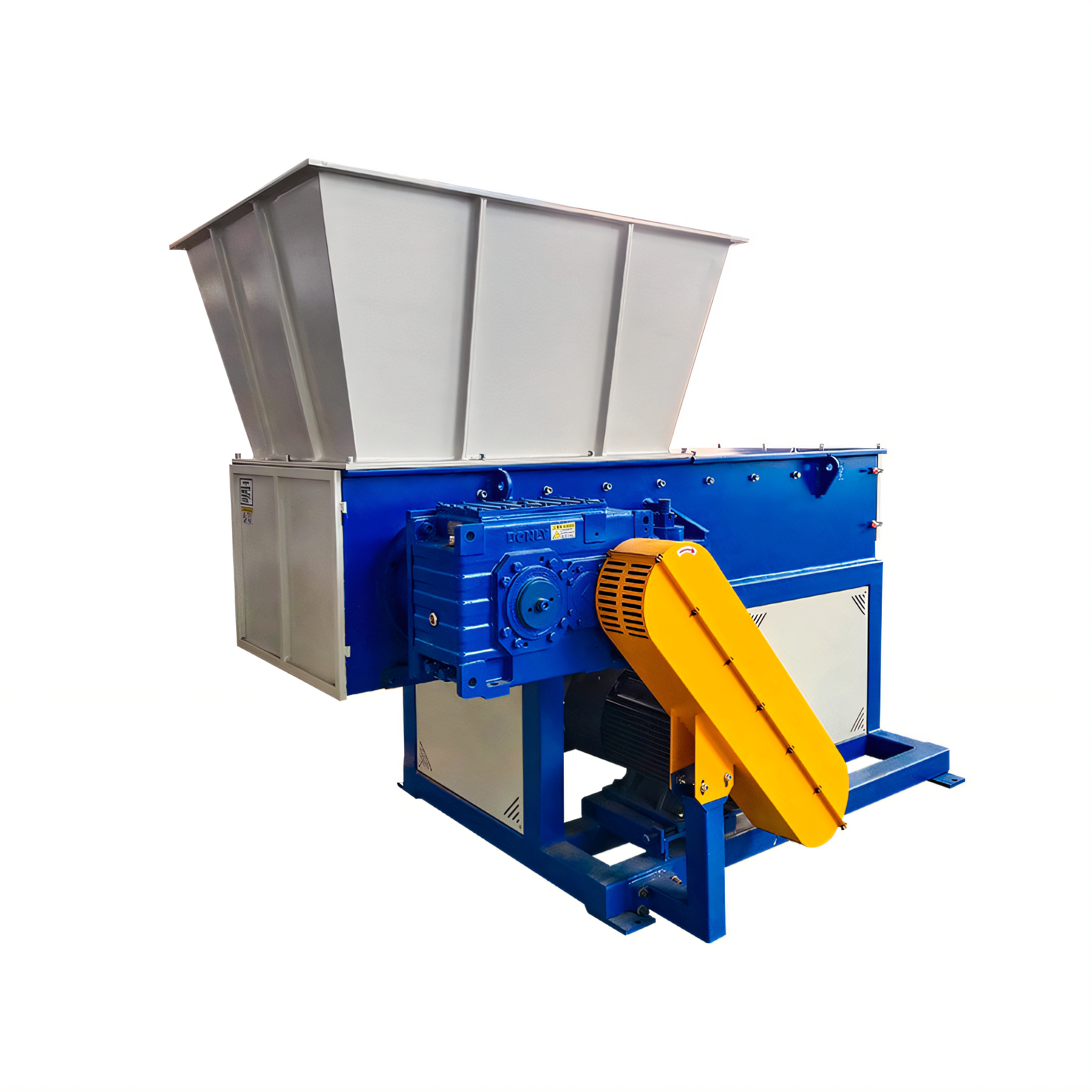
Facility managers often make a common mistake during procurement. They obsess over raw horsepower. Instead, buyers must shift their focus to yield precision and operational uptime. A reliable lithium battery shredder proves its worth through accurate size reduction. Power means nothing if the machine destroys the valuable materials.
The primary hurdle is the particle size challenge. Facilities need a precise target size to optimize downstream processing. Usually, engineers aim for a uniform fraction under 20mm. Consistent sizing dramatically improves downstream drying and sorting processes. Irregular chunks create immediate bottlenecks. Oversized pieces jam augers and confuse magnetic separators.
Evaluating mechanical principles reveals the superiority of specific cutting styles. Consider the following low-speed, high-torque advantages:
High-speed, aggressive shredding creates massive clouds of hazardous dust. It effectively burns up the most valuable material.
Low-speed shearing ensures clean, deliberate cuts on copper and aluminum foils.
Slow rotor speeds minimize frictional heat generation inside the cutting chamber.
High-torque processing yields a much higher-purity black mass fraction for recovery.
Operators must also address the notorious screen blinding problem. This remains a major maintenance pain point across the recycling industry. Wet or electrolyte-soaked battery materials turn extremely sticky. This sludge easily clogs traditional sizing screens beneath the rotor. We call this "blinding." A blinded screen halts throughput completely. It forces operators to shut down the line and manually clean the chamber. When evaluating machines, look for screenless, single-pass knife geometries. Advanced rotor configurations achieve the required <20mm size in one pass without relying on restrictive screens. This directly reduces daily maintenance delays.
Navigating the transition from small testing lines to full production requires careful planning. Decision-makers must define strict operational boundaries for their investments. Buying a specialized Li-ion battery machine requires a clear roadmap for scaling up. You must match the physical capabilities of the machine to your planned throughput volumes.
First, differentiate between pilot tiers and commercial tiers. Lab and pilot systems generally handle module-level testing. They rely heavily on manual feeding and batch processing. Conversely, commercial systems run continuously. True industrial lines process 2 to 3 tons of material per hour. Pilot machines cannot survive the mechanical stress of continuous, multi-shift production.
Handling modern automotive power packs presents entirely new logistical hurdles. You must carefully evaluate the requirements for a heavy-duty EV battery shredder. Processing whole 3,000-lb EV packs requires massive feed openings and specialized hydraulic pushers. If your machine cannot handle a full pack, you face immense labor demands. Workers must manually pre-dismantle the heavy packs down to the module or cell level. This labor-intensive step slows down production drastically.
Furthermore, consider modular front-end integration. The shredder represents only step one of the recycling journey. Buyers must evaluate how the primary cutter feeds into downstream processing modules. Chopped material must move securely. Facilities typically use sealed auger conveyors to transport the hazardous fragments safely. From there, materials enter low-temperature carbonization furnaces. These furnaces burn off organic binders. Finally, magnetic separators isolate the steel casings. Your primary cutting machine must integrate seamlessly with these subsequent technologies.
Selecting a manufacturing partner requires a skeptical, highly pragmatic framework. You must focus intensely on the facility realities of your specific plant. Many standard recycling machinery providers lack the specialized knowledge required for chemical waste. You need a partner who understands the extreme volatility of these chemical energy systems.
The best vendors define strict operating boundaries immediately. Trustworthy manufacturers will tell you exactly what their machine cannot do. Avoid any company making broad "one-size-fits-all" claims. Different chemistries demand different controls. A machine built specifically for dry, fully discharged consumer cells should never process charged EV modules. Pushing equipment beyond its intended chemical boundary invites disaster.
You must rigorously assess the ongoing consumables and physical footprint required. Every technology choice dictates a specific daily workflow. Assess the daily consumption of inert gases. Dry systems require a continuous, heavy supply of nitrogen to maintain safe oxygen levels. Alternatively, assess the liquid demands. Wet systems require complex liquid waste disposal loops. They also demand high-energy drying equipment downstream to remove the moisture from the black mass. Your facility must have the spatial footprint to accommodate these necessary support systems.
Recommend starting all procurement conversations with a strict facility audit. Map out your expected input materials accurately. Document the form factors you will process, such as cylindrical cells, pouch cells, or hard-shell modules. Clarify the expected SOC levels upon arrival. Use this specific audit to start vendor discussions, rather than asking for general equipment catalogs. This approach instantly filters out unqualified machinery builders.
Securing the right equipment forms the foundation of a viable material recovery business. Facilities handling end-of-life cells must treat the initial size reduction step as a highly specialized chemical process, not just a mechanical demolition task.
Investing in specialized equipment fundamentally acts as an investment in hazard containment.
Proper rotor designs directly preserve the purity of the critical black mass yield.
You must strictly align your technology choice (dry vs. wet) with the exact charge state of your incoming materials.
Targeting particle size precision prevents massive bottlenecks in your downstream sorting lines.
The right system minimizes your facility's liabilities. It prevents catastrophic fires and dangerous toxic exposure incidents. Simultaneously, it maximizes the extraction of critical minerals like lithium, cobalt, and nickel. We strongly encourage operators to consult closely with dedicated process engineers. Always request specific case studies that match your exact battery feedstocks before finalizing any machinery decisions.
A: Yes, if you use a dry mechanical processing line. Dry environments require cells to drop below 20% SOC to prevent thermal explosions. Conversely, wet or submerged shredding lines can safely handle partially charged batteries. However, these wet systems demand highly complex gas venting to manage hydrogen generation and require extensive wastewater treatment.
A: Blinding occurs when sticky, damp black mass and escaped electrolytes clump together. This dense sludge easily clogs the traditional sizing screens located beneath the cutting rotors. This clogging leads to frequent, severe downtime. To prevent this, many modern machines utilize single-pass, screenless knife designs to achieve size reduction without restrictive meshes.
A: We strongly advise against mixing these materials. Processing them in the same machine risks severe cross-contamination. Lead-acid and lithium chemistries present fundamentally different chemical reactivity risks. Lithium processing requires dedicated environments with strict atmospheric controls to prevent explosive chemical reactions.


