Views: 0 Author: Site Editor Publish Time: 2026-06-20 Origin: Site


Transitioning paper mill rejects from costly landfill liabilities into recoverable commodities marks a major shift in modern manufacturing. Generating alternative fuels like RDF and SRF holds massive economic and environmental potential. However, processing mixed mill waste introduces extreme operational challenges. Facility managers regularly encounter heavily compressed ragger wire containing dense steel strands. They also battle highly abrasive, high-moisture sludge generated by recycled deinking plants. Standard crushing equipment simply fails under these demanding conditions. This guide provides a pragmatic, engineering-focused look at evaluating and integrating a high-performance shredding system. We break down strict equipment selection criteria and essential risk mitigation strategies. You will discover the required unit operations needed to achieve compliance-grade energy recovery and resource separation. By mastering these dynamics, you can optimize your processing flow while thoroughly safeguarding downstream operations.
Effective processing of ragger wire (pulper tails) requires low-speed, high-torque shredding systems capable of separating up to 45% steel from intertwined synthetic waste.
Moving from landfilling to boiler-ready RDF (Refuse-Derived Fuel) demands strict particle size control and downstream optical sorting to manage chlorine and moisture levels.
Sludge management efficiency hinges on pairing the right pre-processing with advanced dewatering (e.g., double screw presses) to reach mechanically achievable dryness levels of up to 65%.
System layout matters: Pre-intercepting waste before clarification and utilizing two-stage shredding reduces machine wear and prevents downstream equipment blinding.
Operators must first contextualize the specific waste stream entering their facility. Recycled fiber lines generate drastically different waste profiles compared to virgin pulp mills. Recycled paper operations often produce two to four times more sludge volume. Unrecovered fillers, short fibers, and inks drive this massive volume increase. You cannot apply a generic waste approach here. Effective mill waste processing requires pinpointing the exact origin of your material bottlenecks.
Pulper rags, commonly known as ragger wire, represent the most extreme challenge. These thick tails emerge from the pulping drum tightly wound and highly compressed. They typically comprise approximately 45% dense steel wire. The remaining 55% consists of post-consumer plastics, staples, synthetic fabrics, and packing tape. Standard crushers jam immediately upon encountering this dense mixture. Separating these intertwined components requires specialized high-torque shear forces. Shearing cuts through the steel wires cleanly, liberating the trapped plastics for alternative fuel recovery.
It helps to differentiate processing needs based on material origins. Coarse rejects behave very differently from fine rejects. Coarse rejects emerge during the initial pulping stage. They contain heavy stones, thick metal chunks, and unbroken raw materials. Fine rejects drop out during the secondary screening stage. These streams consist of lightweight plastics, fine sand, and residual fibers. A single machine setting rarely handles both extremes effectively.
Paper mill sludge introduces entirely different mechanical hurdles. Deinking operations generate sludge heavily laden with clay and ash. High ash content drastically impacts the final thermal recovery value. It essentially acts as a fire retardant in boiler systems. Furthermore, clay particles complicate mechanical dewatering efforts. They form impermeable layers inside pressing equipment. Understanding these specific sludge properties is crucial before selecting mechanical separation technology.
Table 1: Characteristics of Paper Mill Waste Streams | |||
Waste Category | Origin Stage | Primary Composition | Core Processing Challenge |
|---|---|---|---|
Ragger Wire (Pulper Tails) | Primary Pulping | 45% Steel Wire, 55% Plastics & Tape | Extreme density; requires high-torque shearing. |
Coarse Rejects | Initial Screening | Stones, Heavy Metals, Large Plastics | High risk of sudden machine impact damage. |
Fine Rejects | Fine Screening | Sand, Micro-plastics, Stray Fibers | Highly abrasive; causes rapid tool wear. |
Deinking Sludge | Flotation/Washing | Clay, Inks, Ash, Short Fibers | High moisture retention; clogs filter screens easily. |
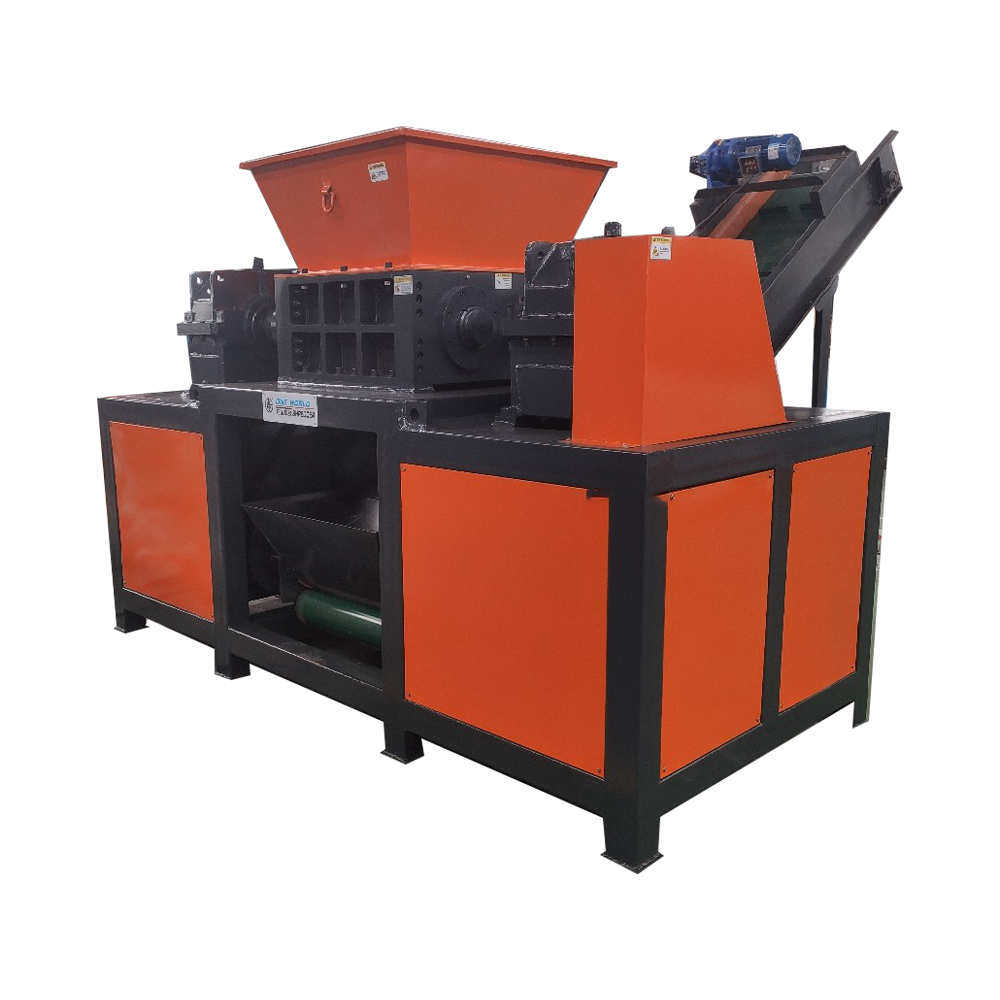
Engineers face a critical dilemma when designing the primary size reduction system. They must choose between a single-step configuration and a two-stage setup. Single-step processing works well for uniform, lower-density packaging waste. It also handles pre-sorted end-cuts efficiently. However, mixed and heavily contaminated rejects demand a different approach.
A two-stage configuration is practically mandatory for a robust pulp reject shredder system. This architecture uses a powerful primary shredder first. The primary machine slowly tears open heavy bundles and liberates intertwined metals. A secondary high-speed machine then normalizes the particle size. This secondary step guarantees the uniform fraction sizes required for Refuse-Derived Fuel (RDF) production. Attempting to achieve small particle sizes in one step usually causes catastrophic motor overloads.
Modern facilities follow a highly standardized processing flow to maximize recovery. You must map out this foundational sequence carefully. First, an infeed conveyor delivers raw rejects steadily. Next, the material enters the paper mill waste shredder for primary volume reduction. The shredded output then passes under an overbelt magnetic separator. This powerful magnet extracts the liberated ferrous metal for lucrative recycling. Finally, a discharge conveyor transports the clean, synthetic fraction toward the pelletizing or boiler feed areas.
Comparison Chart: Single-Step vs. Two-Stage Shredding | |||
Architecture Type | Ideal Material | Advantages | Limitations |
|---|---|---|---|
Single-Step System | Uniform cardboard, loose paper, pre-sorted edge trims. | Lower initial investment, smaller footprint, simpler maintenance. | Fails on dense ragger wire; cannot handle heavy metal contamination. |
Two-Stage System | Mixed pulp rejects, heavy ragger wire, post-consumer plastics. | Prevents machine jamming, liberates metals cleanly, produces uniform RDF. | Requires more floor space and complex conveyor integration. |
Strategic equipment placement also improves downstream packaging operations. Placing shredders directly in front of baling machines offers a massive tactical advantage. Edge trims and large slab waste waste valuable space inside standard bales. Shredding these materials beforehand alters their physical structure. The shredded fibers naturally interlock and bind together. This interlocking action dramatically increases overall bale density. Dense bales reduce transport trips and prevent transit spillage entirely.
Procuring a paper waste machine requires strict scrutiny of internal mechanics. You cannot rely solely on horsepower ratings. Drive mechanics and torque constraints dictate actual field performance. Processing dense pulper wire bundles requires immense, sustained cutting force. High-speed crushers simply trip their breakers under these loads.
Low-speed, high-torque configurations are non-negotiable for primary reduction. Dual-shaft and quad-shaft designs excel in this environment. They bite into heavy rags slowly, utilizing immense rotational torque to shear thick steel cables. If a jam occurs, these intelligent drive systems sense the resistance immediately. They automatically reverse the shafts to clear the obstruction, then resume cutting. This automated reversal prevents frequent trip-outs and eliminates hazardous manual interventions.
Particle size uniformity serves as the second critical evaluation metric. Integrated sizing screens determine the exact dimensions of your output. This becomes essential if your final product targets fluidized bed boilers or cement kilns.
Consistent Fractions: Output sizes must strictly remain between 40mm and 60mm.
Burn Consistency: Oversized pieces burn unevenly and cause boiler temperature spikes.
Screen Durability: Screens must withstand heavy impacts without bending or breaking.
Finally, wear resistance dictates your ongoing maintenance burdens. Paper mill rejects contain highly abrasive elements. Tramp metal, sand, and broken glass constantly grind against the cutting chamber. A well-designed machine combats this abrasion through smart metallurgy and accessible architecture. Look for rotors featuring reversible cutting discs. When one edge dulls, maintenance teams simply unbolt and rotate the disc. This doubles the tool lifespan instantly. Furthermore, accessible rotor chambers allow technicians to perform these swaps quickly, keeping production downtime minimal.
Mechanical dewatering forms the backbone of efficient sludge management. The industry is rapidly shifting away from legacy dewatering technologies. Traditional belt presses usually cap their performance at roughly 30% dryness. This leaves 70% of the material mass as heavy water. Paying to transport and landfill water destroys facility profitability. Modern dewatering hierarchies demand better solutions.
Upgrading to double screw presses fundamentally changes the operational math. These advanced machines achieve up to 65% mechanical dryness. They utilize immense physical pressure to squeeze moisture outward through tightly woven wedge-wire screens. When paired with a robust paper sludge shredder to break down large clumps beforehand, the screw press operates flawlessly. Achieving 65% dryness means the sludge can often burn self-sufficiently without supplemental natural gas.
Engineering layout determines system success just as much as machine quality. Forward-thinking mills implement a reverse layout strategy. Traditionally, facilities pump all waste into massive clarifiers, treating the sludge at the very end of the cycle. Reverse layouts intercept solid waste much earlier. Operators place shredding and pressing equipment upstream, extracting solids before they ever reach the clarifier. This dramatically reduces the total solid load stressing the wastewater treatment plant.
Creating a self-sustaining waste-to-energy loop requires strict component synergy. You must arrange the machinery in a highly specific sequence to guarantee results:
Disc Pre-thickeners: These units capture raw liquid waste and rapidly drain free water, elevating initial solid concentrations.
Double Screw Press: The thickened slurry enters the press, where mechanical squeezing forces out trapped moisture, reaching up to 65% dryness.
Low-Temperature Sludge Dryers: The pressed cake enters thermal dryers utilizing excess facility waste heat. This final step evaporates remaining moisture, creating a highly combustible energy product.
Transforming mill rejects into alternative fuels involves strict chemical compliance. Shredded material cannot transition straight from the cutter into a boiler system. The chlorine risk remains exceptionally high. Polyvinyl chloride (PVC) plastics frequently contaminate recycled paper bales. Burning PVC releases hydrochloric acid gas. This highly corrosive gas destroys expensive boiler tubes rapidly. You must actively manage this chemical threat.
Integrating Near-Infrared (NIR) optical sorting mitigates this severe risk. You place the NIR sorting arrays immediately after the secondary shredder. The system scans the uniform 50mm particles as they fly across a high-speed belt. The sensors identify the unique chemical signature of PVC. Micro-second air jets then blast the offending plastic particles out of the fuel stream. This crucial step ensures the final RDF meets strict environmental and equipment protection standards.
Mechanical blockages present another frequent troubleshooting scenario. Screen blinding plagues many sludge dewatering operations. Clay and high-ash sludge behave terribly under pressure. The plate-like clay particles wedge themselves into screen perforations. They quickly bridge the gaps and completely blind the screen holes, halting water drainage. Field experience reveals a brilliant mechanical solution. Operators intentionally introduce long-fiber waste into the sludge mixture. These resilient fibers act as a natural press aid. As the screw turns, the fibers continuously wipe the wedge-wire screens clean, preventing clay bridging entirely.
Handling sudden material overloads requires smart automation. Processing thick sludge or exceptionally dense rags occasionally overwhelms the drive motors. Shutting down the entire line costs valuable production time. Instead, modern systems utilize automated intervention. When the motor draws excessive current, the system automatically injects dilution water into the feed throat. Simultaneously, pneumatic back-pressure cones retract slightly. This relieves the internal pressure, allowing the machine to digest the tough material without tripping offline.
Selecting the right shredding and dewatering equipment goes far beyond simple waste reduction. It represents a comprehensive energy recovery and asset protection strategy. Facility managers must view these systems as revenue-generating engines rather than disposal expenses. Correctly specified machinery transforms landfill liabilities into valuable steel commodities and high-caloric fuels.
To move forward effectively, implement these action-oriented next steps:
Conduct a localized waste characterization audit to determine exact steel percentages and chlorine levels in your rejects.
Calculate current landfill transport costs against the potential thermal value of 65% dry sludge.
Request manufacturer pilot tests using your specific ragger wire samples to verify true torque capabilities.
Evaluate upstream facility layouts to identify opportunities for pre-clarifier waste interception.
A: Shredding ragger wire eliminates high landfill tipping fees and allows mills to recover and sell the ~45% steel content, while routing the remaining 55% synthetic fraction toward alternative fuel (RDF) generation.
A: Kilns require homogeneous, stable fuel. A dedicated shredder normalizes the physical size of the waste, exposing trapped moisture for drying and liberating metals for magnetic extraction, ensuring the final RDF/SRF meets strict European or local thermal and chemical standards.
A: High concentrations of plate-like clay and fillers (especially from deinking recycled paper) can bridge across screen perforations. Introducing fibrous waste into the sludge stream acts as a mechanical press aid to keep screens clear.
A: While versatile single-shaft shredders exist, best practice dictates a customized approach. Bulky rags require low-speed, high-torque shearing to break steel wires, whereas fine rejects typically require high-speed cutting to achieve the uniform particle size necessary for optical sorting and pelletizing.


