Views: 0 Author: Site Editor Publish Time: 2026-06-03 Origin: Site


Extended Producer Responsibility mandates are dramatically reshaping global waste management policies. Governments now hold manufacturers directly accountable for packaging end-of-life cycles. Meanwhile, the FDA continues issuing favorable compliance letters for food-grade recycled plastics. These converging forces drive massive global demand for high-purity rPET. However, turning post-consumer waste into profitable raw material presents a harsh business reality. You must rely heavily on precise mechanical size reduction to succeed. Selecting the ideal plastic bottle shredder involves far more than merely verifying throughput capacity. It requires actively balancing upstream contamination risks. You must also align your equipment output tightly against downstream washing requirements. In this comprehensive guide, we explore how proper mechanical breakdown bridges the gap between raw waste and premium flake. You will learn how to match machines to specific materials accurately. We will help you evaluate critical rotor components like an expert. Finally, you will discover maintenance protocols designed specifically for maximum operational uptime.
Equipment purchase price typically accounts for only 35–40% of a 5-year TCO; energy efficiency and blade lifespan dictate actual profitability.
Choosing between a single-shaft and dual-shaft plastic container shredder depends entirely on your feed state (e.g., loose HDPE vs. highly contaminated, baled PET).
Effective shredding is the prerequisite for separating critical contaminants (like PVC and HDPE bottle caps) during the downstream sink/float washing phase.
Premium rPET flake valuation requires strict adherence to purity, moisture stability, and low non-PET polymer content.
Industrial recycling operations strictly follow a rigorous standard workflow. A reliable bottle recycling machine sits precisely in the middle of this crucial sequence. To understand its fundamental value, examine the standard seven-step industrial blueprint:
Sorting: Removing obvious non-plastic materials like scrap metal, cardboard, and organic waste.
Label Removal: Stripping outer polymer sleeves using mechanical friction or thermal systems.
Shredding: Reducing whole rigid containers into manageable, dimensionally uniform pieces.
Hot and Friction Washing: Eliminating stubborn glues, sticky sugars, and embedded oils.
Sink/Float Separation: Dividing different plastic polymers based entirely on their physical density.
Drying: Removing residual moisture rapidly to ensure stable long-term storage.
Pelletizing: Extruding clean flakes into ready-to-use resin pellets for manufacturers.
Underperforming shredders inevitably create a massive processing bottleneck. Many facility managers mistakenly treat shredding as a blunt-force operation. They buy the cheapest machine available, hoping downstream washers will fix any sizing errors. This approach fails universally. Friction washers require uniform surface areas to scrub off glues. If you feed them wildly varying chunk sizes, the friction dynamic collapses. Oversized plastic strips jam sensitive friction washers easily. Conversely, undersized plastic dust causes severe yield loss inside thermal dryers.
Industry veterans follow a very simple operational imperative: better pre-treatment equals lower backend costs. Your primary shredder serves as the ultimate enabler for the entire plant. It dictates exactly how cleanly your sink/float separation tanks can perform their job. If the cut is jagged or folded, dirt remains trapped. Clean cuts expose contaminants, allowing washing chemicals to penetrate effectively.
No single piece of machinery handles every plastic waste stream perfectly. Choosing the correct technology depends entirely on your specific material feed state. Understanding machine architecture prevents costly purchasing mistakes.
These machines excel primarily when processing uniform, rigid materials. You might deploy them for clean HDPE containers or thick-walled plastic pipes. They operate at high rotational speeds to deliver rapid throughput. Precision screens control their uniform output perfectly. However, they remain highly susceptible to catastrophic damage. Hidden metal contaminants can shatter their rigid blades instantly. Operators must install rigorous magnetic separation belts beforehand to protect the cutting chamber.
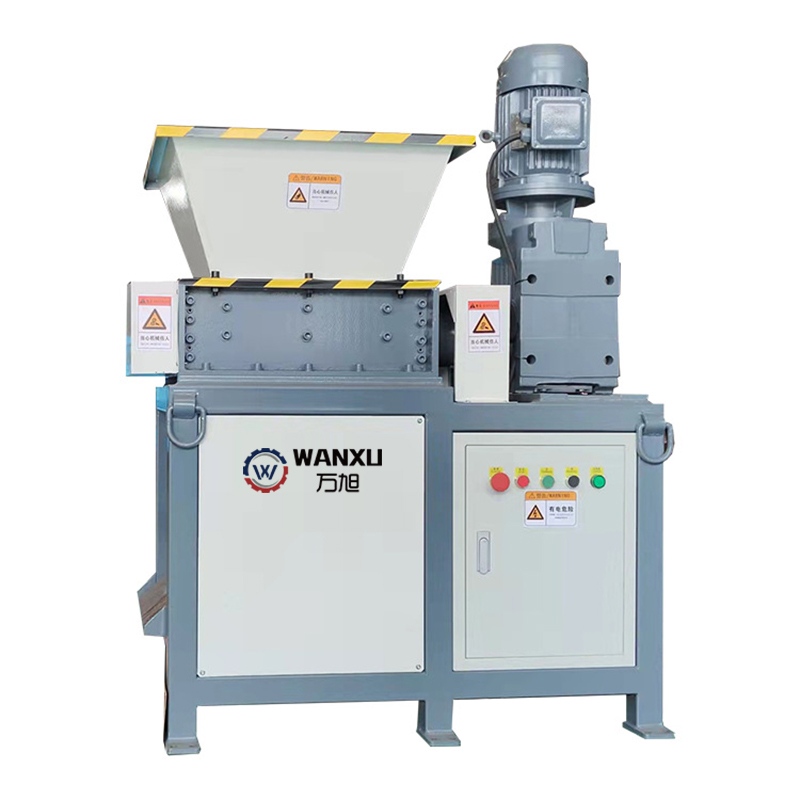
A robust plastic container shredder utilizing a twin-shaft design thrives under immense pressure. It is best suited for highly contaminated, high-volume, or heavily baled materials. Think of unsorted PET bottle bales or massive industrial plastic drums. They feature exceptionally high torque and very low rotational speed. They provide extraordinary shear force without jamming easily. This structural resilience makes them ideal for coarse primary breakdown. They tear open compacted bales securely before further processing occurs.
Granulators sit directly downstream from your primary reduction equipment. They perform a highly critical secondary processing step. They reduce coarse, roughly torn scraps into industry-standard 10–15mm flakes. Global end-buyers require this exact dimension for advanced food-grade applications. Granulators spin faster and use sharper blades to achieve this precise tolerance.
Comparison of Primary Shredding Technologies | |||
Machine Technology | Ideal Feed Material | Operating Dynamics | Output Characteristics |
|---|---|---|---|
Single-Shaft System | Loose, clean, rigid plastics | High RPM, moderate torque | Highly uniform (screen controlled) |
Dual-Shaft System | Baled, highly contaminated waste | Low RPM, extreme torque | Coarse, irregular (primary reduction) |
Every plant operator deeply fears the dreaded "batch killer." Polyvinyl chloride (PVC) contamination firmly holds this notorious title. Processing waste profitably means managing these chemical and physical threats early.
PVC poses severe physical and chemical risks during recycling. It melts at significantly lower temperatures compared to standard PET. If PVC accidentally enters your high-temp extrusion phase, disaster strikes. It chemically breaks down and forms corrosive hydrochloric acid. This acid actively destroys the molecular structure of all surrounding plastics. It causes your premium rPET to turn bright yellow rapidly. The material becomes brittle, loses tensile strength, and completely loses its market value. Proper shredding helps expose and isolate hidden PVC sleeves early.
Consumer bottles rarely consist of just one polymer type. The twist caps and security rings usually contain High-Density Polyethylene (HDPE) or Polypropylene (PP). Consider the journey of a standard beverage container. The label might use a specialized shrink-sleeve polymer. The adhesive holding it requires hot alkaline water to dissolve. If your blades merely crush the bottle without slicing it, that adhesive remains protected inside plastic folds.
A reliable PET bottle shredder cuts these mixed components into highly uniform sizes. Clean shearing action ensures washing chemicals touch every square millimeter of the surface. This precise uniformity allows physical density differences to work efficiently. Inside the subsequent sink/float washing stage, clean PET naturally sinks. Meanwhile, the lighter HDPE and PP fragments float to the surface. If large pieces remain clumped together, this vital physical separation fails entirely.
Corporate buyers demand strict acceptance criteria before purchasing premium flake. They measure material quality through precise, unforgiving metrics:
Purity levels: Non-PET polymers must remain below strict parts-per-million (ppm) thresholds.
Absolute cleanliness: Flakes must show zero traces of residual glues, paper, or organic residues.
Moisture stability: The material must be thoroughly dried to prevent degradation during storage.
Color clarity: Transparent, non-yellowed material commands the absolute highest commodity market price.
These demanding acceptance metrics validate why precise cutting chamber engineering matters immensely.
Evaluating heavy machinery requires looking far past fresh external paint. You must ignore standard marketing claims. The internal core components dictate your long-term processing success.
Industrial machinery durability starts squarely at the cutting edge. You must demand superior metallurgy from your equipment supplier. Require standard D2 tool steel hardened specifically to 58–62 HRC. This specific hardness level withstands highly abrasive contaminants beautifully. It powers through rogue glass fragments and embedded sand effortlessly. Softer metal alloys lose their sharp edge far too quickly. They end up tearing the plastic rather than cutting it cleanly. Torn edges trap dirt and ruin washing efficiency.
Rotor configuration heavily impacts both output quality and monthly electricity bills. Compare traditional straight-cut blades against modern V-cut configurations. A V-cut rotor distributes raw cutting force evenly across the entire shaft. This strategic energy distribution can reduce overall power consumption by up to 25%. Furthermore, it naturally pulls bulky material toward the center. This centering action prevents frustrating sidewall jamming and reduces bearing wear.
Drive mechanisms define exactly how your machine reacts to sudden stress. Standard electric drives work wonderfully for predictable, uniform loads. However, hydraulic drive systems offer immense anti-jamming benefits. They excel spectacularly when processing unpredictable, highly compacted material bales. They can reverse instantly upon sensing an uncrushable object. Regardless of the drive type you choose, prioritize smart energy control. Always specify IE4-rated efficiency motors. Pair them directly with Variable Frequency Drives (VFD) for optimal energy regulation.
Bottom screens dictate the final physical size of your shredded particles. Heavy-duty screens featuring strict ±0.2mm manufacturing tolerances prove absolutely essential. They physically prevent oversized plastic chunks from passing through the chamber prematurely. Oversized material inevitably damages your sensitive downstream friction washers and pelletizers.
Understanding equipment economics requires projecting expenses far beyond the initial invoice. The initial purchase price represents merely a fraction of overall operational costs. Daily operating expenditures demand your immediate and constant attention. Electrical energy costs typically run between $0.08 and $0.15 per kilogram processed. Consumable part replacements form the second largest operational expense category.
Internal wear parts have highly predictable lifespans based on daily throughput. Rotor blades usually require manual flipping or full replacement every 18 to 36 months. Sizing screens generally last anywhere between 24 and 48 months. However, processing highly abrasive loads accelerates this timeline significantly. Sand and glass act like aggressive sandpaper against steel components.
Consistent, documented maintenance prevents catastrophic and expensive downtime. Implement these rigorous Standard Operating Procedures (SOPs) across your facility:
Daily Routines: Inspect all rotor blades visually for dangerous micro-fractures. Clear out any accumulated debris from the dust extraction belts. Listen carefully for abnormal bearing noises.
Weekly Routines: Grease all main drive bearings thoroughly using high-temp lubricants. Check hydraulic fluid viscosity and verify correct tank levels. Ensure safety interlocks function perfectly.
Monthly/Quarterly Routines: Re-torque all blade mounting bolts exactly to factory specifications. Measure blade wear limits carefully using calibrated tools. You must mandate immediate blade replacement once wear exceeds 2mm.
Many facility operators try skipping vital pre-washing stages to save money upfront. This short-sighted decision exponentially accelerates expensive blade wear. Dirt, sand, and grit destroy sharp edges rapidly. Skipping this step also embeds surface dirt deeper into the plastic fibers during shredding. Ultimately, this reduces your final flake value significantly. A robust HDPE shredder always performs best when fed a reasonably pre-sorted, clean stream.
Investing in robust plastic processing machinery represents a foundational infrastructure decision. It requires perfect strategic alignment between your raw material input and downstream washing capacities. Your daily throughput goals must match your equipment's true operational limits realistically. You simply cannot build a profitable recycling line on optimistic assumptions. Mechanical breakdown sets the baseline for your entire material purity standard.
Before finalizing your equipment specification, request a comprehensive material trial. Demand a physical throughput test using your exact facility waste stream. Measure the resulting output flake quality meticulously. Ensure the particle sizing matches your washing tank requirements perfectly. Verify that power consumption aligns with your local utility budgets. Taking these proactive steps guarantees your smooth transition from a basic waste processor to a premium resin supplier.
To maximize your operational success, focus on the cutting chamber's engineering, prioritize regular blade maintenance, and never underestimate the destructive power of hidden contaminants. Your final flake quality will always reflect the precision of your initial shredding stage.
A: Yes, but it requires careful operational adjustments. PET is inherently brittle and thin, while HDPE is thicker and more flexible. Processing both effectively requires changing screen sizes and adjusting blade clearances to handle the differing material properties without causing friction melting.
A: Most mid-sized, 1000kg/h systems yield a return on investment within 20 to 28 months. This timeline assumes you are actively running the equipment efficiently and selling processed, high-quality flake directly to end-buyers at current market commodity rates.
A: Advanced machines use aggressive rotor bite designs to puncture sealed containers safely. They feature heavy-duty, waterproof bearings and specialized hoppers that safely vent pressurized gases and drain residual sticky liquids away from internal electrical components.
A: Yes, typically. A dual-shaft machine performs primary coarse shredding, reducing large bales into rough strips. A granulator provides secondary precision flaking, cutting those coarse strips into the exact 10–15mm dimension required for food-grade washing operations.


