Views: 0 Author: Site Editor Publish Time: 2026-06-19 Origin: Site


Shredding flexible plastics remains the most notoriously challenging application in the size reduction industry. We know firsthand how frustrating it feels to process light, stretchy materials. If you use a generic rigid plastic shredder for flexible films, you almost guarantee severe production bottlenecks. Uncut materials quickly stretch and wrap tightly around spinning rotors. This friction melts the plastic rapidly. It frequently leads to catastrophic bearing failures. You simply cannot afford hours of manual downtime just to cut rotors free.
This article provides plant managers and recycling facility operators with an evidence-based, actionable framework. We will help you evaluate and specify dedicated equipment confidently. You will learn the exact mechanical requirements needed to process diverse flexible materials. Our guide covers everything from clean post-industrial packaging rolls to heavily contaminated agricultural bales. By understanding these core engineering principles, you ensure stable downstream sorting and washing.
The Shearing Principle: Flexible films require continuous "shearing" (micro-clearance cutting) rather than brute-force tearing to prevent the material from stretching and wrapping around the rotor.
Contamination Defense: Processing agricultural film demands heavy-duty wear protection (hard-faced rotors) and isolated bearing housings to survive up to 45% sand and soil contamination.
Feeding Architecture: Baled flexible materials frequently jam traditional hydraulic pushers; modern dedicated units utilize dual counter-rotary self-feeding or specialized curved screens.
System Integration: Shredder output must be strictly controlled (typically 40mm primary, 12mm secondary) to stabilize downstream friction washers and ensure pelletizing moisture stays below 5%.
Operators often experience massive operational headaches when using incorrect size reduction equipment. Generic shredders work well for rigid pipes and thick boards. However, they fail miserably on thin, flexible polymers. To solve this, we must first understand how flexible films behave under mechanical stress.
Flexible packaging relies heavily on Linear Low-Density Polyethylene (LLDPE) and Low-Density Polyethylene (LDPE). These materials possess incredibly high elongation at break. Standard shredders use blunt force and wide blade gaps. They try to rip the plastic apart. This approach fails entirely on thin films. Without extremely precise blade clearances, a stretch film shredder will simply pull the material into the cutting chamber. It stretches the film instead of severing it cleanly.
When machines fail to cut the plastic, the real nightmare begins. Uncut, stringy film wraps tightly around standard rotors. As the rotor spins, it collects more uncut layers. This creates an enormous block of compressed plastic. The resulting friction generates intense heat. It melts the polymer directly onto the metal shaft. When this happens, operators must stop the line completely. Workers spend hours manually cutting the fused plastic free. This common mistake destroys daily throughput quotas.
Standard single-shaft shredders rely on flat hydraulic pushers. These rams force material against the rotor. This works well for hard, loose plastics. It fails completely when feeding whole bales of flexible material. The soft, compressible nature of baled film causes it to flatten out. The material frequently wedges and bridges between the pusher ram and the chamber wall. The pusher gets stuck. The rotor spins empty. You lose continuous processing flow.
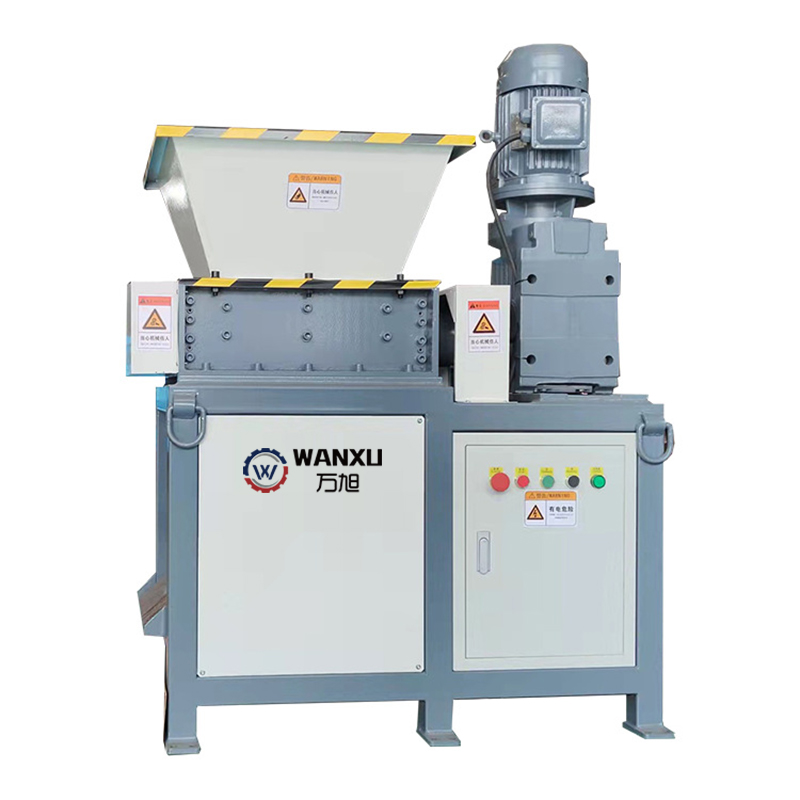
How do we overcome these extreme material challenges? We must abandon standard designs. We need specialized engineering. You must look for specific mechanical features when evaluating a true plastic film shredder. These machines feature distinct architectural upgrades.
The cutting mechanism must act like a pair of high-speed scissors. We call this the shearing principle. Engineers achieve this using specialized rotor designs.
V-Shape Alignment: Rotors feature blades arranged in a distinct V-pattern. This guides light material toward the center. It prevents film from migrating to the side walls.
F-Type Cutting Profile: This profile utilizes alternating rotor blades. They pair perfectly with multiple rows of fixed stators. This creates a continuous, scissor-like shearing action.
Micro-Gap Tolerances: Thin films demand tight blade clearances. The gap between rotating and stationary knives must remain microscopic. Operators must adjust these clearances easily to maintain clean cuts.
We already established why flat hydraulic pushers fail on flexible bales. Advanced shredders eliminate this bottleneck completely. Many modern units employ dual counter-rotary self-feeding mechanics. They grab the bulky bale and pull it inward dynamically. Alternatively, some machines use gravity-optimized angled hoppers. These designs pair with specialized curved screens. They prevent soft materials from bridging. They guarantee a steady, unjammed feed into the cutting zone.
Even with perfect cutting geometry, static electricity causes thin films to cling. Dedicated film shredders feature optimally positioned fixed blades. These do more than just cut. They act as structural scrapers. As the main shaft rotates, these static knives continuously shave off film residue. They sweep the rotor clean on every single revolution. This mechanical redundancy totally eliminates the rotor wrapping nightmare.
Farming plastics introduce an entirely new layer of difficulty. Mulch films, greenhouse covers, and silage wraps endure harsh outdoor conditions. Recycling these materials pushes machinery to its absolute physical limits. Standard equipment degrades rapidly under these specific conditions.
We must acknowledge a brutal operational fact. Agricultural bales rarely contain pure plastic. They arrive packed with abrasive sand, rocks, and wet organic matter. In many real-world scenarios, contamination levels reach up to 45% by weight. Processing this dirt acts like feeding coarse sandpaper directly into your machine. A standard machine will lose its cutting edge in hours.
To survive this abrasive assault, your equipment needs specialized metallurgy. A true agricultural film shredder acts like an armored vehicle. We outline the critical material standards below.
Component | Recommended Metallurgy | Protective Function |
|---|---|---|
Chamber Walls | Hardox Wear Plates | Resists deep gouging from tumbling rocks and abrasive sand. |
Rotors & Tool Holders | Vautid Hard-Facing Alloys | Prevents the rotor body from eroding under constant friction. |
Sizing Screens | Creusabro Steel | Maintains exact hole diameters despite heavy material impact. |
Bearings represent the heart of any rotating machinery. Mud and abrasive dust destroy bearings quickly. Dedicated agricultural machines use outward-offset bearing housings. This represents a critical evaluation checkpoint for buyers. The manufacturer physically isolates the bearings outside the cutting chamber. They leave a distinct, visible gap between the wall and the housing. This physical void prevents abrasive mud and electrostatic dust from breaching the mechanical seals.
Many advanced operators employ wet crushing (带水破碎) directly inside the primary chamber. You inject water directly onto the spinning rotor. This provides three major operational benefits. First, it pre-washes heavy soil away from the plastic. Second, the water cools the cutting tools instantly. Third, it prevents friction-induced melting completely. Wet crushing dramatically extends the lifespan of your expensive blade sets.
Selecting the correct power configuration determines your long-term success. You must match your drive system to your specific feed material. High-volume processing requires reliable, uninterrupted torque.
Buyers generally choose between two primary drive architectures. Your operational scale and material unpredictability dictate the right choice. We summarize these differences in the comparison chart below.
Drive System Comparison Chart | |||
Drive Type | Ideal Application | Torque Profile | Shock Resistance |
|---|---|---|---|
Electromechanical | Clean, pre-sorted post-industrial rolls. | Steady, consistent speed. | Moderate. Relies on belts/gearboxes. |
Hydraulic / Direct Drive | Unpredictable, dense agricultural bales. | Maximum torque at very low RPMs. | Extremely high. Handles severe impacts. |
Hydraulic drives provide exceptional power. They handle immense shock loads without causing dangerous electrical peaks. When a heavy bale drops onto the rotor, a hydraulic system absorbs the impact smoothly. It prevents the electrical grid from suffering sudden power spikes.
Even the best sorting protocols miss things. Agricultural bales frequently hide heavy metal tractor parts or dense stones. When blades strike uncrushable foreign objects, immense damage can occur. You need a smart control system. Advanced Programmable Logic Controllers (PLCs) monitor rotor resistance continuously. They detect sudden jams in milliseconds. The PLC instantly reverses the rotor direction. It spits the dangerous object out, preventing catastrophic tool damage.
Volume matters. A robust machine acting as a high-capacity plastic bag shredder processes immense volumes daily. You should expect a realistic baseline throughput ranging from 500kg to 4000kg per hour. Actual yields depend heavily on your screen size and material density. Wet, dense agricultural film processes differently than light, dry warehouse stretch wrap. Always specify your required output metrics during the purchasing phase.
A shredder rarely operates in isolation. It represents just one critical node in a larger, complex system. We must address how size reduction impacts downstream alignment. The shredded output dictates the stability of the entire washing and pelletizing process.
Forcing a single machine to perform total size reduction often causes bottlenecks. Smart facility managers utilize a two-stage strategy.
Primary Rough Reduction: Operators use a double-shaft shredder first. It attacks whole bales aggressively. It rips them into coarse, 40mm strips.
Secondary Fine Granulation: The coarse strips feed into a single-shaft granulator. This unit refines the material down to exact 12mm flakes.
Splitting the work across two passes yields significantly higher total throughput. It reduces wear and prevents machine stalling.
Film recycling involves a complex balance regarding water. We call this the moisture paradox. On one hand, you want wet crushing during the shredder stage. The water cools the blades and removes heavy dirt. On the other hand, the final extrusion phase demands extreme dryness. You must balance front-end wetting with back-end extreme dewatering. Your downstream equipment must feature intense mechanical squeezing and thermal drying. You must bring the final flake moisture safely below 5%.
Uniform particle size acts as the heartbeat for the entire PE film recycling machine system. If your shredder produces wildly varying sizes, your line will crash. Long strips bridge and clog the pipes in density separation tanks. Oversized chunks overload the delicate motors on high-speed friction washers. By maintaining strict 12mm output control, you guarantee fluid material movement from end to end.
Processing flexible plastics requires immense mechanical precision. Investing in a dedicated film shredder versus a general-purpose rigid plastic shredder is not an optional upgrade. It remains a strict baseline requirement. You must shear the material rather than tear it to prevent disastrous rotor wrapping.
To process agricultural plastics successfully, you must fortify the machine. Hard-faced rotors, offset bearings, and smart auto-reversal systems keep you operational despite extreme contamination. We suggest a highly practical next step for all buyers. You should demand a live material test using your specific baled waste. Verify the blade clearances, actual throughput, and anti-wrapping capabilities firsthand before finalizing your procurement.
A: Dedicated machines utilize micro-gap blade clearances and dual-fixed stator knives. They shear the flexible material continuously like scissors. This prevents long, uncut strips from forming. The fixed blades also act as scrapers to clean the main shaft dynamically.
A: Yes, it can handle un-sorted bales if properly equipped. You need a heavy-duty hydraulic drive, smart millisecond auto-reversal, and wear-resistant chamber armor. However, using a primary pre-shredder is highly recommended for highly contaminated bales.
A: Double-shafts excel at primary rough reduction. They handle whole bales easily and output coarse, long strips. Single-shafts feature internal screens. They provide exact sizing and produce uniform 40mm flakes necessary for automated downstream washing lines.


