Views: 0 Author: Site Editor Publish Time: 2026-06-24 Origin: Site


By 2050, global end-of-life photovoltaic (PV) waste is projected to reach between 54 and 160 million tons. Manual dismantling of obsolete panels is dangerous, labor-intensive, and unscalable. You cannot rely on hand tools to process commercial volumes safely. As EPR (Extended Producer Responsibility) regulations tighten globally, facilities need industrial-grade solutions to handle bulk processing.
Investing in a commercial solar panel recycling shredder is the critical first step. It safely reduces module size and prevents hazardous leaching into the environment. Furthermore, mechanical processing unlocks millions in recovered commodities. Facilities can harvest glass, aluminum, copper, and silver at scale. We will explore how modern shredding lines operate, key compliance metrics you must know, and the realistic economics behind recovering these high-value materials.
High Yield Potential: Modern shredding and separation lines can achieve up to 95% material recovery by weight.
Economic Drivers: While silver constitutes a tiny fraction of a panel's mass, it drives approximately 47% of the recycled economic value.
Regulatory Compliance: Mechanical shredding combined with proper dust collection ensures compliance with stringent EPA (TCLP testing) and EU WEEE directives.
Physical Limitations: Shredders perform size reduction and mechanical separation; downstream chemical or thermal processing is still required for high-purity silicon and precious metal extraction.
Decommissioning outdated solar arrays presents a massive logistical challenge. Historically, many operations relied on manual dismantling. Workers stripped aluminum frames by hand. They manually removed junction boxes. This approach introduces severe bottlenecks and major safety risks. Hand stripping exposes workers to toxic heavy metals. Dust containing lead and cadmium often becomes airborne. Furthermore, manual labor limits processing volume to just a few panels per day.
You need mechanical processing to scale operations. An automated solar waste machine completely transforms facility throughput. Industrial units easily process 1.5 tons of material per hour. They enclose the hazardous dust. They automate the repetitive physical labor. This efficiency makes high-volume recovery commercially viable.
Operators frequently refer to end-of-life solar modules as "recyclable gold." A dedicated recycling line extracts highly valuable raw materials. Silver drives much of this profitability. It makes up a tiny fraction of the panel weight but contributes massive economic value. Below is a breakdown of achievable commodity benchmarks per ton of shredded PV waste.
Expected Material Recovery per Ton of Shredded PV Waste | ||
Material Recovered | Estimated Yield / Recovery Rate | Economic Impact |
|---|---|---|
Glass | ~75% of total mass | High volume, low margin. Crucial for landfill diversion. |
Aluminum (Frame) | 100% recovery | High steady market demand. Easy to melt and reuse. |
Copper (Wiring/Traces) | ~9.32 kg per ton | High value non-ferrous metal. Strong global demand. |
Silver (Paste/Traces) | ~0.30 kg per ton | Drives ~47% of the total recycled economic value. |
Financial returns represent only one side of the equation. Environmental sustainability offers equally strong incentives. Processing recycled module materials requires roughly 35% less energy consumption compared to manufacturing virgin materials. Lower energy usage translates directly into carbon footprint reduction. For large energy corporations, proving this closed-loop material lifecycle directly fulfills aggressive ESG targets.
A comprehensive recycling operation requires more than one solitary machine. Truly efficient module disposal equipment integrates multiple sequential technologies. Each step performs a highly specific separation task. This structured approach prevents cross-contamination between materials.
The process always begins with physical pre-treatment. Operators or automated machines remove the exterior aluminum frame. They also detach the junction box located on the back. Junction boxes contain copper wires and durable plastics. Removing these bulky external elements serves two purposes. First, it isolates high-value, intact metals immediately. Second, it protects the primary cutting chambers from unnecessary wear.
Once stripped, the remaining flat laminate moves forward. This laminate contains fused layers of glass, EVA resin, silicon cells, and metal traces. Conveyor belts feed this sandwich into a heavy-duty PV panel shredder. A dual-shaft configuration works best here. High-torque motors drive massive, hard-faced blades. These blades bite into the slippery glass. They aggressively crush and shear the panels into uniform, coarse strips.
Coarse strips require further breakdown. A secondary granulator receives the rough shreds and reduces them into fine particles. Once granulated, the material mixture undergoes intense mechanical separation. The line uses circular vibrating screens to sort particles by size. Magnetic separators extract trace ferrous metals. Eddy current separators repel and isolate non-ferrous metals like copper. This multi-layered screening generally achieves an 85% to 95% removal rate for glass cullet, leaving mixed plastics and precious metals for downstream refining.
Fracturing tempered glass and silicon wafers generates immense particulate clouds. This dust is not benign. It contains toxic trace elements like lead or cadmium. To ensure absolute facility safety, high-powered industrial vacuums operate continuously over the shredding and granulating zones. They capture airborne toxins immediately. The system safely drops filtered air outside and deposits hazardous dust into sealed collection bins for specialized disposal.
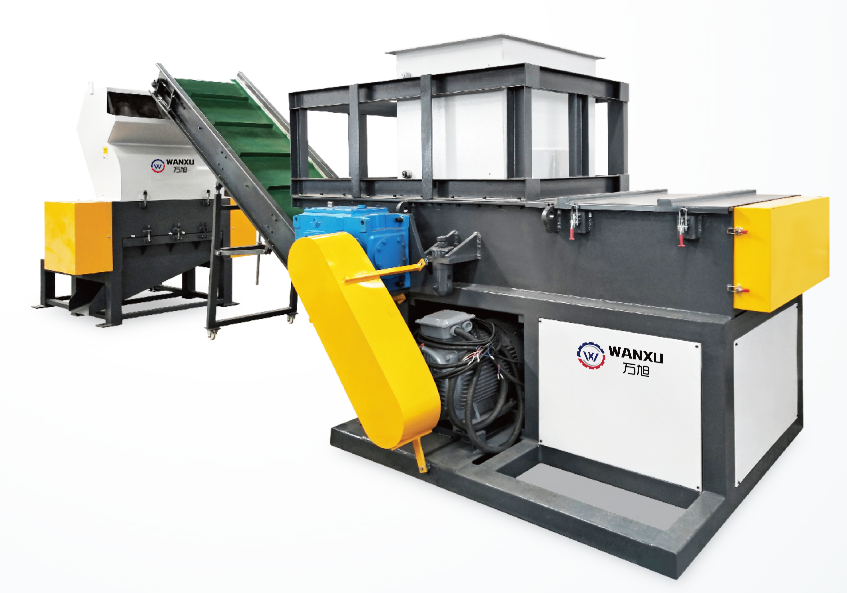
Choosing the right mechanical equipment requires careful due diligence. Not all industrial shredding machines handle solar waste effectively. PV glass is extremely abrasive. Standard plastic or wood shredders will break down quickly if fed solar panels. You must evaluate specialized machinery based on strict criteria.
Solar technology evolves rapidly. Your facility will likely receive panels spanning decades of different manufacturing techniques. Ensure the equipment handles a wide variety of architectures. It must easily crush older heavy monocrystalline and polycrystalline panels. It must also accommodate modern PERC designs. Furthermore, verify it handles thin-film varieties like CdTe, CIGS, and a-Si. Versatility guarantees your line remains operational regardless of the incoming waste stream.
Many vendors advertise massive throughput speeds. Speed matters little if the output material remains heavily mixed. You must assess vendor claims critically. Request guaranteed purity rates. Purity dictates your resale market value. Below is a summary chart highlighting the purity benchmarks you should demand.
Material Purity Summary Chart | ||
Separation Target | Minimum Acceptable Purity Target | Why It Matters |
|---|---|---|
Aluminum Removal | >98% Pure | Prevents contamination in secondary smelting operations. |
Glass Recovery | >90% Pure | Ensures glass cullet is acceptable for insulation or aggregate reuse. |
Copper Recovery | >95% Pure | Maximizes immediate spot-market commodity pricing. |
Tempered PV glass acts like sandpaper against metal. It destroys standard cutting tools. Evaluate the maintenance cadence before purchasing. Look for shredders featuring specialized blade alloys designed specifically for high abrasion. You want replaceable wear plates lining the cutting chamber. Ensure maintenance teams can access hoppers and rotors easily. Quick access minimizes operational downtime when blades inevitably require rotation or replacement.
Proper mechanical processing is not just about making money. It is primarily about strict legal compliance. Global environmental agencies increasingly scrutinize how companies discard solar waste. Ignorance of regional laws often leads to crippling financial penalties. Your mechanical setup dictates whether your facility stays compliant.
In the United States, solar panels face rigorous testing. If un-shredded or improperly disposed cracked modules enter landfills, they risk failing the TCLP (Toxicity Characteristic Leaching Procedure) test. When rain washes over broken panels, heavy metals can leach out. If a panel fails TCLP, the EPA classifies it as Subtitle C Hazardous Waste. This classification requires incredibly expensive, specialized disposal.
Shredding mitigates this issue by safely capturing the hazardous fractions upfront. Additionally, state-level regulations vary widely. California enforces strict Universal Waste regulations. These rules mandate special handling for solar panels, treating them similarly to discarded batteries. Proper mechanical processing ensures you manage toxins proactively rather than reactively.
Europe leads the world in recycling legislation. You should use EU standards as the gold standard for your global facility design. The WEEE (Waste Electrical and Electronic Equipment) Directive covers PV panels comprehensively. The directive enforces strict mandates. It requires facilities to achieve an 85% material recovery rate and an 80% actual recycling rate by total mass.
Entry-level shredders simply cannot meet this 80% material separation threshold. They leave glass, plastics, and metals hopelessly tangled. Investing in advanced photovoltaic recycling technology is non-negotiable if you plan to operate within or supply to European markets.
Transparency matters when designing an industrial plant. Equipment sellers sometimes paint an overly simple picture. Operating a profitable recycling center requires navigating complex chemical and physical realities. You must understand these limits to plan your budget accurately.
One major hurdle remains widely misunderstood. Manufacturers glue solar panels together using a tough polymer called EVA (Ethylene Vinyl Acetate). Mechanical shredding alone does not perfectly separate the EVA polymer from the silicon and glass matrix. The blades chop the material, but the glue still binds tiny fragments together. To achieve high-purity silicon or pure precious metals, thermal treatment or chemical etching is required downstream. Facilities typically heat the granules above 500°C to burn off the EVA completely.
A complete turnkey plant requires substantial infrastructure. You cannot plug a heavy-duty shredder into a standard warehouse outlet. These lines demand a significant physical footprint. They require robust PLC (Programmable Logic Controller) systems to automate conveyor feeds and prevent jams. Furthermore, heavy-duty ventilation and dust suppression systems are mandatory. Silica dust damages human lungs quickly. Your HVAC and filtration budget will be substantial.
Maintain healthy skepticism toward exaggerated marketing claims. No single machine inputs whole panels and outputs perfectly separated, market-ready pure elements. That technology does not exist. Authentic, industrial-scale recovery relies on an integrated multi-machine line. Primary shredding prepares the material. Secondary granulation sizes it. Mechanical screening sorts it. Thermal/chemical processes refine it. Build your business model around this multi-step reality.
When you begin shortlisting manufacturers, prioritize vendors who embrace transparency. Demand equipment demonstration trials using your specific panel waste. Sending a sample batch of your oldest, toughest modules proves whether a machine truly delivers the promised purity and speed.
Your procurement team should calculate your expected regional waste volume. Account for regular end-of-life loss versus early weather-related failure rates. Compare your projected daily tonnage against the 1.5 to 3.0 tons-per-hour capacity of commercial units. This data allows you to determine an accurate CAPEX ROI timeline. Upgrading your physical processing capabilities ensures your business safely captures the maximum value hidden inside tomorrow's electronic waste.
A: No. Standard shredders wear out rapidly due to the highly abrasive nature of tempered PV glass. Specialized hard-faced blades are required to withstand the friction and protect the rotor.
A: Enclosed dust collection systems capture airborne particulate instantly. Meanwhile, mechanical separation isolates lead and cadmium-bearing fractions safely. This ensures hazardous materials enter dedicated disposal streams rather than contaminating the ambient air or the surrounding environment.
A: While entry-level units exist, commercial viability typically requires equipment capable of processing at least 1 to 1.5 tons per hour. Processing volumes below this threshold rarely justify the expensive downstream separation and filtration costs needed for total compliance.


