 |


| Quantity: | |
|---|---|
WX-1000D
WANXU
The WX-1000D is designed for primary size reduction in metal recycling. Its two cutting shafts grip and shear incoming scrap, helping prepare it for sorting, collection, or further processing. Listed applications include aluminum cans, scrap cables, and metal drums. Rigid plastics and selected paper waste can also be considered when the same facility handles multiple material streams.
The WX-1000D and WX-1000D+ differ in overall length and have separate motor and reducer entries in the specification table. When comparing the two configurations, consider the dimensions of the largest feed pieces, the required output, and the space available for feeding, discharge, and maintenance.

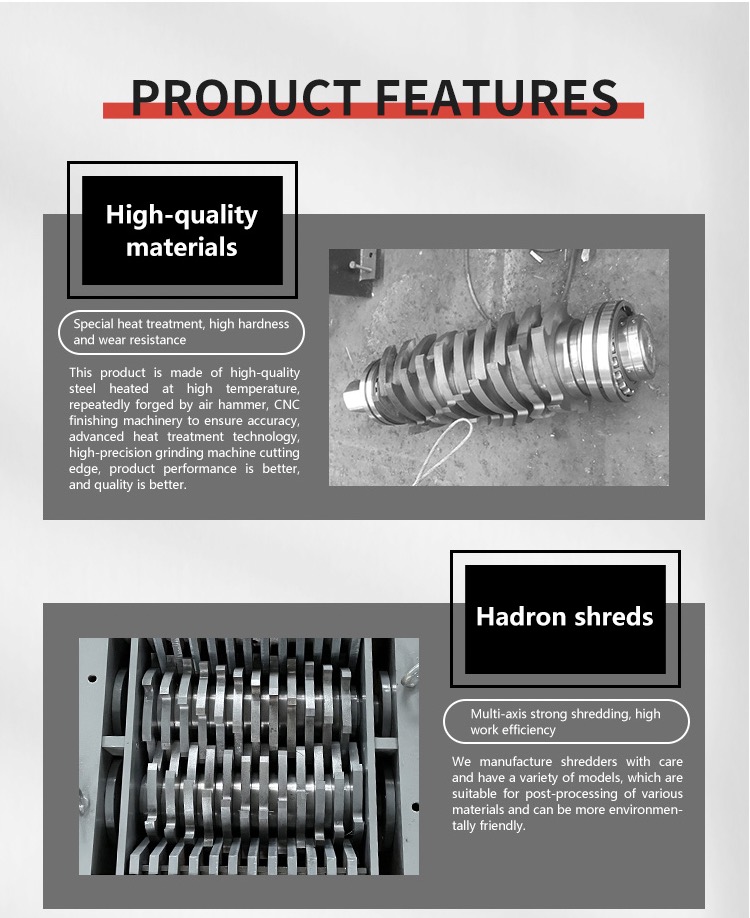
The heavy-duty cutting chamber features a blade diameter of 180 mm, forged from high-strength alloy to resist wear and maintain a sharp edge over thousands of hours of operation. The shredder uses a sturdy 80 mm shaft, thickened to prevent bending even when processing dense materials. The electrical cabinet is controlled by an intuitive PLC system, allowing operators to monitor performance metrics at a glance. In terms of footprint, the WX-1000 model measures 3500*1200*2000mm, while the upgraded WX-1000D+ model measures 4000*1200*2000mm. It is designed for efficient and high-speed shredding, maximizing facility throughput while minimizing downtime.
Parameter | Value |
Model | WX-1000D, WX-1000D+ |
Motor | 40kw, 40kw-2 |
Reducer | JK87, JK87-2 |
Electric Cabinet | PLC Controller |
Input Speed | 17 turns/min |
Blade Size | Dia 180mm |
Shaft Size | Dia 80mm |
Dimension | 3500*1200*2000mm, 4000*1200*2000mm |
Two cutting shafts grip and shear the feed into smaller pieces. For hollow or irregular items such as metal containers, this primary reduction step makes the material easier to collect or move to the next stage of the recycling line.
The specification table lists JK87 and JK87-2 reducer configurations across the two models, along with a PLC-controlled electrical cabinet. Confirming the drive setup and control functions for the quoted unit helps the facility plan the electrical connection and how the shredder will be operated within the line.
Both models list a blade diameter of 180 mm and a shaft diameter of 80 mm. The original product description specifies alloy blades. Feed thickness, shape, and reinforcement are useful inputs when assessing the cutting setup for aluminum scrap, cable, or rigid plastic.
The WX-1000D is listed at 3,500 mm long, while the WX-1000D+ is listed at 4,000 mm long. Both have a listed width of 1,200 mm and height of 2,000 mm. These dimensions provide a starting point for checking the machine position, conveyor connections, and access around the equipment.

Feed material | What to check during selection |
|---|---|
Aluminum cans and light metal scrap | Specify the metal type, thickness, and typical piece size. For beverage cans, note whether the feed is loose, flattened, or baled. |
Metal drums and containers | Provide the largest diameter and height, wall thickness, and details of any reinforced rims or fittings. These details help determine whether preparation is needed before feeding. |
Scrap cables | Provide cable diameter, typical lengths, and construction. Identify armored or reinforced cable separately for review. |
Rigid plastics | For plastic barrels, automotive bumpers, or molded offcuts, provide the largest dimensions and wall thickness. Note any attached metal parts. |
Paper and packaging scrap | Describe whether the material is loose, bundled, or baled, and identify any straps or other attachments that may affect feeding. |

A material trial can show how a specific feed enters the cutting chamber and what the pieces look like after shredding. Samples should reflect normal production and include the largest or thickest items expected in the feed. For cable scrap, include typical lengths and construction. For metal containers, include representative wall thicknesses and reinforced sections.
Record the tested model, feed preparation, and cutting configuration alongside the output. For a line that includes sorting or secondary shredding, compare the size and shape of the discharged pieces with what the next machine can accept.
WANXU can review motor configuration and line layout based on the feed material, expected processing rate, and available space. For integration into an existing facility, the review can include the infeed arrangement, discharge point, and connection to downstream equipment.
WANXU also provides project design, equipment manufacturing, installation, commissioning, and technical support. The quotation can specify the configuration and scope of service for the proposed installation.
1. What materials can the High Speed Twin Shaft Shredder process?
The shredder is designed for soft materials such as scrap cables, plastics, aluminum cans, bottles, and paper. Furthermore, its aggressive shearing action makes it highly capable of reducing bulky items like car bumpers and large metal drums into uniform fragments.
2. What is the shredding capacity of the machine?
The shredder has a shredding capacity of approximately 2000-3000 kg/hour, which is suitable for medium-sized recycling operations aiming to scale up their daily processing volume without adding extra labor.
3. What is the motor power of the shredder?
The shredder is equipped with two 4kW motors, which provide sufficient power for efficient metal recycling. This dual-drive setup ensures balanced torque distribution across the cutting shafts.
4. How much does the shredder weigh?
The machine weighs 800 kg and is compact, making it easy to install in most industrial environments. Its solid structural frame absorbs operational vibrations, keeping the unit stable on standard concrete floors.
5. What are the dimensions of the High Speed Twin Shaft Shredder?
The shredder dimensions are 3500*1200*2000mm for the WX-1000D model and 4000*1200*2000mm for the WX-1000D+ model. These footprints are optimized to fit into existing processing lines without requiring major facility modifications.
6. Can the shredder process different types of materials?
Yes, it is versatile and can shred a variety of materials including plastics, metals, and paper for recycling. The specialized blade geometry ensures a clean cut regardless of the material's density or elasticity.


