 |


| Quantity: | |
|---|---|
WX-1600D
WANXU
The WX-1600D is designed for the first size-reduction stage of industrial plastic recycling. Its two cutting shafts grip and shear bulky pieces into smaller fragments that are easier to transfer through the line. For facilities handling thick-walled containers or irregular molded rejects, the first step is to review the largest pieces and determine what the downstream equipment can accept.
WANXU supports material testing, model selection, and recycling line design. The shredder can be evaluated as a standalone machine or as part of a line where its discharge needs to match a conveyor, sorting system, or secondary size-reduction equipment.

Parameter | Value |
Model | WX-1600D |
Electric Cabinet | PLC Controller |
Input Speed | 12-20 turns/min |
Blade Size | dia 1000mm |
Shaft Size | dia 300mm |
Motor | 75kW*2 |
Reducer | ZQ500*2 |
Dimension | 4500*2000*3600mm |
Two 75 kW motors and two ZQ500 reducers power the cutting shafts. The low-speed drive supports primary shearing of bulky feed. When the scrap stream includes pieces of different thicknesses or shapes, a representative trial helps assess how they feed and break down.
WANXU offers different claw profiles and blade thicknesses. Cutter selection takes into account the shape of the incoming scrap, its wall thickness, and the output needed by the next machine. A trial can help compare how a proposed blade configuration grips the feed and what piece sizes it produces.
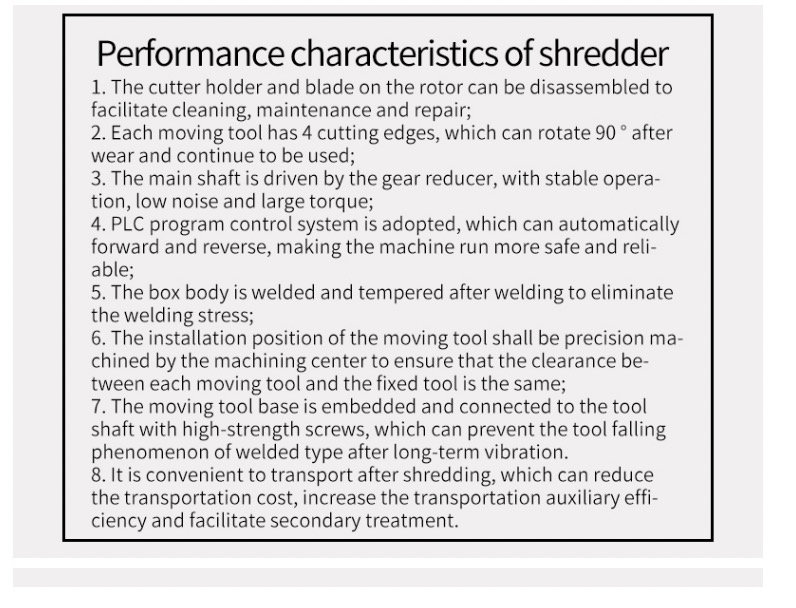
The PLC cabinet provides start, stop, and reverse controls. Automatic overload reversal allows the machine to respond when cutting resistance rises during shredding, which is useful when the thickness or shape of the feed varies between batches.
The machine uses separate bearing housings with multilayer seals. The seals help keep dust and moisture away from the bearings, while the removable assembly gives maintenance teams access to the shafts, blades, bearings, and seals during servicing.

Feed material | What to check during selection |
|---|---|
Thick-walled plastic containers | Provide the largest dimensions, wall thickness, and plastic type. Note handles, inserts, or reinforced sections that could affect how the item feeds. |
Rigid plastic offcuts and molded rejects | Include representative pieces from normal production. The largest and thickest samples help WANXU assess the blade configuration. |
Plastic film and flexible packaging | Specify whether the feed is loose, bundled, or baled. A material trial can show how the flexible pieces feed and discharge with the proposed claw profile. |
Mixed plastic packaging | Describe the main materials in the mix and identify any attached labels, closures, or non-plastic components. This helps define the shredding and downstream sorting requirements. |
The cutting assembly uses blades with a listed diameter of 1,000 mm and shafts with a listed diameter of 300 mm. Blade diameter describes the cutter assembly. The effective feed opening and the size of the largest acceptable piece should be confirmed for the proposed configuration.
A useful trial shows the original feed alongside the shredded output and records the blade profile, blade thickness, and feeding conditions. For a line that includes washing or granulation, the trial results help determine whether the discharged pieces can move directly to the next stage or need further size reduction.
WANXU can review the blade setup and line layout based on material samples, expected throughput, and the output required by downstream equipment. For an existing line, the review can also cover how scrap reaches the shredder and how discharged material moves to the next machine.
WANXU conducts load testing before shipment. The quotation can specify the proposed cutter configuration, the scope of factory testing, and the available service and replacement parts arrangements.
1. What materials can the twin-shaft shredder process?
The shredder is highly versatile and suitable for tough materials such as mixed plastics, scrap metals, industrial textiles, solid wood, paper rolls, waste tires, and bulky household appliances. Its immense shearing force breaks down these diverse materials with ease.
2. What industries usually use this shredder?
It is widely used across multiple sectors, heavily relied upon in industrial waste recycling facilities, urban garbage disposal plants, dedicated plastic recycling centers, wood processing mills, and large-scale papermaking industries seeking efficient volume reduction.

3. What is the shredding capacity of the machine?
The actual throughput capacity depends heavily on the density and type of the feeding material, but under standard operating conditions, the machine can process up to 2000-3000 kg per hour, maintaining a steady and continuous workflow.
4. What is the blade size?
The shredder's heavy-duty blade diameter is exactly 1000 mm. These large-scale blades provide a massive cutting surface area, ensuring that even oversized items are gripped and pulled into the cutting chamber efficiently.
5. Is the machine equipped with a control system?
Yes, it is equipped with an industrial-grade PLC control system for precise operation. This cabinet not only manages the 12-20 turns/min input speed but also constantly monitors motor load to trigger automatic reversal if uncrushable objects are detected.


